


Such has been the excitement of late over mooted restoration of wolf and lynx to the Highlands – or immediate fretting about rumbunctious wild boar – that we too readily forget the ‘Highland Tiger’.
Probably because very few of us will ever see a Scottish wildcat, at least in the actual wild.
They are very shy – with good reason; after centuries of persecution they have abundant cause to hate humans – and are found, these days, only in a few random redoubts.
The likes of the glens of Angus, Royal Deeside, the quieter wooded parts of the Black Isle and, perhaps most securely and at their happiest, in the great, lonely Ardnamurchan peninsula.
The wildcat so reminds you of the typical domestic tabby that it is important to stress the differences. A wildcat is bigger, stronger, tougher, with longer legs and broader feet. A thick black-tipped tail and a broad squat head.
And not to be trifled with – ‘muscled, highly aggressive creatures that can kill, in seconds, any rodent, rabbit or hare unlucky enough to cross their paths’, panted a London journalist in 2012. ‘Males often grow to the size of medium-sized dogs and can weigh up to 8kg.’
Even humans often come off worse. Robbie Rankin, who tended captive wildcats at the Highland Wildlife Park, recalled them with respect. ‘I have come out of our enclosure with blood dripping from my hands on many occasions.’
For Felis silvestris grampia is wholly, almost magnificently untameable.
You could adopt a kitten within hours of birth, bottle-feed it, raise it on Lily Kitchen’s finest and choice Christmas turkey, lay on its own Netflix account and a week off in April to go skiing – and the beast will hiss and spit at you till the last.
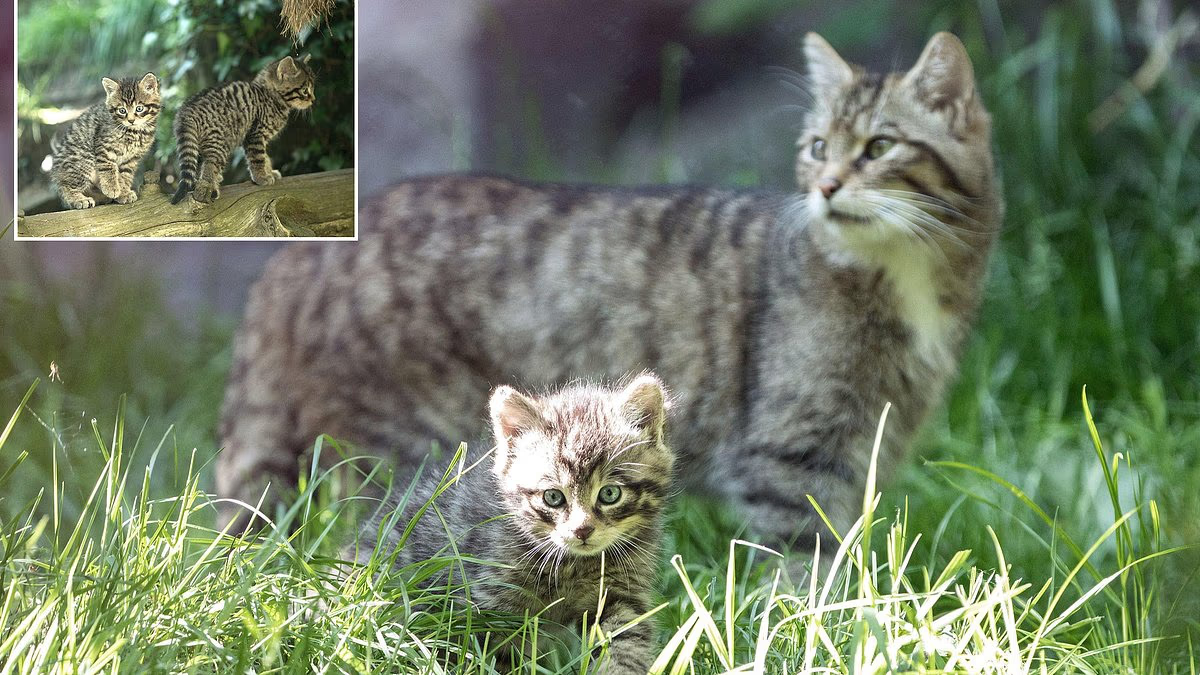
MOST telling in the photographs of this magnificent creature is the expression. We might joke that cats do not have owners – they have staff – but there is a meekness about your typical puss.
A Scottish wildcat kitten and its mum at Edinburgh Zoo

The wildcat kittens are part of a conservation breeding programme which experts hope will save the species from extinction in the wild
Even in repose, though, the wildcat radiates infinite scorn. Utter contempt. Lord Sugar in the boardroom, the meanest PE teacher in the history of ever; the Presbyterian minister desperate to suspend someone for six months.
And, when enraged, entire bone-crunching savagery.
They still hit the headlines. Last weekend, amid sweltering London heat, keepers were so concerned for their wildcats at London’s Golders Hill Park Zoo they treated them to frozen meat paste.
And, the other day, extraordinary footage was released – the first time a determined wildcat had been caught on video swimming across a considerable river.
But this is an animal teetering on the edge. Its survival a priority for what is now NatureScot since 2020. Some, in 2019, feared as few as 35 true wildcats still roamed them thar hills and that the species was ‘functionally extinct’. Though so hard is it to glimpse or number the Highland Tiger we can never quite be sure.
It prefers woodland, shuns open heath, hates worked farmland, does not care for deep snow and is by habit ‘crepuscular’ – most active around dawn and dusk and especially delighting in moonlight.
A life in the shadows, which is just how the wildcat likes it. To complicate things further, it is fiercely territorial. One tom can command nearly two square miles of territory and, um, entertain several females: minus the mister, the ranges of female cats seldom overlap.
They hit sexual maturity early – around ten or 11 months – and can beget up to eight kittens twice a year, though the winter mortality rate is frightful for their young.
Historically, the biggest threat was us. The last wildcats in England were shot in 1849 and, as late as the Fifties – as Dawn MacLeod recorded in her memoir of years spent tending the famous Inverewe Gardens – a report of one near Gairloch had crofters looking out their shotguns.
Roadkill is still a serious problem, but these days the chief menace is the domestic moggie. Foxes cannot mate with dogs, but your own tom-cat will happily resort to any port in a storm – and vice versa – and interbreeding now stains the wildcat gene-pool.
NatureScot, moving quickly, has since 2013 run a breed-and-release programme – purebred kittens raised in captivity and freed, in appropriate country, as they reach maturity – and, in parallel, a catch-and-neuter operation for feral and alley cats.
As well, of course, as encouraging all responsible cat-owners to neuter their own. Early signs are encouraging: the released junior wildcats are radio-collared and the survival rate is gratifyingly high.
WHY the wildcat became so persecuted rests partly on its long association with witchcraft and the advances on gun technology through the 19th century – breached shotguns, rifled barrels, nifty cartridges and so on.
That in turn – now that men could readily blam grouse and that in great numbers out of the sky – led to intensive estate management and extreme prejudice against anything deemed ‘vermin’.
Untold Edwardian memoirs of country gentry recall all the ospreys, buzzards, sparrowhawks, red kites and so on they used as boys to shoot – and how odd, come to think of it, you don’t see any of them around any more. On December 18, 1913, King George V personally slew more than a thousand pheasants – remarking guiltily afterwards to his heir, ‘Perhaps we went a little far today, David…’
But what was sinister and ‘other’ to the gentry and their hirelings was, of yore, highly esteemed by the Highlander.
Fearless, ferocious and defiant, the wildcat – in the days when they were in great abundance and no one managed grouse moors – was highly regarded by Gaels and, from the 1200s, began to feature in clan heraldry.
Most notably, assorted clans around Inverness – Grants, MacIntoshes, Chisholms and Frasers and so on – formed a formidable confederation, the Clan Chattan – ‘Sons of the Cat’.
Their motto translating, ‘Touch not the cat without a glove’. Clan Chattan remained a force for some 500 years, till the savageries after Culloden – a coalition of sufficient clout to worry Lords of the Isles in the west and, down in Edinburgh, the King himself.
The surname Cattanach endures in the Highlands to this day, and so – just – does our Highland Tiger.
If but a yowl in the dusk; perhaps once glimpsed out the corner of your eye – scattered, bloody fur and feathers and furtive footprints in the snow.
