


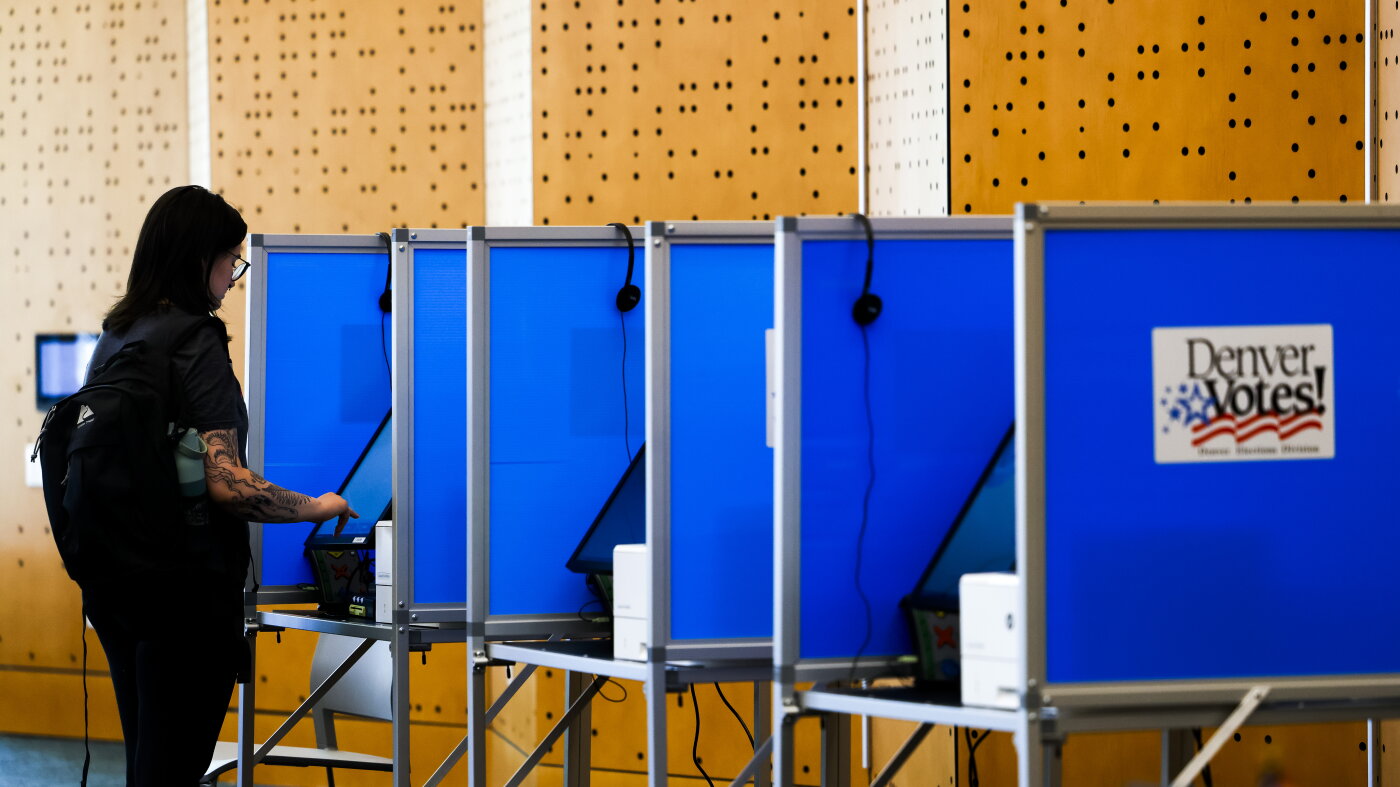
Two lawsuits have been filed in the United States seeking to prevent federal officers from entering polling places, amid growing fears that immigration enforcement could intimidate voters and deter them from casting ballots.
Paul López, Denver’s clerk and recorder, is among the election officials and civil rights advocates challenging the possibility of federal agents appearing at voting locations. He said voters had repeatedly asked what they should do if officers arrived at the polls.
“Every single meeting I have, there’s somebody that asks the question, ‘What can we do if federal agents are at the polls?’” Mr López said.
Federal interference at polling places is unlawful, but election officials and rights groups say statements from members of the Trump administration have forced them to prepare for the possibility.
Lawsuits challenge possible federal presence at polls
The first coalition, which includes Mr López, filed a lawsuit last week arguing that sending armed federal officers to polling places would breach a federal law dating from the Civil War era.
A second case was filed in Washington DC on Friday by civil rights groups and unions. It argues that suggestions federal agents could be deployed to polling stations violate the 1965 Voting Rights Act, which prohibits intimidating another person from voting.
Brian Netter, legal director at Democracy Forward and one of the lawyers involved in the first case, described officials’ comments as a “striking and disturbing departure from settled U.S. law”.
The latest lawsuit also challenges the administration’s efforts to identify non-US citizens who may have appeared on state voter rolls or cast ballots. It alleges that immigration officers are using flawed methods and unreliable data, potentially leading to the surveillance, investigation or unlawful detention of US citizens, particularly people from communities of colour.
A whistleblower report this week alleged that the Department of Homeland Security’s Unlawful Voter Initiative was advancing rapidly and relying on unreliable information, resulting in US citizens being wrongly flagged. The department said its investigations were conducted “diligently and professionally”.
The White House did not immediately respond to a request for comment about the allegations in the lawsuit.
President Donald Trump said in May that he would do “anything necessary” to ensure the country had “honest” elections when asked whether federal agents could be sent to polling places.
Earlier this month, Markwayne Mullin, the Homeland Security Secretary, said Immigration and Customs Enforcement agents could serve warrants at polling places. Tom Homan, the administration’s border czar, later said agents would not be “sweeping polling places”, although he had previously questioned why people would be concerned about such activity.
In a statement, the Department of Homeland Security said ICE was “not planning operations targeting polling locations”. It added that the agency carried out intelligence-led targeted enforcement and that people could be arrested if an active public-safety threat endangered a polling location.
FBI director Kash Patel also declined to rule out agents being present at polling places during a contentious congressional hearing on Tuesday, saying only that they would “follow the law”.
There were several reports during primary elections of federal law-enforcement activity inside or near polling sites in different states.
Voters report fears over immigration authorities
The shifting messages have begun to affect voters. About 40 per cent now believe it is likely that ICE agents will be present at voting locations in their area, according to polling released this week by the University of California San Diego.
Voters of colour were significantly more likely than white voters to say they feared being questioned by immigration authorities despite being US citizens. Election officials said such concerns could reduce turnout even if no enforcement operation took place.
Mr López said Denver had a plan in case federal officers appeared at polling places. “They’re going to face prison sentences,” he said.
Bethany Li, executive director of the Asian American Legal Defense and Education Fund, which is representing nine organisations in the latest case, said the situation echoed fears experienced by Black communities during the civil rights era.
“The whole idea was to prevent voter intimidation in similar form in the future. And that’s exactly what we’re seeing now from the federal government,” Ms Li said.
Héctor Sánchez Barba, president and chief executive of Mi Familia en Acción, one of the groups involved in the litigation, urged voters not to be deterred. “Know your rights, make a plan to vote, and make your voice heard,” he said.
