


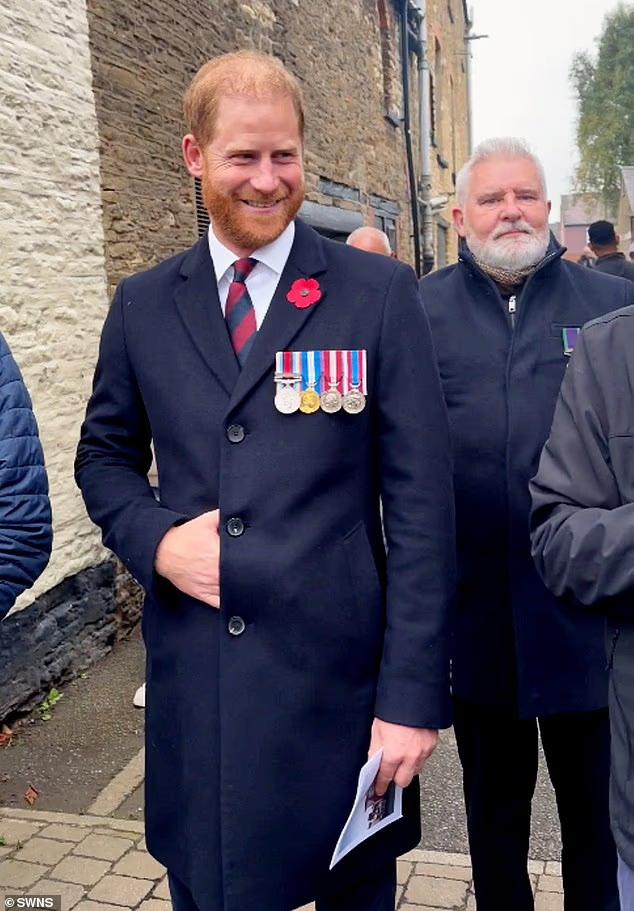
Prince Harry’s surprise appearance at a Remembrance ceremony in Brackley has prompted former culture secretary Nadine Dorries to suggest he could still serve the public in a role separate from the working Royal Family.
The Duke of Sussex attended the 45-minute ceremony in the Northamptonshire market town apparently alone, wearing a suit and tie, a poppy and his own service medals on his overcoat. He stood towards the back of the crowd before speaking to local people.
Harry’s visit came as the King and Queen and the Prince and Princess of Wales took part in the main Remembrance Sunday ceremony at the Cenotaph, alongside a procession involving 10,000 Armed Forces veterans.
Writing about the Brackley appearance, Ms Dorries said Harry had gone to pay his respects and remember comrades lost during his decade in the military, including two tours of Afghanistan. She also highlighted his continuing involvement with veterans through the Invictus Games, which he co-founded.
She said footage appeared to show an initial tension in his expression, but that he soon relaxed after receiving a warm welcome from local residents and chatting freely with the crowd.
Ms Dorries, who said she had been a harsh critic of Harry and Meghan, argued that the event offered a glimpse of a possible future role for him. She wrote that his ability to connect with soldiers, veterans, elderly people and children could allow him to contribute to public life without being seen as a rival to the working Royals.
However, she said the Duke and Duchess of Sussex had forfeited any prospect of returning as working members of the Royal Family following Harry’s memoir Spare and their interview with Oprah Winfrey.
She said the King had made clear that the Sussexes were private citizens and that there was no route back for them as working Royals. But she suggested Harry’s popularity had endured, particularly among those who had admired his mother, Diana, Princess of Wales.
Ms Dorries concluded that a Harry with “fewer grudges, and more smiles” could once again win over the British public and become the “People’s Prince”.
