


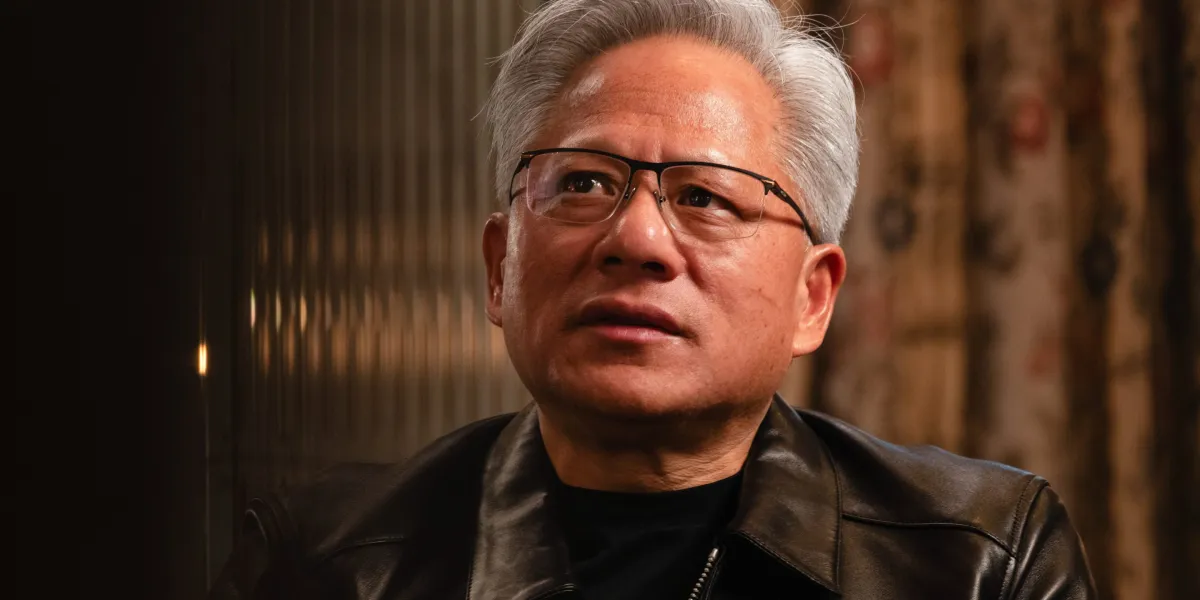
Nvidia’s succession plan is under renewed scrutiny after chief executive Jensen Huang admitted having an affair with Alice Huang, a business executive suspected by US intelligence of acting as an operative for the Chinese government.
China’s foreign ministry has denied the allegation. Nvidia has launched an independent investigation into the relationship, while the company’s board said it had no reason to believe national security or corporate secrets had been compromised.
Huang apologised publicly on Sunday, saying: “I was unfaithful to my wife. My actions hurt her and our children. There is no excuse for what I did. I am deeply sorry.”
Nvidia said the episode would not interrupt his leadership. “Today’s news will not slow Nvidia. Jensen is committed to continuing to lead Nvidia as CEO without interruption,” a company spokesperson said.
The affair has nevertheless intensified questions over whether the chip giant has a formal succession plan, which neither Huang nor Nvidia has publicly disclosed. Nvidia shares fell by more than 6 per cent on Monday morning.
Bernstein analysts said it was unclear who could replace Huang because his identity was so closely tied to the company. “Nvidia is not an ordinary company and Jensen is not an ordinary CEO,” they wrote.
“He IS Nvidia, clearly sets the long term strategy and direction, and (with supposedly 60 direct reports) pulls most of the company’s strings himself,” the analysts added.
Nico Caprez emerges as possible successor
Attention has fallen on Nico Caprez, Huang’s 35-year-old son-in-law and Nvidia’s vice-president of global AI infrastructure growth.
Caprez was formerly an alpine skier for Switzerland and began his career as a consultant at Boston Consulting Group. He completed an MBA at London Business School in 2021, where he met Huang’s daughter Madison; the pair married in September.
He joined Nvidia as a corporate development manager in February 2024 and became director of global AI infrastructure enablement for the company’s cloud partners about a year later. In less than three years, he rose to his current role leading global AI infrastructure growth.
Caprez was involved in efforts to raise 500 billion dollars with six major asset managers, including Apollo Global Management and Blackstone, to finance Nvidia chips for data centres. He also reportedly helped the company pursue minority stakes in two data-centre developers.
His standing within the company has been praised by senior figures. Vladimir Troy, Nvidia’s vice-president of AI infrastructure, said: “Nico is very important.” A cloud executive who met him described him as “Jensen’s consigliere”.
Madison Huang is a senior director of physical AI and robotics product marketing, while her brother Spencer is a director of robotics product management. One Nvidia employee who works with Caprez said Jensen Huang appeared to be preparing Madison and Caprez for a future leadership role.
Huang has rejected suggestions that his daughter is destined to succeed him. Asked about the prospect, he said: “I don’t hope the job on her, and the reason for that is because if that’s their aspiration, Spencer of Madison’s, they have to go earn it, and it’s really, really hard work.”
He added that the pressure of being chief executive was high because he was responsible not only for his own family but for “an entire industry”.
The key-man risk at Nvidia
The succession concerns extend beyond the question of who might replace Huang. Economists and technology analysts have warned that Nvidia may have become too dependent on its founder’s personal leadership.
“The so-called ‘key-man risk’ looms large here, and it’s doubtful markets have adequately priced it in,” economist Mohamed A. El-Erian wrote. “This will not be easy for the board to navigate.”
Daniel Newman, chief executive of technology research firm the Futurum Group, said Nvidia had been built around Huang’s highly centralised approach. He said Huang had a team of lieutenants who ensured his decisions were carried out “ferociously, maniacally”.
Newman said Huang had become a founder-led figure comparable with Steve Jobs or Elon Musk, making it difficult for investors to imagine Nvidia under a different chief executive.
Any eventual transition could see Nvidia move away from the rapid pace of innovation pursued by Huang and towards becoming an “execution machine”, with a greater focus on supply chains and reliable delivery to partners.
Newman said it was unlikely that one person could take on all of Huang’s responsibilities. Nvidia would probably need a leadership team to make its most important decisions, rather than relying on a single successor.
