


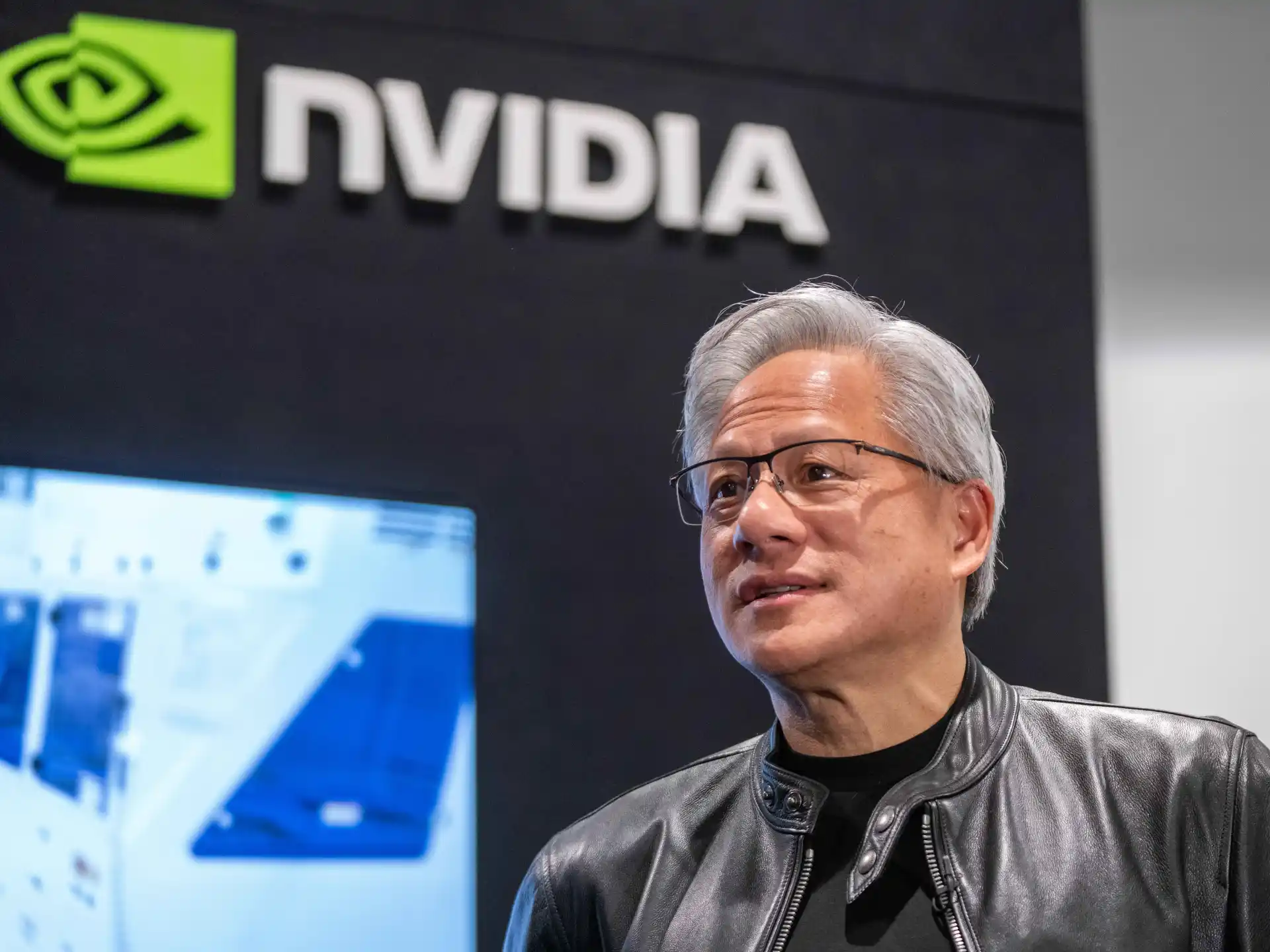
Jensen Huang’s reinstatement as chief executive of Nvidia has sent the chipmaker’s shares sharply higher while prompting questions about the influence of the White House over corporate decision-making.
Donald Trump claimed he played a central role in persuading the company’s board to reverse its decision, less than two weeks after Mr Huang resigned amid allegations about his personal relationships. The episode has raised fresh concerns over the growing reach of Silicon Valley in Washington and the boundaries of presidential intervention in corporate affairs.
Jensen Huang returns to Nvidia
Mr Huang stepped down after reports of extramarital affairs, including an alleged relationship with Alice Huang, who has been accused of being a Chinese spy. Beijing has denied that she is a spy.
Alice Huang previously led Megaspeed, a company that had a business relationship with Nvidia. The board had begun investigating the allegations when Mr Huang resigned, with chief financial officer Colette Kress taking over as interim chief executive while directors searched for a permanent successor.
His departure prompted a backlash among influential figures in Silicon Valley. A petition calling for his return attracted more than 180,000 signatures, including one from Elon Musk, while analysts warned that losing Nvidia’s founder could seriously damage the company’s market value.
Nvidia said its board had concluded that Mr Huang should resume the role.
“The Board believes Jensen is the right person to lead NVIDIA, and that his reinstatement is in the best interests of our stockholders, employees, partners and customers,” said Harvey C Jones, the board’s chairman.
Mr Huang said: “I am honored to return to NVIDIA and lead one of the most consequential technology companies in the world at the beginning of a new industrial revolution.”
Trump’s role raises governance questions
Mr Trump said he had participated in the board meeting and that his intervention had been instrumental in the decision. He indicated that the market reaction to Mr Huang’s resignation had probably influenced his thinking, although he said the long-term benefit of having the founder back in charge mattered more.
The intervention is unusual because decisions over a company’s chief executive are normally taken by its board. Aleksandar Tomic, associate dean for strategy, innovation and technology at Boston College, said it was “unprecedented in the sense that a sitting president has exerted very public pressure on a corporate board to make a particular decision”.
Corporate governance experts have called for greater clarity about the extent of the president’s involvement. Martin Mulyadi, a professor of accounting at Shenandoah University, said a board could accept input from the government but should not allow an outside party to choose a chief executive without explaining the decision to shareholders.
Mr Trump’s intervention comes as parts of his administration take opposing positions on Nvidia’s business practices and dealings with China. The Department of Justice and the Securities and Exchange Commission are continuing to investigate the company.
Treasury Secretary Scott Bessent has questioned whether Nvidia facilitated chip sales to China to strengthen its financial results and has argued that the company should appoint an outsider as chief executive. Commerce Secretary Howard Lutnick, meanwhile, faces allegations that he delayed restrictions on Nvidia’s chip sales to China, prompting Democratic lawmakers to examine whether interests connected to his former firm benefited.
Mr Tomic said the central issue was how much of Nvidia’s revenue came from sales that might not withstand increased scrutiny over export controls. He also questioned whether the company had sufficiently robust internal controls.
Nvidia shares lead a wider market rally
Investors welcomed Mr Huang’s return. Nvidia shares rose by about 31 per cent in early trading and retained much of the gain during the session.
The rally spread across US markets. The Nasdaq 100 climbed by nearly 7 per cent, the Dow Jones Industrial Average rose 3 per cent and the S&P 500 gained 4.7 per cent.
Shares in Nvidia rival Advanced Micro Devices increased by 6.85 per cent, while Microsoft rose 1.65 per cent and Alphabet gained 5.8 per cent. CoreWeave, in which Nvidia holds a 10 per cent stake, climbed 22 per cent.
Nvidia’s importance to markets extends beyond its own share price. As of October, it accounted for 8.1 per cent of the Nasdaq 100 and had investments worth more than $100 billion, including more than $48 billion in shares of eight publicly traded companies.
The board’s reversal has also intensified debate about whether founder-led technology companies can hold powerful executives to account. Mr Tomic said the decision risked reinforcing the view that prominent technology founders were indispensable, making it harder to respond to personal or professional misconduct.
He warned that the episode could bring stronger government scrutiny, particularly as political control of Congress changes, and said the decision might ultimately establish a precedent for greater official involvement in corporate leadership.
