


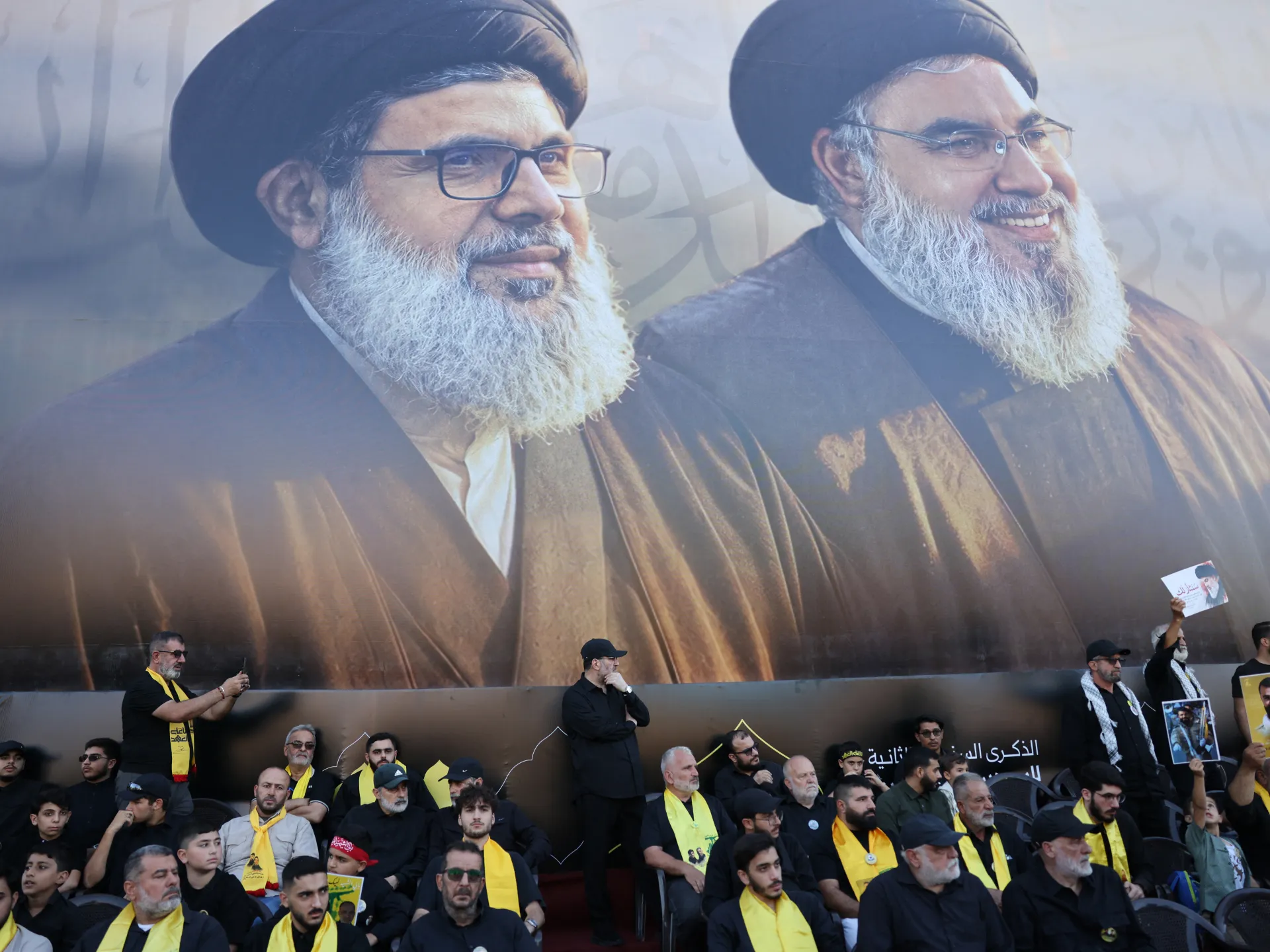
Hezbollah has been left politically weakened in Lebanon after its decision to open a front against Israel in support of Gaza triggered a chain of events that cost it much of its leadership, damaged its standing among supporters and helped reshape the country’s political system, analysts say.
The Iranian-backed group entered the conflict on October 8, 2023, a day after Hamas’s attack on Israel, acting without a cabinet decision or wider governmental agreement. What it presented as a show of strength was followed by Israel’s intensified attacks, the killing of Hezbollah leader Hassan Nasrallah, the invasion of southern Lebanon and the group’s loss of its position as the country’s dominant political and military force.
Before the conflict, Hezbollah was widely regarded as Lebanon’s strongest political and military actor. Its influence extended beyond the country through its alliance with the al-Assad regime in Syria and links with partners in Iraq and Yemen.
Inside Lebanon, the movement had enough electoral influence to help install or bring down governments. It had also used its supporters against opponents, including during protests in Beirut in 2019 calling for reform of the country’s sectarian political system.
In the months before the war, the group’s confidence was visible in a military parade in southern Lebanon and in the erection of tents in the Shebaa Farms, territory Lebanon regards as occupied by Israel. At the same time, Hassan Nasrallah was warning of Israel’s imminent collapse as the country was gripped by protests.
Jad Dilati, a political analyst from Nabatieh in southern Lebanon, said the decision to open what became known locally as the War of Support was taken unilaterally.
“October 7 set in motion a chain of events that Lebanon’s political system was not properly prepared to manage,” he said. “Hezbollah opened its support front for Gaza on October 8 completely unilaterally, without any cabinet decision or governmental consensus or even taking into account the positions of the southern [Lebanese] residents who were most affected and still are most affected by these actions.”
Hezbollah’s political decline after the Lebanon war
For 11 months, Hezbollah and Israel exchanged fire, although Israel carried out more than five attacks for every Hezbollah attack. Tens of thousands of people fled their homes on both sides of the border.
The conflict escalated sharply in September 2024, when nearly 500 people were killed in Lebanon on September 23 alone. Israel then ordered the evacuation of parts of Beirut’s southern suburbs and assassinated Nasrallah, even after he was said by Lebanese officials to have accepted a ceasefire.
“When Nasrallah was amenable to a ceasefire, Israel was on the offensive and wasn’t going to return to the previous status quo,” said Nicholas Blanford, a non-resident senior fellow at the Atlantic Council and the author of a book about Hezbollah.
Israel invaded southern Lebanon in October 2024 and remained there for more than two months after a ceasefire was agreed in November. It continued destroying homes and infrastructure and kept troops at five positions on Lebanese territory. The collapse of the al-Assad regime in Syria in December 2024 also disrupted Hezbollah’s land routes for receiving weapons and funding from Iran.
Over the following 14 months, Israel violated the ceasefire more than 10,000 times, according to the account provided by analysts. Israel intensified its military campaign again in March 2026 after Hezbollah fired rockets in response to the violations and the assassination of Iran’s Supreme Leader Ayatollah Ali Khamenei, whom the group regarded as a religious and political leader.
More than 9,000 people have been killed in Lebanon since 2024 and more than 1.2 million displaced, with entire regions emptied. Israel now occupies large areas of Lebanese territory, extending up to 10 kilometres from the border in some places, while villages and farmland have been reduced to rubble.
The destruction has deepened Lebanon’s economic crisis. The World Bank says the economy contracted by more than 6 per cent in 2026, while the cost of reconstruction, estimated at about 11 billion dollars after the 2024 conflict, is expected to have risen significantly.
A legitimacy crisis among Hezbollah’s supporters
Hezbollah had previously strengthened its support by providing welfare and assistance to its community after wars with Israel, including the 2006 conflict. But since 2024, the Lebanese state and much of the international community have sought to expand their own services, while the government has openly backed efforts to disarm the group under a framework agreement with Israel.
Mr Dilati said Hezbollah was facing a crisis of confidence among the Shia community it has represented for decades.
“Hezbollah is in a legitimacy crisis that it has not faced before,” he said. “I wouldn’t say that there is a rupture in the community or a complete political realignment, but a big part of the communities that supported it for decades are saying that Iran left them behind, the war was fought on their land for someone else’s interests, and that they don’t want wars anymore.”
Analysts said the group remained the most popular representative of Lebanon’s Shia Muslims, despite growing criticism. Mr Blanford said it continued to meet the community’s needs and that there was no political alternative for many Shia voters.
“What is binding them to Hezbollah is the fact that several hundred thousand Shias were booted out of their homes and are living in non-Shia areas where they do not feel particularly welcome, and this can create a sense of vulnerability that naturally makes them gravitate to Hezbollah as communal protection, rightly or wrongly,” he said.
The group also retains fighting capacity, and analysts and foreign diplomats said its weakness had been overstated. However, its future will depend partly on wider regional developments, including the outcome of the US-Israeli war on Iran.
Hezbollah’s weakened position has coincided with the election of Joseph Aoun as president and the formation of a government taking a firmer line against the movement. Mr Blanford said the prospect of a prolonged occupation could further alter attitudes among communities that had lost homes, villages, orchards and farmland.
“The key thing is this looks like a long occupation, and you may get a situation where people who have not only lost their home but lost their village, orchards, banana plantations, tobacco fields and the rest of it may think life was good before and may start blaming Hezbollah,” he said.
