


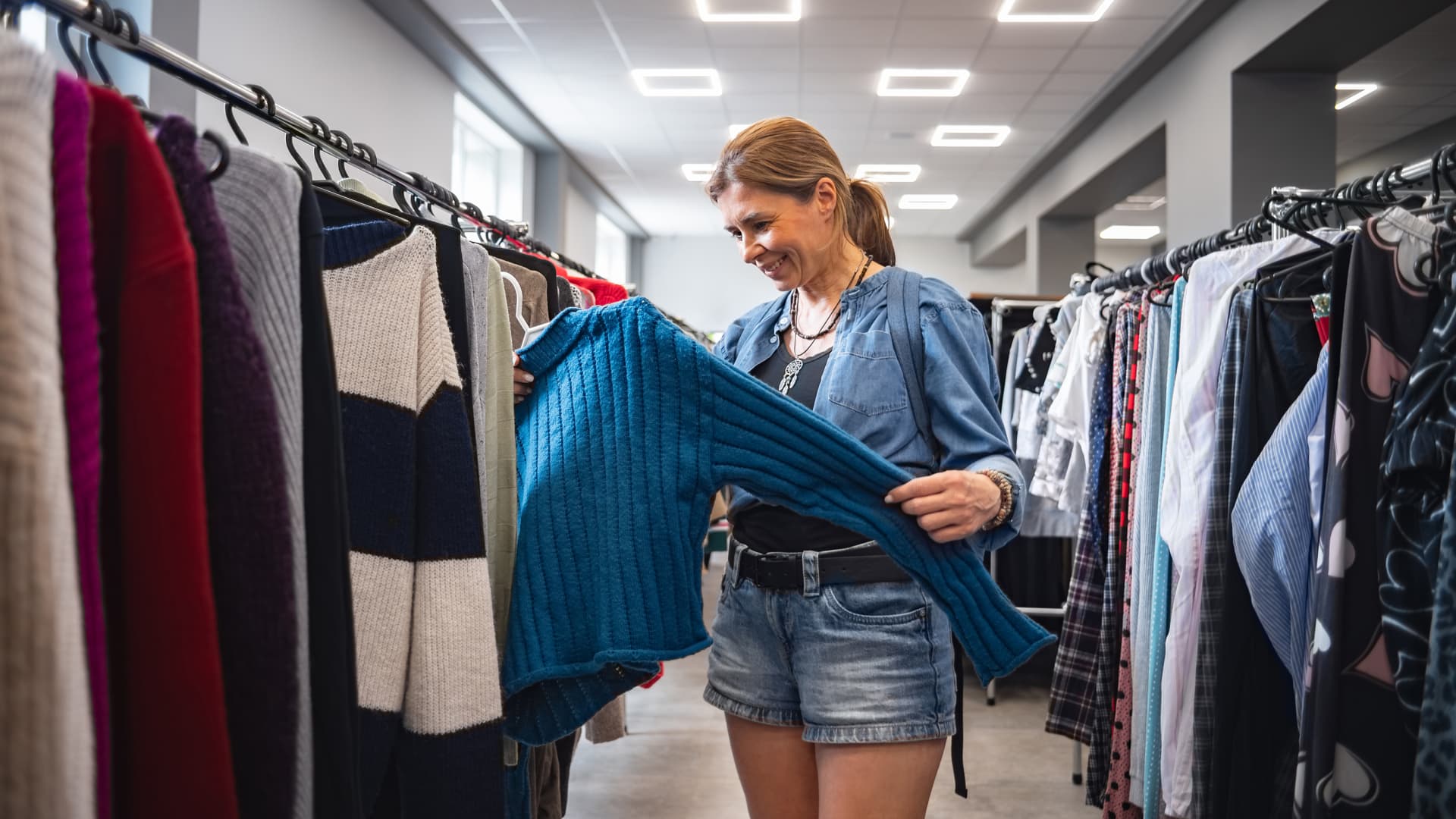
Secondhand shopping is becoming a bigger part of holiday spending as consumers seek value, distinctive gifts and better-quality goods amid the cost-of-living squeeze. Younger shoppers are driving much of the growth, with Generation Z and millennials leading the expansion of the resale market.
The US secondhand clothing market grew by 13% in 2025, almost four times faster than the wider retail clothing market, according to GlobalData. It is expected to approach $80 billion by 2030, with an average annual growth rate of more than 7%.
Generation Z accounted for 40% of the market’s expansion, followed closely by millennials. Katherine Cullen, a global senior retail analyst at EY Parthenon, said thrift shopping offered younger consumers both individuality and the excitement of finding something unusual.
“I think this has been their version of the thrill of the hunt that millennials loved during the recession days,” she said. “It’s a way to really express an individual style, find something unique, something that really fits their own vibe and personality.”
The trend is increasingly extending beyond purchases for oneself. Shoppers are turning to pre-owned clothing, furniture, electronics and books when choosing presents for relatives and friends, with the aim of finding items that match the recipient’s personality.
For Los Angeles resident Vanessa Roberts, that meant buying two antique children’s chairs for her nieces’ play area. The 37-year-old, who has been thrifting for at least 20 years, said about 70% of her gifts this year would come from secondhand shops.
Roberts began looking for presents in September and described the process as a scavenger hunt. She said older thrifted clothing could also offer better quality than some mass-produced items currently available.
“It’s crazy that you can find better quality items at the thrift store right now from 20 years ago versus what you can find at stores right now,” she said.
Secondhand shopping gains value
Persistently high prices and elevated fuel costs have made shoppers more selective, even though holiday spending is expected to exceed $1 trillion for the first time. Some of that increase is linked to inflation.
Consumers are therefore continuing to spend, but are choosing carefully where to pay more. Cullen said secondhand goods had become more attractive because shoppers could combine occasional splurges with a stronger focus on value.
A report by consumer insights firm The Consumer Collective found that 34% of respondents believed secondhand products offered better value than new ones.
Jamie Iannone, chief executive of eBay, said pre-owned goods could carry an appeal beyond their lower prices, particularly when they were rare or vintage.
“I can buy a product that’s used, and it almost has cachet around it,” he said. “Consumers today, they’re able to get these amazing values on products, and it’s seen as very normal to be gifting pre-loved.”
eBay’s October Recommerce Report found that 70% of consumers surveyed worldwide considered secondhand shopping important for managing their budgets. Some 89% said they expected to spend the same amount or more on pre-owned goods next year than they had this year.
Iannone said interest in secondhand shopping during the current holiday season was “much stronger” than last year, adding that it was becoming an established part of consumers’ shopping and gifting routines.
Uniqueness drives resale demand
The appeal is not solely financial. As algorithms increasingly influence what shoppers see, pre-owned markets offer an opportunity to buy items that are less uniform and more personal.
Alon Rotem, chief strategy officer at online thrift marketplace ThredUp, said its holiday research showed that shoppers valued uniqueness almost as highly as price.
“Secondhand is where they’re finding unique items to wear,” he said, describing the shift as a meaningful change in consumer taste. He added that vintage goods were becoming more popular and that “uniqueness has a premium in their minds”.
Major retailers are responding to the interest. Companies including Lululemon, Patagonia and Madewell have begun experimenting with pre-owned goods, while investors are also monitoring the resale sector.
Shares in eBay and Savers Value Village have risen this year, although ThredUp and The RealReal have both fallen over the same period. Cullen said the combination of frugality, the search for distinctive products and the satisfaction of finding a bargain was likely to sustain interest in secondhand shopping.
