


A new systematic review published in JAMA Network Open finds that news outlets and clinical studies report positive effects of psilocybin therapy at nearly the same rate, but reporters often present benefits as established and extend them to conditions with limited trial backing, revealing a gap between public narratives and the scientific evidence.
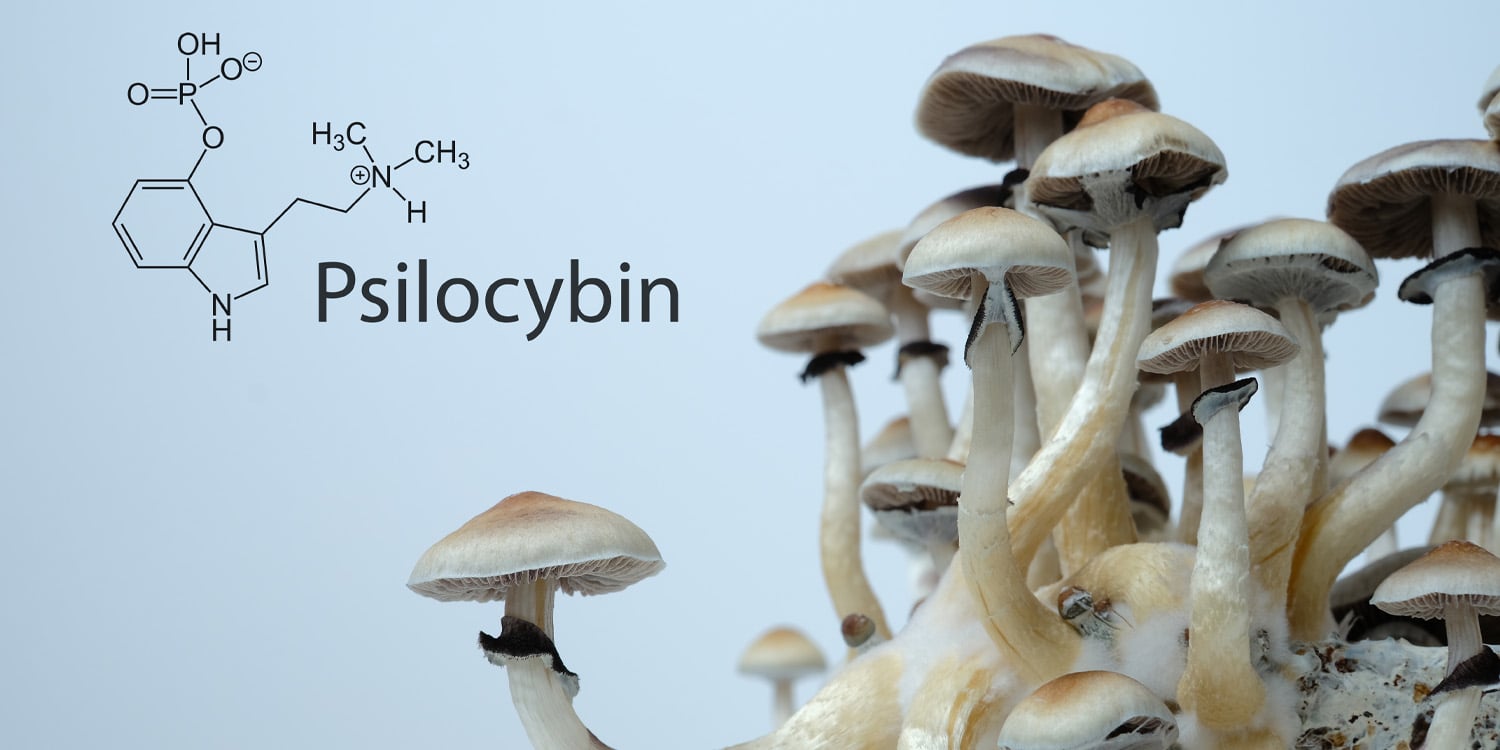
Psilocybin is a naturally occurring psychoactive compound found in hallucinogenic mushrooms. When ingested, the body converts it into psilocin, a chemical that interacts with serotonin receptors in the brain to alter mood and perception. Scientific interest in psychedelics has grown since the 1990s after a long regulatory hiatus, with researchers exploring potential help for mental health and substance use disorders.
Despite this uptick in interest, the clinical evidence remains in its early stages. A 2024 scoping review by many of the same researchers catalogued 193 published and 80 ongoing psilocybin studies, finding that only 12 per cent were randomized clinical trials and most were small, with a median of 22 participants.
A further 2023 systematic review of psychedelic trials found that blinding was either unsuccessful or not checked, likely because the drugs’ conspicuous effects make it hard to conceal who receives the active treatment.
The authors argue that public interest has outpaced the evidence base. Between 2018 and 2021, use of hallucinogens other than LSD among young adults in the United States nearly doubled from 3.4 per cent to 6.6 per cent, and some people use psilocybin off‑label for mental health conditions without regulatory approval. In response, lead author Kim Madden of McMaster University, senior author Anthony Adili, and colleagues set out to compare the tone, safety details and effectiveness claims in news coverage with those in trial publications.
“Psychedelics are having a renaissance, receiving increasing media coverage in recent years,” said Adili, a professor and vice chair of the Department of Surgery and an associate member of the School of Biomedical Engineering at McMaster University, as well as the chief innovation officer, head of orthopedics, and director of the Centre for Health Innovation and Research in Psychedelics at St. Joseph’s Healthcare Hamilton. “While the socialization of these substances is helping facilitate research initiatives, we wanted to investigate how aligned media reporting is with the current published trials.”
To conduct their two‑part review, the researchers updated their earlier scoping work, searching four medical databases for English‑language psilocybin trials on any medical condition from 1 January 2014 to 10 October 2024. They included randomized trials and phase 1 or 2 nonrandomized trials, excluding reviews and recreational use studies.
Separately, they searched the Factiva database for English‑language news articles on clinical uses of psilocybin published from 1 January 2014 to 22 April 2025, extending the media window six months beyond the trial cutoff to capture coverage after study publication. Press releases, stock reports and brief summaries were excluded.
Two reviewers independently screened and extracted data from each eligible trial and news story, with a third resolving disagreements. For trials, they recorded the treated condition, sample size, dosing, whether psychotherapy accompanied the treatment, safety outcomes and the authors’ conclusions about efficacy. Trials were assessed for bias with the Cochrane Risk of Bias tool. For media articles, they noted the target audience, health claims, safety or policy discussions and overall tone—classified as favourable, neutral or skeptical.
The final dataset comprised 70 trial publications and 172 online news articles. Annual counts for both trial publications and media stories rose from 2018 onward, peaking in 2023. Most trials were conducted in the United States and the United Kingdom, while most news articles emanated from the United States and Canada. Nearly all media articles (163, or 95 per cent) targeted the general public, and 115 pieces (67 per cent) referenced at least one published trial.
Of the 70 trial publications, 36 (51 per cent) were randomized, 30 (43 per cent) were nonrandomized experimental studies, and 4 (6 per cent) comprised two nonrandomized crossover studies, a pooled analysis and a secondary analysis. The vast majority described small samples of fewer than 100 participants (65 papers, or 93 per cent), and follow‑up was often short or incompletely reported. About 19 of the 36 randomized trials carried a high or unclear risk of bias in relation to blinding, with concerns also tied to for‑profit funding.
When comparing overall conclusions, trial publications and news stories reported positive outcomes at similar frequencies, though they measure different things: a trial’s main conclusion versus any favourable claim in a news piece. Forty‑nine of the 70 trial publications (70 per cent) concluded that psilocybin benefited patients on the primary outcome, 5 (7 per cent) reported mixed effectiveness, 1 (1 per cent) found no benefit, 4 (6 per cent) were inconclusive and 11 (16 per cent) provided no efficacy conclusion.
In the press, 125 of the 172 media articles (73 per cent) made at least one positive claim about psilocybin’s effectiveness, while 47 (27 per cent) did not. Overall, 122 media articles (71 per cent) adopted a favourable tone—98 (57 per cent) optimistic and 24 (14 per cent) cautiously optimistic—while 45 (26 per cent) were neutral and 5 (3 per cent) skeptical.
Beneath those numbers, the study found stark differences in how evidence was framed. “The most practical significance of this systematic review is that there is a disconnect between media publications and the hard science,” Adili told PsyPost.
While trial authors routinely stressed methodological limitations and the preliminary nature of their work, news articles tended to present benefits as established. Both groups centred on depression, which appeared in 47 trial publications (67 per cent) and was mentioned in 138 media articles (80 per cent). Other conditions trialled included substance use disorders, cancer‑related distress, headaches or migraines, anxiety, bipolar II disorder, body dysmorphic disorder, and single publications on OCD, autism, anorexia nervosa and demoralisation.
In contrast, media coverage frequently linked psilocybin to conditions with little or no trial evidence. Four‑fifths of outlets referenced depression; but 74 articles discussed PTSD and 5 mentioned Alzheimer’s disease or other neurodegenerative conditions, despite no eligible trials testing psilocybin for those conditions. Anxiety was highlighted in 72 articles, with anorexia nervosa or other eating disorders discussed in 18, alongside smaller numbers on OCD, chronic pain and long COVID.
The researchers also noted differences in how treatment context and safety were portrayed. In 51 trial publications (73 per cent), psilocybin was administered with psychotherapy, typically at doses of 25 milligrams or higher. By contrast, 107 media articles (62 per cent) mentioned psychotherapy but 143 (83 per cent) omitted dosing details altogether.
Safety reporting was uneven. Thirty‑one trial publications (44 per cent) described safety outcomes, with 24 (34 per cent) documenting short‑term adverse events such as anxiety, nausea or headaches, and only four (6 per cent) addressing long‑term safety. Media coverage mentioned adverse effects in only 51 articles (30 per cent); when harms were discussed, they focused on psychosis or challenging experiences, with 12 articles (7 per cent) noting potential long‑term risks not clearly tied to trial findings.
“Something surprising to me was how minimally media articles reported on safety,” Adili observed. “Based on the lack of safety reporting, we want audiences to be more aware that media articles may bias positive results without discussing safety concerns. As a result, patients may enter into trials with preconceived notions of the outcomes leading to potential disappointment if their expectations aren’t met.”
Policy themes were also common in the press. Across the 172 articles, 48 (28 per cent) discussed legalising or decriminalising psilocybin for clinical use, and 45 (26 per cent) urged expanded patient access. A further 28 pieces (16 per cent) addressed reducing stigma, while only eight (five per cent) mentioned potential for misuse or abuse. The authors warned that coupling calls for broader legal access with optimistic efficacy claims could raise public expectations beyond what current medical evidence supports.
“We hope that the average person is more critical of overly positive media portrayal of psychedelics and is empowered to do their own research,” Adili said. “When possible, reference the study that the media article references, delve deeper into potential safety concerns, and conduct further research.”
As with all research, there are caveats. The findings focus on communication about psilocybin rather than on the drug’s efficacy; trials remain in early phases, while policy shifts in places such as Oregon and Colorado have moved ahead. The media review was limited to English‑language, text‑based online articles in Factiva, excluding television, radio, podcasts or social media, which may convey different narratives.
On the clinical front, the 70 trial publications include multiple analyses of overlapping trials, conference abstracts and a dissertation, meaning they do not constitute 70 independent experiments. The review relied on each paper’s own conclusions about efficacy rather than applying a formal strength‑of‑evidence grading.
Evaluating media tone and messaging also involves subjectivity; two reviewers coded each article independently, but initial agreement was only moderate, suggesting that another team might classify content differently. The authors recommend larger, high‑quality randomized trials with longer follow‑up and thorough safety reporting, alongside media outlets that avoid sensationalism and clearly explain study limitations and uncertainties.
“At the Centre for Health Innovation and Research in Psychedelics (CHIRP), our next steps are to design and conduct rigorous randomised controlled trials to produce evidence and actionable outcomes that can improve patient care,” Adili added. “Long‑term, we hope to provide novel solutions for patients with few alternate options across subspecialties from gut‑brain health to neurodegenerative disease, chronic pain, and women’s health.”
The study, “Clinical Evidence on Psilocybin and Its Representation in Media Reporting: A Systematic Review,” was authored by Kim Madden, Breanne Flood, Imad Kashir, Rayan Ahmad, Hiba Ali, Rotem Petranker, James MacKillop and Anthony Adili.
