


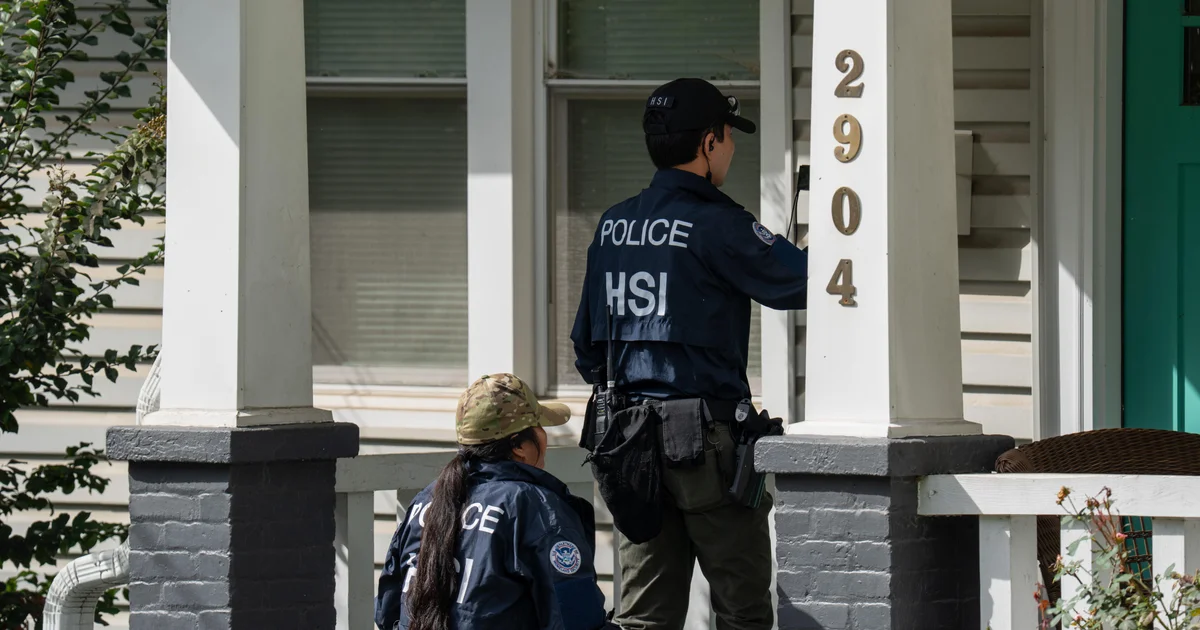
A federal magistrate judge questioned whether prosecutors had established probable cause for at least two offences being investigated when they sought a warrant to search Democratic Minnesota congresswoman Ilhan Omar’s home in Washington DC, newly released court documents show.
The records detail a constitutional dispute between prosecutors and Magistrate Judge Matthew Sharbaugh over the search of the sitting member of Congress’s private residence. The statutes under examination remain redacted, and the documents do not identify any criminal charges.
Prosecutors told the court that the investigation concerned private conduct and had no connection with Omar’s congressional office or legislative work. Judge Sharbaugh nevertheless rejected their assessment of how likely it was that protected congressional material would be kept at her home, writing: “That perspective blinks reality.”
He also required the Justice Department to change the way the warrant would be carried out. Omar was to have an opportunity to identify constitutionally protected legislative material before investigators searched for evidence.
Homeland Security Investigations agents executed the warrant on October 12, after officials applied to search the property on October 2. The authorised seizure included documents, records, photographs, thumb drives, external hard drives, computers and mobile phones “registered or used by” Omar.
The warrant sought material described as the “fruits, contraband, evidence, and instrumentalities” of alleged violations, although the relevant wording is redacted. It referred to alleged conduct involving Omar, identified in the papers by an alternative name, between 1980 and the present.
Before signing the warrant on October 9, the judge received two confidential submissions from federal officials supporting the application. Three days earlier, a judge had ordered the warrant sealed, citing concerns that disclosure could lead to flight from prosecution, interference with evidence, intimidation of potential witnesses and serious damage to the investigation.
A filing by the federal government on October 16 stated: “The United States believes ILHAN has committed [REDACTED] crimes over decades—beginning long before she was ever in Congress.” The alleged offences were not specified.
The 169 pages released by the US District Court for the District of Columbia are heavily redacted. They include exchanges over probable cause, constitutional privilege, the execution of the warrant and whether the records should be made public, while obscuring the allegations, supporting evidence and details of property seized.
US Attorney Jeanine Pirro had asked a judge on Monday not to release the files, arguing they could be required in a future trial. Associate Deputy Attorney General Alessandra P Serano and Ms Pirro’s office had sought to keep the material secret as recently as November 4.
Homeland Security Investigations has jurisdiction over federal offences including immigration document fraud, identity fraud and immigration benefit fraud. Sources cited by WCCO said several immigration issues were being investigated, though the released documents do not set out the specific allegations.
Criminal defence attorney Joe Tamburino described the case as highly unusual, pointing to the involvement of a sitting member of Congress and the possibility that someone could face the loss of their citizenship.
Omar’s office said on October 12 that she had “done nothing wrong” and condemned the raid as an “outrageous abuse of power and an unprecedented escalation in the weaponization of federal law enforcement to target political enemies.”
