


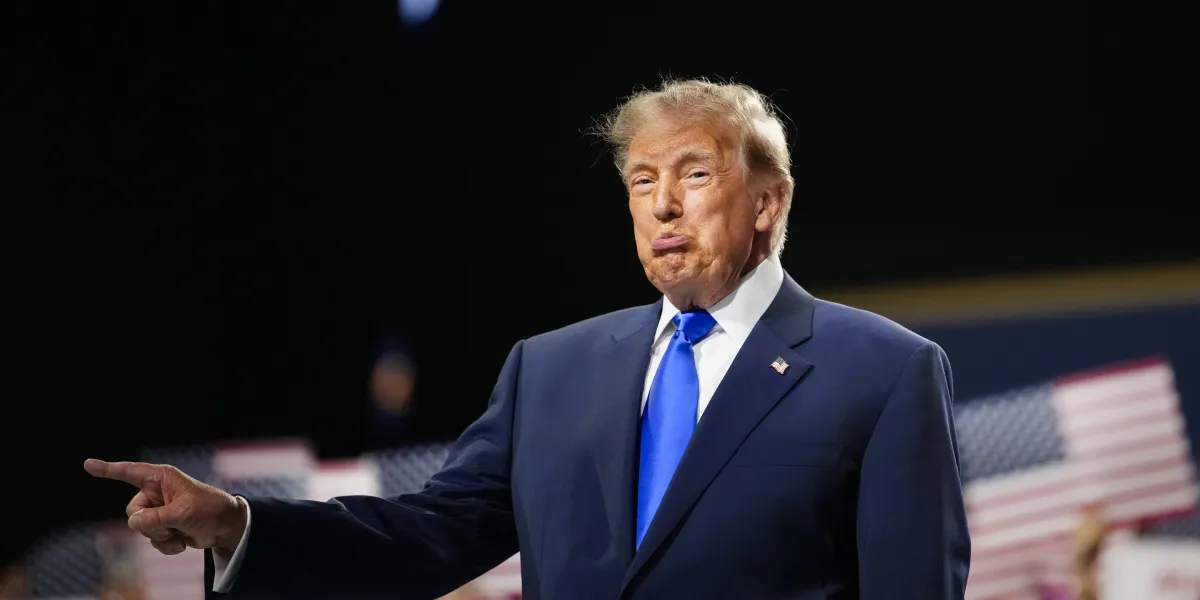
Republican candidates are keeping their distance from Donald Trump’s $5,000 dividend pledge, despite the president repeating the proposal at a rally in battleground North Carolina.
Trump told supporters: “If we win, we’re going to get you $5,000. So that’s it. Very simple.” But the Republican candidates who appeared alongside him did not mention the plan.
The silence comes about a week after Trump unveiled the proposal at the party’s unusual midterm convention in Dallas. There is little evidence that candidates in competitive races have made the payments a central part of their campaigns.
The pledge has rarely featured in television advertising from either Trump’s political operation or Republican candidates. It has generally surfaced only when reporters have asked candidates about it, with most avoiding a firm commitment.
The Republican National Committee has described the proposed payments as part of Trump’s wider economic agenda and said candidates should support them.
“Of course we encourage all Republican candidates to run on his agenda, and that includes efforts to put more money in the pockets of the American people,” said Natalie Baldassarre, an RNC spokesperson.
One exception is Representative Derrick Van Orden, who is seeking re-election in a competitive Wisconsin district and has praised the proposal.
The pledge comes as the economy faces rising interest rates, persistent inflation and increasing fuel costs, with Republicans seeking to retain control of both the House and Senate.
Trump previously said savings from the Department of Government Efficiency and income from import tariffs could fund payments of $2,000 or more, but those plans did not materialise. He has said congressional approval would not be necessary, while House Speaker Mike Johnson indicated that lawmakers would need to act.
The proposed $5,000 payment could cost more than $1 trillion, according to the material, giving Democrats grounds to question whether the plan can be delivered.
“This idea is nothing more than a recycled broken promise that voters know Republicans will never deliver,” said Viet Shelton, a spokesperson for the House Democratic campaign arm.
Republican campaign adverts have instead focused largely on the One Big Beautiful Bill Act, including temporary tax reductions on tips and overtime. Other candidates have concentrated on local concerns or criticism of their opponents.
Doug Heye, a Republican strategist and former RNC communications director, said candidates’ reluctance to embrace the dividend was unsurprising.
“It’s a dumb idea,” Mr Heye said. “There’s no way to pay for it and it would spike inflation.”
