


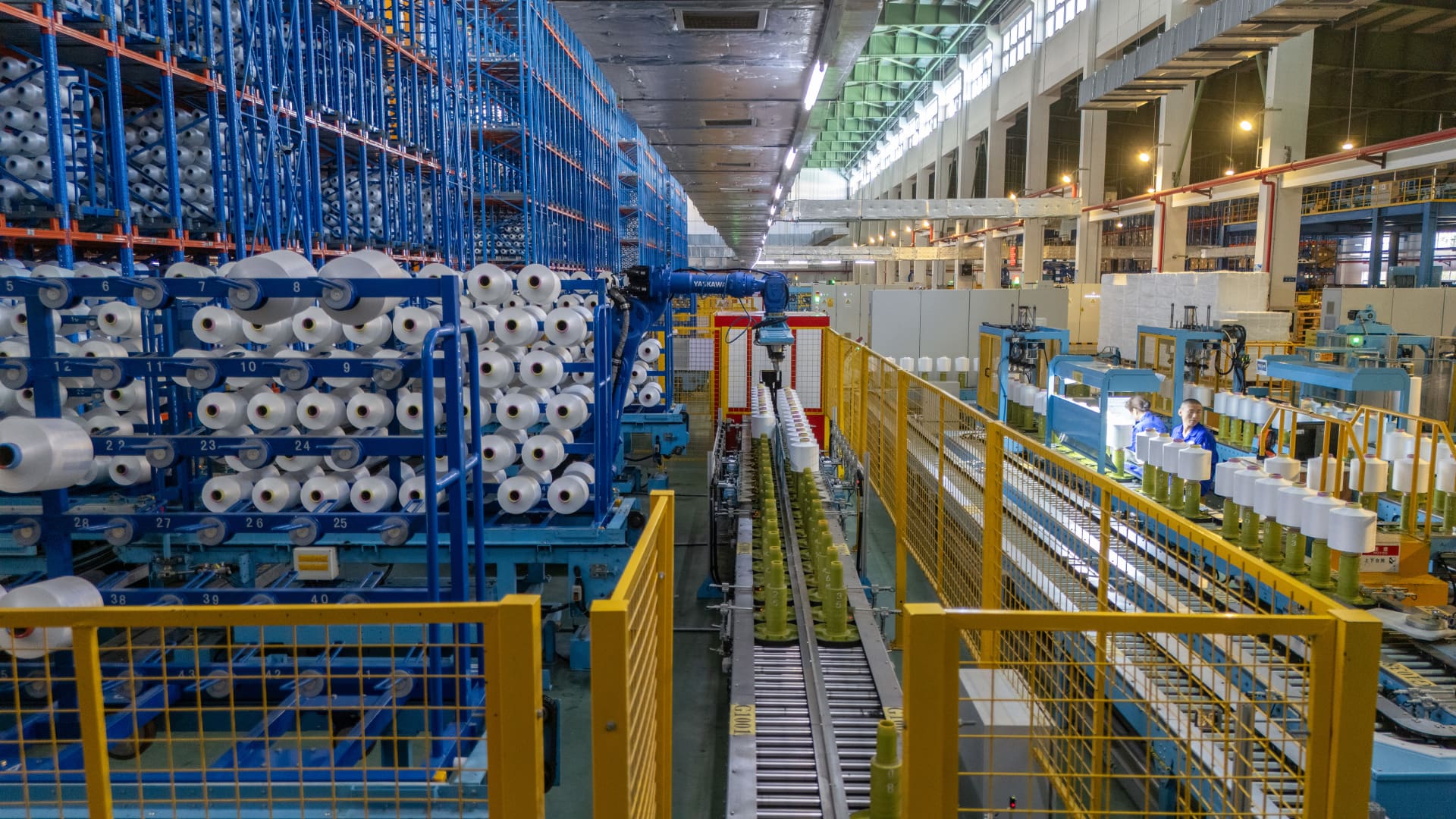
Clothing prices have risen sharply since the pandemic even as the materials used in many garments have shifted towards cheaper synthetic fibres, prompting shoppers to scrutinise quality more closely.
Apparel imported into the US was predominantly cotton in about 60% of cases in 2010. That share has since fallen to around 45%, with polyester and nylon now making up the majority of imports.
At the same time, clothing prices declined for much of the two decades before Covid-19 but have climbed to record highs since 2020. Consumers facing higher costs for food, fuel, rent and other essentials are increasingly questioning whether garments offer value for money.
A 2026 Consumer Sentiment Index by consulting firm AlixPartners, based on responses from more than 9,000 shoppers, found that consumers were examining labels more closely and rejecting cheap materials sold at premium prices.
“If it’s not a natural material, a retailer brand who passes it off as it is, they’re really becoming very low on consumers’ minds,” said Sonia Lapinsky, the firm’s head of fashion.
The shift towards polyester
The rise of fast fashion and ultra-fast fashion helped drive demand for inexpensive synthetic fabrics. Brands including Forever 21 and H&M expanded rapidly in the 2000s and 2010s, followed by companies such as Shein and Fashion Nova, which brought new designs to market more quickly and at lower prices.
Janine Stichter, a consumer analyst at US Bancorp BTIG, said shoppers had begun to place greater emphasis on quality over the past three or four years than they had in the previous decade or two.
Import data shows that synthetic garments remain cheaper than cotton ones. Between January and August 2026, the average import price for apparel made predominantly from synthetic fibres was $2.64 per square metre, compared with $3.67 for clothing made largely from cotton.
However, synthetic apparel import costs have risen by about 11% since 2010, while cotton clothing costs have increased by 21%. Polyester also has practical benefits, including helping garments retain their shape and wick away sweat.
The growth of athleisure has been one factor behind the increased use of polyester. Sports apparel in the US grew at an annual rate of 4.9% between 2015 and 2025, compared with 2.6% for apparel and footwear overall, according to Euromonitor data.
Ms Stichter said the trend towards sportswear and a possible decline in quality had become intertwined. But criticism of synthetic materials is growing, with the word “polyester” even being used by Gen Z as an insult for something considered fake or poor quality.
Environmental and health concerns have also increased around petroleum-based clothing, including research indicating that microplastics can leach from polyester garments during washing.
Supply chain pressures
Clothing companies faced higher costs after the pandemic as demand outstripped supply, while tariffs and the Iran war added further pressure. Petroleum is used to make many synthetic fibres, and oil prices have risen since the start of the conflict.
Ms Stichter said companies had moved production and redesigned supply chains after Covid-19, sometimes reducing costs by using less expensive fabrics.
The changes have coincided with a shift away from manufacturing in China. Sheng Lu, a fashion and apparel studies professor at the University of Delaware, said China’s established clothing industry had more highly skilled workers, advanced equipment and stronger materials management than emerging manufacturing destinations including Bangladesh, Sri Lanka and Cambodia.
Those countries largely serve value and mass-market customers, he said, and were not yet as prepared to produce higher-quality luxury and premium goods.
Manufacturers in lower-cost locations may still need to import raw materials from China, extending production times. Retailers must then commit to designs earlier and may be forced to discount garments if demand falls short.
“If you have to mark down that product because the consumer doesn’t want it as much, your net margin might actually be worse than if you were to just invest in quality in the first place,” Ms Stichter said.
Natural materials gain ground
Brands that have prioritised materials such as cotton, wool, silk and cashmere are benefiting from the change in consumer attitudes.
Ralph Lauren’s share price has risen by about 85% over the past two years. Around 90% of its apparel is primarily made from cotton, leather, wool, viscose, cashmere or silk, and the company said it sold more products at full price while reducing markdowns in its 2026 financial year.
Direct-to-consumer brand Quince, whose identity is centred on natural materials, reached a $10 billion valuation this year. Organic cotton retailer Pact also climbed 20 places to eighth in ThredUp’s 2025 ranking for best resale value, while Quince rose 16 places to third.
By contrast, Shein and Zara each fell three places in AlixPartners’ 2026 consumer sentiment ranking for the young adult speciality category, to fifth and seventh respectively.
Shein passed higher tariff costs on to shoppers in 2025 and attributed a sales slowdown to the resulting price increases. Its share of US apparel, accessories and footwear card spending fell year on year in the fourth quarter of 2025 and the first two quarters of 2026, according to Consumer Edge.
Zara has continued to increase sales and profits despite the fall in its sentiment ranking. Ms Lapinsky said the worsening consumer view of some brands could nevertheless prove a leading indicator of what is to come in the quarters ahead and into 2027.
