


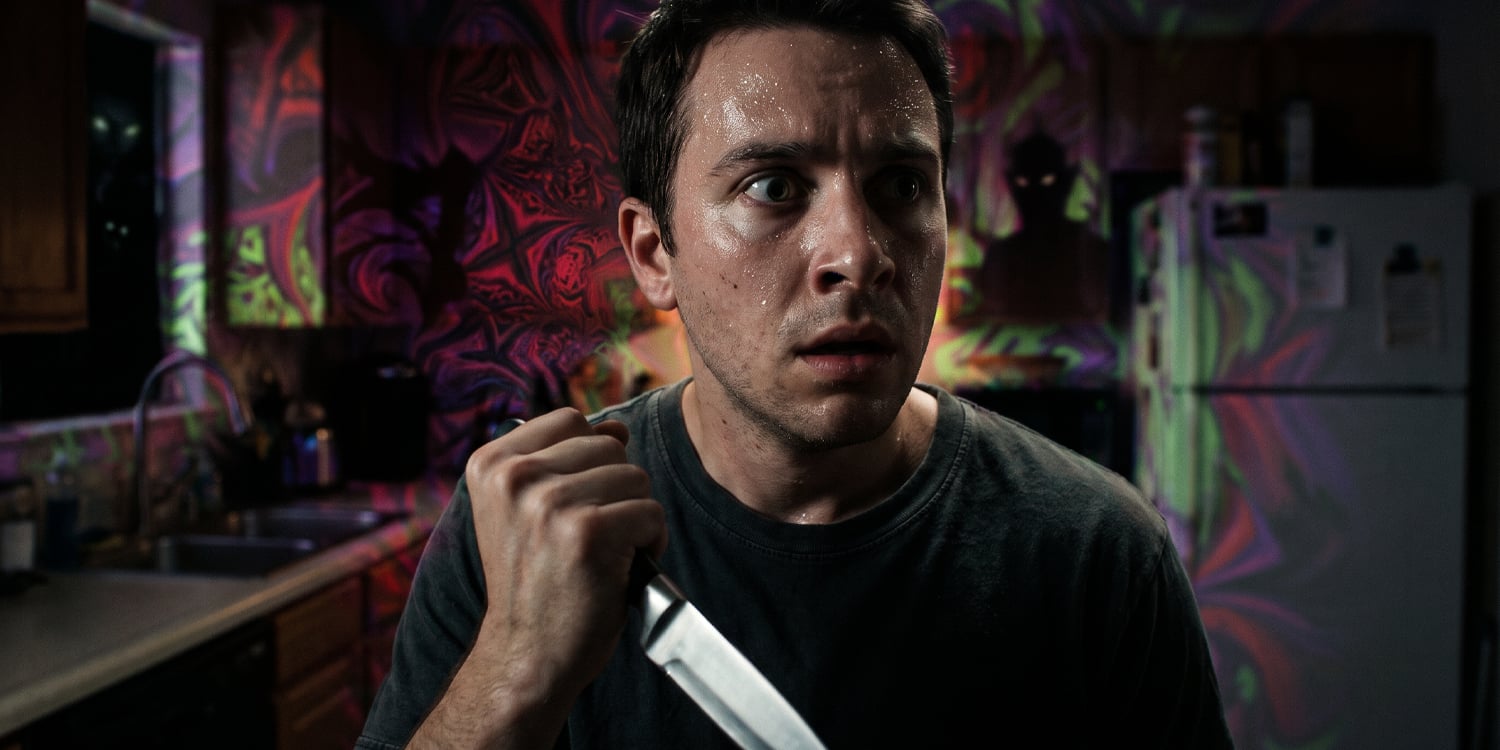
A pair of international studies into rare killings carried out under the influence of psychedelic drugs has found that sudden breaks with reality and delusions of imminent danger frequently drive these offences. The research, led by Jesse J. Norris of the State University of New York at Fredonia, uses a shared database to examine more than 600 homicide cases and 22 offender profiles to understand how psychedelic-induced psychosis may shape violent crime.
The broader descriptive study analysed 626 homicide events across 33 countries, with around 86 per cent of cases occurring in the United States or Canada. The majority involved LSD (about 88 per cent), with psilocybin present in about 11 per cent, and more than half involved concurrent use of non-psychedelic drugs such as alcohol or cannabis. Delusions were identified in 177 cases (28.3 per cent) and appear to be a rising feature since 2011, increasing from about two reported cases per year between 1966 and 2010 to 5.9 per year from 2011 to 2025.
Among the 129 cases where delusions were explicitly described, religious themes were unusually common, spanning roughly 45 per cent of delusional offenders across several categories. About 23 per cent involved perceived threats from demons or the devil, around 9 per cent included beliefs about communicating with God, and about 6 per cent involved offenders claiming to be God or an angel.
“I was surprised at how many psychedelic-intoxicated homicide offenders were experiencing vivid supernatural delusions that motivated their offenses,” Norris said. “Compared to other forms of psychosis, supernatural delusions might be more common in psychedelic-associated psychosis.”
Outside religious themes, around 20 per cent of specified cases centred on secular persecutory delusions that others were plotting against or attacking the user. In terms of motive, countering an imagined threat accounted for about half of the specified cases (52 per cent), while smaller shares involved obeying hallucinated commands to kill (9 per cent) or attempting to “wake up” into normal reality.
Offenders who exhibited delusions were more than twice as likely to kill an intimate partner and nearly twice as likely to kill a friend or a parent; parents accounted for 8.4 per cent of victims versus about 2 per cent of victims overall. Psilocybin-intoxicated offenders were disproportionately represented in recent years and were roughly twice as likely to display delusions as users of other psychedelics, a pattern Norris attributes to a possible trend towards very large mushroom doses. Conversely, those who committed robbery or sexual assault alongside the killing were far less likely to report delusions.
Conversely, those who combined psychedelics with alcohol, cannabis or other drugs were about one third less likely to exhibit delusions than those taking psychedelics alone—possibly because solo users take higher doses while mixed-drug cases often involve impulsivity fueled by alcohol. About 14 per cent of cases involved “overkill” and 15 per cent involved amnesia, though the link between delusions and overkill was not statistically significant, and the amnesia difference did not reach statistical significance.
Delusions and trajectories in psychedelic-induced homicides
To explore how individual cases unfold in court, Norris partnered with Dr Brian Holoyda, a psychiatrist in California and an adjunct professor in Wisconsin, to profile 22 diverse offenders from the United States, Canada, Australia and the United Kingdom drawn from the same database. The researchers started with 71 well-documented homicide cases where psychedelics likely played a direct role, narrowing to 22 profiles to illuminate clinical features and sentencing.
Several offenders had previously experienced psychedelic-induced psychosis, including a Canadian teenager who, after taking large psilocybin doses, imagined his father turning into a werewolf. In at least four, and perhaps as many as six, offenders had prior episodes of psychedelic-associated psychosis yet used psychedelics again. Norris stressed that while other explanations are possible, the circumstances of many cases strongly suggest psychedelic use triggered the offending behavior.
The profiles also illustrated “delusions of unreality”—the fixed belief that reality is a dream or game—and in one British teenager on a synthetic psychedelic the belief that stabbing his friend would wake him into normal reality. Norris noted that some offenders appeared genuinely surprised to learn that their murders were real.
The 22-cases included offences occurring in isolated locations such as campsites and hiking trails, often where outside intervention was unlikely. Six cases involved alcohol or other non-psychedelic drugs, showing how sleep deprivation or stimulant effects can complicate causal judgments. In many instances, accessible weapons or vehicles heightened the risk.
Sentence lengths across the 22 profiles varied widely, from two years of juvenile probation to life imprisonment and even a death sentence in California. On average, sentences were about 26.4 years in the United States, 13 years in Australia and 6.9 years in Canada, though Norris cautioned that the sample is small and not representative, and sentencing is heavily influenced by jurisdictional rules, including the treatment of voluntary intoxication and the availability of different legal regimes for automatism and psychosis.
Among those with prior psychedelic-related psychotic episodes, sentences tended to be longer (an average of 25.4 years) than those without, though the small sample limits firm conclusions about international patterns.
In addition to the varied legal outcomes, the research noted notable differences in how countries treat intoxication and criminal responsibility. The authors acknowledge that more data, including medical records and emergency room information, would help clarify who is most vulnerable to violent delusions and how to respond effectively in clinical and legal settings.
“We are not advocating a particular policy position,” Norris asserted. “We just think these cases are important to document so that people have a more complete understanding of the effects of psychedelics on people’s behaviour. Even if some homicides can be attributed to psychedelic use, that does not necessarily mean authorities should maintain the drugs’ illegal status or enforcements should be tougher. Policymakers and the public should be aware of these tragedies and weigh them alongside potential harms and benefits.”
The researchers emphasise practical harm-reduction steps, such as avoiding isolated wilderness settings where bystanders cannot intervene and ensuring psychiatric follow-up if delusions persist after a drug wears off. They also urge users and those around them to minimise risk by moderating doses, avoiding weapon access and refraining from driving while on psychedelics. If psychotic symptoms develop, immediate psychiatric help may be crucial to prevent violence. They also warn that individuals with a history of delusions, drug-related or otherwise, should abstain from psychedelic use due to the risk of recurrence.
The two studies, “The Role of Delusions in Homicides by Psychedelic-Intoxicated Offenders: A Mixed-Method Analysis” and “Homicides associated with psychedelic use: Psychiatric features, risk factors and sentencing outcomes,” were authored by Jesse J. Norris, with the latter co-authored by Norris and Brian Holoyda.
