


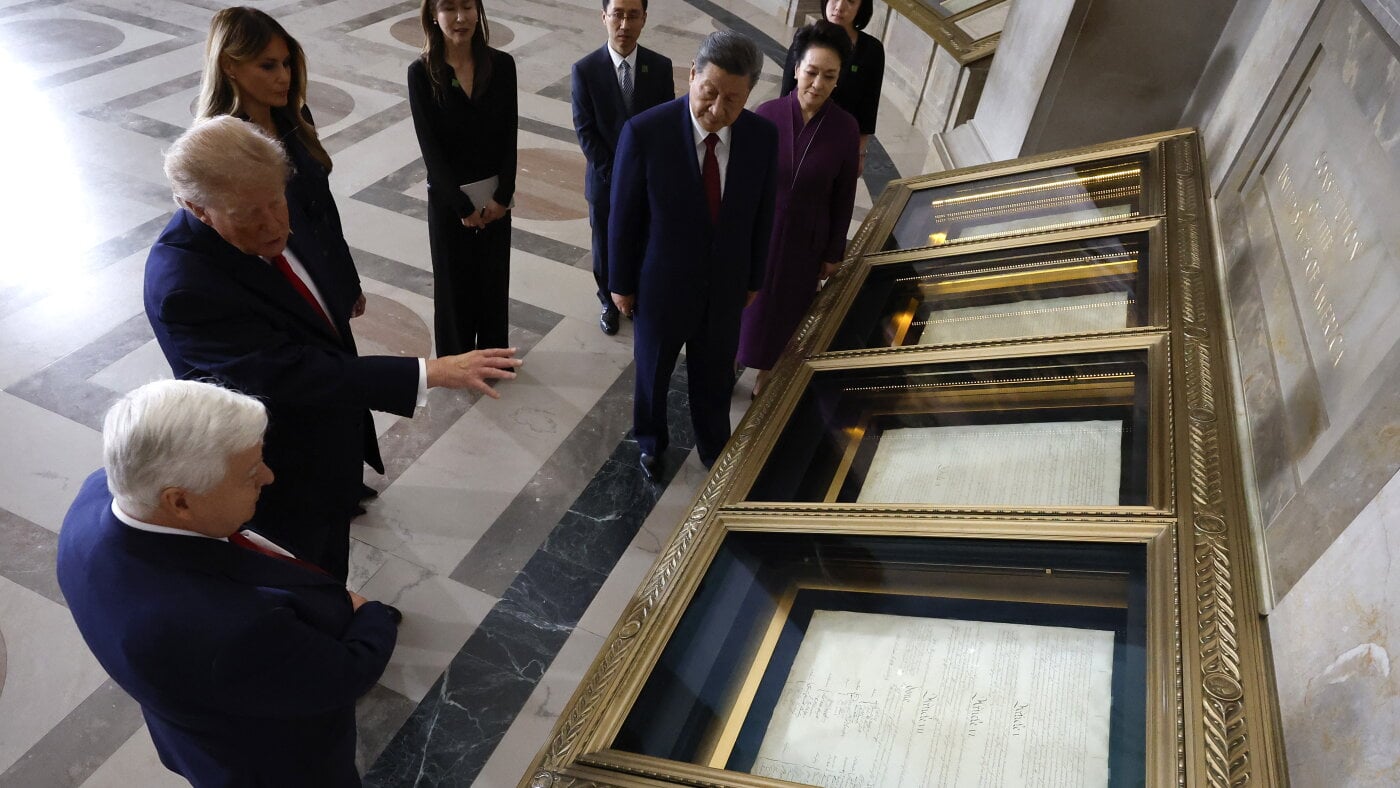
A planned display of the Treaty of San Francisco was removed from the US National Archives shortly before Donald Trump and Chinese leader Xi Jinping toured the museum, after Chinese officials objected to the document’s inclusion, according to people familiar with the arrangements.
The treaty, signed by the United States and Japan in 1951 but not China, formally ended hostilities between Japan and the Allied Powers after the Second World War. It also left Taiwan’s political status undetermined and did not state that the island belonged to Beijing.
A long table had been prepared in the museum’s main foyer with a brick from the Great Wall of China and an elaborate 19th-century scroll sent by a Qing emperor. The display was taken away in a last-minute change, a Chinese diplomat said, speaking anonymously because they were not authorised to comment publicly.
Chinese officials were angered by the planned inclusion of the Treaty of San Francisco because China was not a signatory, according to the diplomat and two other people familiar with the matter.
“It is a point of contention for the Chinese because they were not signatories to the Treaty of San Francisco, and they do not like the fact that the treaty of SF leaves undetermined Taiwan’s political status,” said Ryan Hass, a Taiwan and China expert at the Brookings Institution.
Other documents central to the US position on Taiwan, including the Six Assurances and the Three Communiques, were also discussed during the planning of the visit but were ultimately not displayed.
The episode underlined the sensitivity of Taiwan in the relationship between Washington and Beijing. It also pointed to concerns within the US government that Xi might seek to alter America’s official stance on the island during a state visit in which Trump gave his Chinese counterpart a warm reception.
Taiwan has its own government and military, while Beijing wants eventually to bring the democratic island under its control and opposes any formal declaration of independence. The US has no formal diplomatic relations with Taiwan and no commitment to defend it if China attacks, but American legislation and diplomatic statements make it the island’s main security guarantor.
Chinese embassy officials learned about the proposed list of documents on Thursday, during Xi’s visit to Washington, according to two Chinese diplomats. About 90 minutes before the leaders arrived at the National Archives, they were still unsure whether the Treaty of San Francisco would be shown.
Beijing has intensified its criticism of the treaty since late last year and does not recognise it. US diplomats said China had privately asked other countries to regard the document as illegal because neither the government of China nor Taiwan signed it.
China instead points to the Cairo and Potsdam declarations, in which US leaders supported the removal of Japanese territories and their restoration to Chinese sovereignty under the Republic of China, the name now used by Taiwan’s government.
When Trump and Xi arrived, the foyer had been cleared and the two leaders viewed original copies of the Declaration of Independence, the Constitution and the Bill of Rights. An administration official said they had seen “important, historic documents that set the foundation for 250 years of American greatness”.
The official said the visit had allowed the leaders to discuss the history of the United States and China and had concluded a “very productive state visit”. The Chinese embassy in Washington did not respond to a request for comment.
Hass said the Archives visit was intended to reciprocate Xi’s hospitality when Trump visited Beijing, including a tour of the Temple of Heaven and the gardens at the central leadership compound. He said the symbolism conveyed “the parameters of limits in which President Trump operates”.
Xi praised the “founding spirit” of 250 years of US history during the tour. Trump replied: “Ours goes 250 years, which is great, and we’re proud of it, but theirs goes 6,000 years.”
