


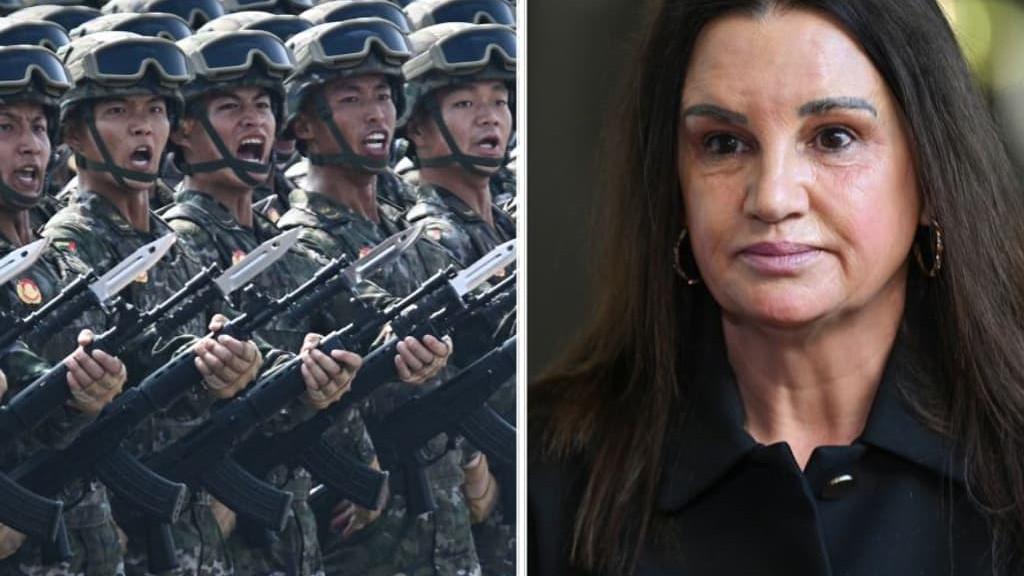
Australia faces “some very big decisions in the next 12 months” over whether it would help Taiwan in the event of a Chinese attack, independent senator Jacqui Lambie has warned.
Speaking on the ABC’s Insiders programme, Senator Lambie said Australia would need to decide whether to intervene, remain on the sidelines or conclude that it could not become involved.
“We’ve already heard from Xi Jinping that he intends to take Taiwan next year – what does that look like?” she said.
“Do we go in and help Taiwan if that happens? Or do we not? Or we sit back and we just have to say we can’t get involved? So there is a lot of things in play here right now.”
Her comments followed a declaration by Chinese President Xi Jinping that the Taiwan question was an “unwavering historical mission” for the Chinese Communist Party.
“The tide of history cannot be stopped,” Mr Xi said. “The complete reunification of the motherland must be realised, and it will certainly be realised.”
Military drills raise tensions around Taiwan
China recently staged military exercises around Taiwan without announcing them in advance, using warships to encircle the island while dozens of military aircraft operated nearby.
Beijing has increased the frequency of military drills around Taiwan in recent years, but the latest exercises were unusually secretive and extended across a wider area of the Western Pacific.
A conflict in the Taiwan Strait would threaten trade routes used by Australia to transport iron ore, coal and gas. It would also disrupt Taiwan’s semiconductor production and cause significant damage to China’s economy, with wider consequences for the global economy.
Foreign ministers from the world’s seven largest economies condemned the exercises, saying they threatened regional stability, freedom of navigation and the safety of international shipping.
They said they opposed “any unilateral attempts to change the status quo, particularly by force or coercion, or the threat thereof”.
Australia and the Philippines to deepen defence ties
The tensions come as Australian Prime Minister Anthony Albanese prepares to sign a new defence pact with the Philippines, which has also faced increased Chinese military activity linked to territorial disputes.
Opposition defence spokesman James Paterson said closer military relations with Manila were in Australia’s national interest.
“We’re both living in a contested region of the world, and Australia working more closely with the Philippines to help deter conflict in our region is a good thing,” he told News24’s Sunday Agenda.
Mr Paterson said Chinese coastguard and maritime militia vessels had harassed Philippine fishing and naval vessels in recent years.
“I think it’s really important that Australia stands shoulder to shoulder with the Philippines to resist that aggression, which is contrary to international law and which is dangerous and destabilising for the region,” he said.
Australia’s defence relationship with the Philippines has expanded as China has asserted its claims over areas within the Philippines’ exclusive economic zone. Those claims are not internationally recognised, while China has continued to build artificial islands and clash with Philippine navy vessels.
