


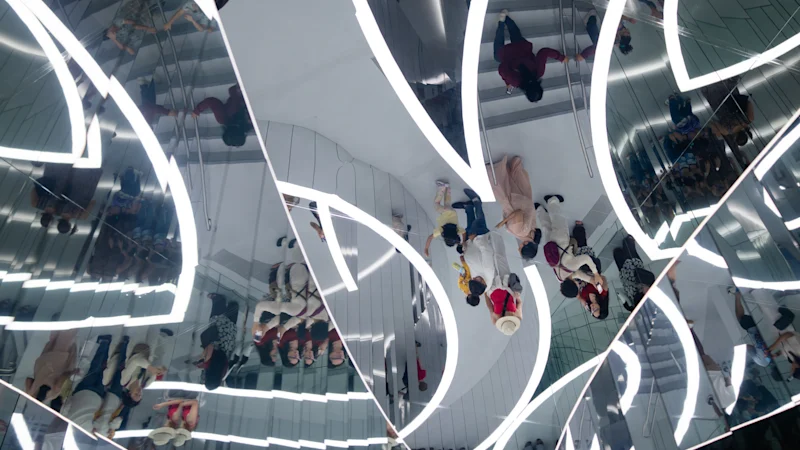
Taxpayers provided up to $200 million to complete and prepare the $1 billion Powerhouse Parramatta museum for its opening, while uncertainty over the institution’s leadership is expected to continue beyond Christmas.
The scale of public spending was disclosed in annual reports for New South Wales’ major cultural institutions, tabled in parliament this week. The figures cover the 2025–26 financial year and include preparations for five major exhibitions and the museum’s operational readiness.
The Powerhouse received almost twice the previous year’s government contribution of $104 million. Its funding was also around three times that of the Art Gallery of NSW, which received $64.6 million, and more than double the Australian Museum’s $74.5 million.
The Parramatta museum opened on November 6, with an ABC Day attracting 10,000 visitors. The total cost of its five major exhibitions is not included in the $200 million figure and will appear in a later reporting period.
The institution said the funding had supported “the substantial completion of five major exhibitions for the opening of Powerhouse Parramatta, alongside operational readiness activities required to prepare the new museum for public opening”.
Powerhouse leadership uncertainty
The opening has come as chief executive Lisa Havilah remains stood aside, 72 days after the launch, pending a formal misconduct inquiry into governance and procurement issues.
A report by probity firm Lander & Rogers has yet to be delivered, making it unlikely that the matter will be resolved before Christmas.
The museum’s contract with marketing company KI Community, which is at the centre of the inquiry, ended on November 9. A spokesperson said it ended “upon completion of the agreed scope of work” and that the company was “no longer providing services under the contract, and no payments will be made for services beyond that date”.
Newly disclosed contracts included more than $3 million in previously unreported payments. They included $323,500 to relocate, maintain and display the historic Catalina flying boat at a south coast aviation museum while the Ultimo Powerhouse undergoes a $300 million rebuild.
The aircraft is due to be installed at the Ultimo site alongside the Boulton and Watt steam engine and Locomotive No.1 when the building reopens.
The museum also paid a New Delhi arts and entertainment company $350,000 to programme and promote a one-day launch event for the Jaipur Literature Festival in Sydney. The main Sydney spin-off event is scheduled to run over two days next August.
British artist Es Devlin’s company received $350,000 for creative direction, design development, exhibition delivery and promotional support for The Turning, one of the five free exhibitions at Parramatta.
The Powerhouse recorded a notional surplus of $52 million for the year, largely because construction delays at Ultimo left grant money unspent. It also recorded $206 million in government contributions for the western Sydney cultural institution.
With the Ultimo building closed and only the Sydney Observatory and Castle Hill storage depot operating, self-generated income fell to $1 million, against a budget of $26 million from shop sales and ticketed exhibitions. The shortfall was attributed to delays in opening Parramatta.
The annual report lists 12 senior executives, including Ms Havilah on $427,435, the chief financial officer on $353,000 and 10 departmental directors earning an average of about $260,000 a year.
Elsewhere in Sydney, the Art Gallery of NSW recorded its highest annual attendance, with 2.68 million visitors — a 13 per cent rise on the previous year and more than the National Gallery of Victoria’s 2.45 million across its Melbourne sites. The Australian Museum recorded 1.3 million visitors.
The gallery’s attendance included more than 620,000 visitors to The Key’s Under the Mat. However, it cut 45 jobs, about 11 per cent of its 385 full-time equivalent positions, to address a $7.5 million budget shortfall.
It received $76 million in government operating and capital funding and raised $23 million in ticket sales, functions and other income, below its $36 million target. Overall ticket sales fell by 7 per cent year on year.
