


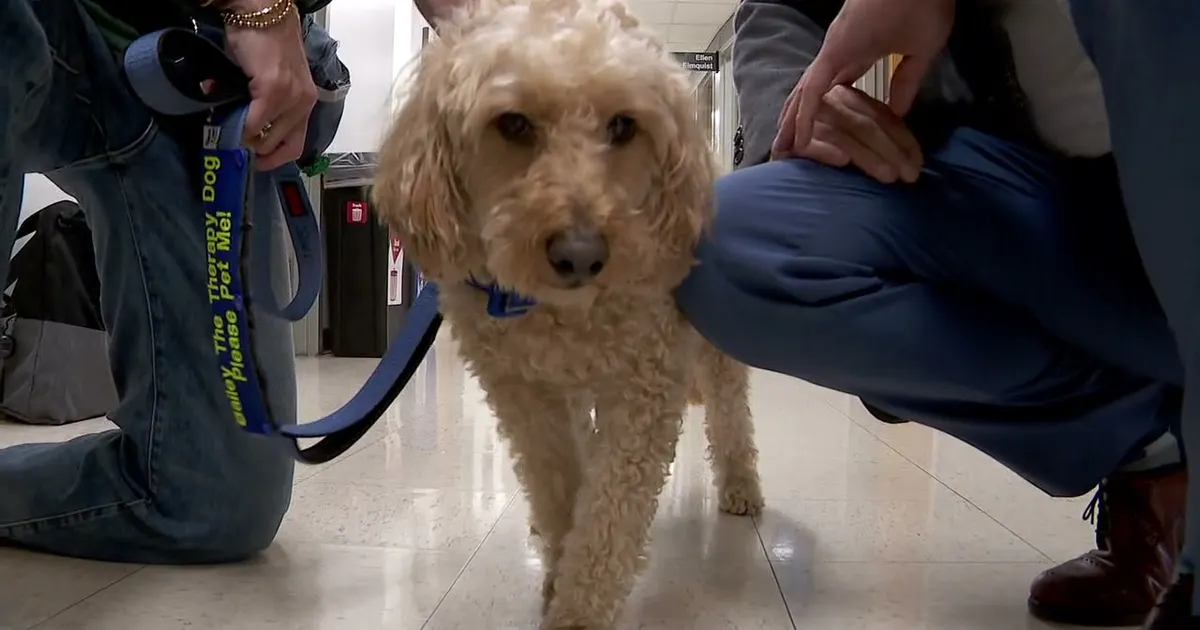
A therapy dog is helping ease stress and anxiety for pupils at Mounds View High School in Minnesota, where Bailey visits the classroom regularly with volunteers from the non-profit organisation You’re Not Alone.
The dog’s arrival has become a welcome break in the school day. Students gather around Bailey, who they say can lift their mood and help them feel calmer before returning to lessons.
Cheryl Jass volunteers with the programme and brings Bailey into classrooms once a week. She began after experiencing the dog’s comforting effect during her own health struggles.
“You can talk to a dog, they’ll listen, they’re no judgment. They just want to be loved and love you,” Jass said.
She said the visits are intended to help pupils manage anxiety and remain in school. Nurses have told her that anxiety can sometimes appear as a stomachache, while stroking Bailey can help some students settle and return to class.
Students at Mounds View said the visits made a noticeable difference to their day. One pupil said Bailey “honestly makes my day a lot better” and helped to calm them down.
Another student, speaking about their own anxiety and depression, said having a dog at school “just kind of brightens your day”.
Therapy dog programme expands across schools
Rob Reetz, principal of Mounds View High School, said pupils carried considerable pressure as they thought about university and their prospects after leaving school.
“They don’t always have to carry that,” he said, adding that the weekly visits were also a positive way for staff to begin their day.
You’re Not Alone was founded by Amy Walz, who established the non-profit after her family experienced a mental health crisis involving her 11-year-old son in 2007.
The organisation now sends certified therapy dogs and volunteer owners into 72 schools across three states. Around 30 more schools in Minnesota are on its waiting list.
Walz said the volunteers did not arrive as figures of authority, but as caring members of the community. “We go by our first names because we don’t want to be the authority in the school. They have enough of that,” she said.
She said the programme aimed to create an accepting, non-judgemental space through “unconditional love” for pupils and staff.
