


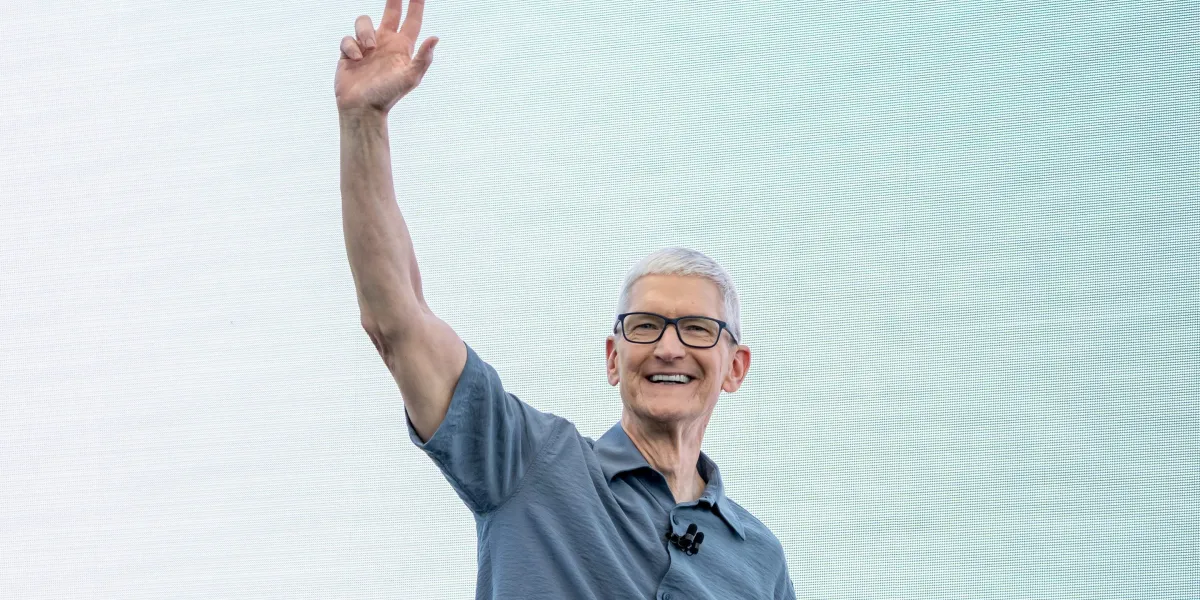
Tim Cook’s transformation as Apple CEO has taken him from an “under-the-radar” operations specialist to a visionary leader who established his own direction for the company after Steve Jobs.
When Cook was first identified as a possible successor in 2008, he rejected the idea that he could replace Jobs, saying: “Come on, replace Steve? No. He’s irreplaceable.”
At the time, Cook was viewed by outsiders as a “genius” and an “operations whiz”, but also as something of a “blank slate”. His low-profile approach contrasted sharply with Jobs’s prominent and forceful public persona.
Jobs stepped down as Apple chief executive in 2011 and died soon afterwards. By the following year, Cook had been in the role for six months and was described as being “in complete control”.
He continued to pay tribute to Jobs’s legacy while making clear that Apple would not simply remain fixed in its founder’s image. Cook “doesn’t apologize for charting a new course”, according to the assessment at the time.
Tim Cook’s leadership of Apple
By 2015, Apple had become richer and bigger under Cook, with more expansive ambitions. One Apple executive summed up his approach by saying: “He never tried to be Steve. He tried to always be himself.”
Cook’s calm pragmatism set him apart from his formidable and combustible predecessor, but his time leading Apple had established him as a visionary in his own right.
