


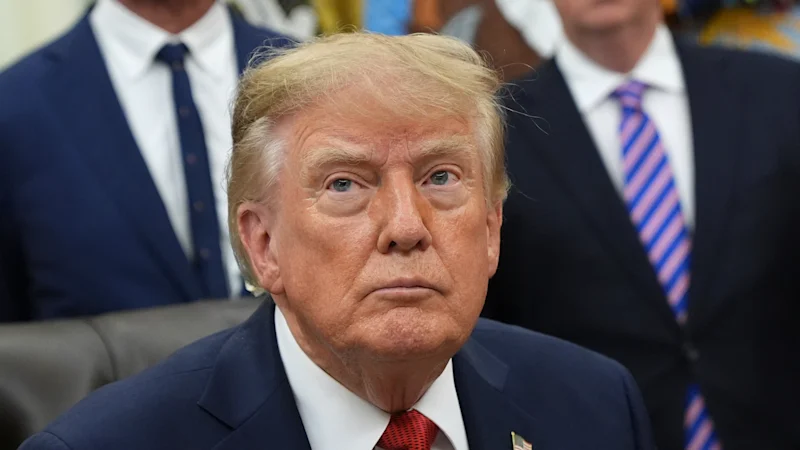
Donald Trump has proposed creating an “AI Force” and appointing a White House artificial intelligence tsar, while signalling that his administration will prioritise the industry’s expansion over tighter regulation.
The US president did not explain whether the new force would be a military command, a civilian agency or a department. He also gave no details about how it would fit alongside existing government bodies and private technology companies developing increasingly powerful models.
Announcing the proposal on social media, Mr Trump said the administration would “cherish it, help it, and watch over it”. The White House did not respond to a request for clarification about the force.
The move places Mr Trump firmly alongside those in Washington who argue that development should be accelerated rather than restricted while policymakers assess the risks posed by frontier AI systems.
He compared warnings about artificial intelligence with concerns over global warming and what he described as conspiracies created by “Radical Left Democrats”. His position contrasts with fears about the technology shared by some Republicans, including concerns about safety and the need for oversight.
David Sacks, the venture capitalist who previously served as Mr Trump’s AI tsar, welcomed the proposal. “President Trump understands the media hoax cycle better than anyone else,” he wrote on social media.
Mr Sacks added: “That is why he is refusing the ‘pause’ that Bernie Sanders and Elizabeth Warren are demanding. A pause would not make America safer. It would hand the frontier to China.”
Existing US agencies already working on AI
The proposed AI Force would join several institutions already involved in the technology. US Cyber Command is testing advanced models, including Anthropic’s Mythos, to identify weaknesses in adversaries’ computer networks and help address previously undiscovered vulnerabilities in critical American infrastructure.
The Cybersecurity and Infrastructure Security Agency, part of the Department of Homeland Security, also has responsibility for protecting vital systems. However, its staffing has been substantially reduced since Mr Trump returned to office, in part because the agency disputed his claims that the 2020 presidential election had been rigged.
Mr Trump has previously proposed creating new organisations to address technological threats. During his first term, he said after meeting Russian president Vladimir Putin that the two countries would establish a joint cyberspace force to combat cybercrime. The idea was later quietly abandoned after US national security officials expressed confusion about working with a principal rival in cyberspace.
Former president Barack Obama criticised Mr Trump’s approach to artificial intelligence on Friday, warning that the technology could “deeply affect our health and our safety”.
“There’s no replacement for an effective, government regulatory structure,” Mr Obama said at Colgate University in New York. He argued that the US faced a gap of “at least of a couple of years” because the federal government was not capable of, or willing to, create a serious regulatory framework.
Mr Obama urged voters to scrutinise candidates’ plans for artificial intelligence, saying: “If somebody does not have a serious plan for how to deal with this, then they’re not meeting the moment, and you should probably look for somebody else.”
