


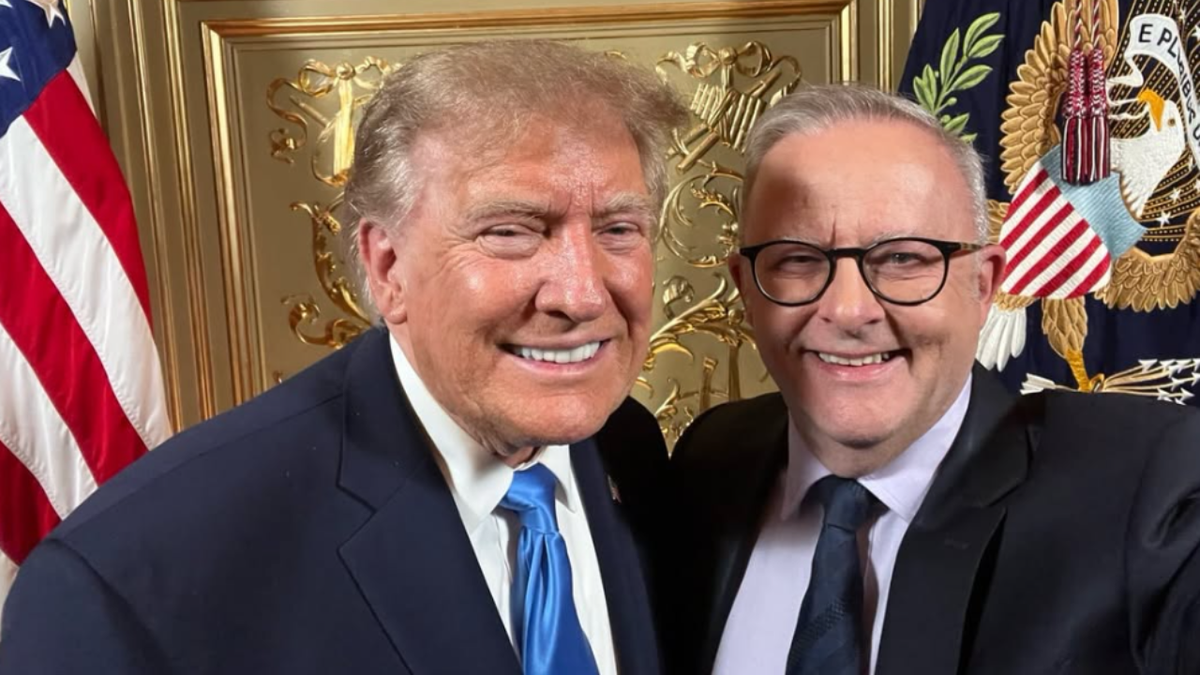
Donald Trump has proposed renaming artificial intelligence “Super Intelligence” as he argued the existing term makes the technology sound unreal, while Australian Prime Minister Anthony Albanese warned of the risks posed by its rapid development.
Speaking at the United Nations General Assembly in New York, the US president said America and “hopefully the world” would use “Super Intelligence”, or SI, in future official documents.
“The use of the word ‘artificial’ makes intelligence fake — it makes it sound fake, and it is not fake,” Mr Trump said. “It’s actually amazing, but we have to be careful.”
He said the proposed name sounded “much better” and was “much more accurate”. The suggestion followed a poll Mr Trump posted on his social media platform, in which users were asked to choose between “Super Intelligence” and “Superior Intelligence”. The former received almost twice as many votes.
Mr Trump also rejected calls for greater international oversight of the technology, saying the US opposed efforts to create a global system for controlling artificial intelligence.
“The United States also totally rejects any attempt to construct a globalist scheme to control the artificial intelligence being spoken of,” he told the assembly.
He argued that development should be encouraged as the US competes with China for dominance in the sector. “Whoever wins superintelligent, wins. That’s the group that wins,” he said, claiming the US was already “leading now over China by a lot and everyone else”.
The comments came a day after Mr Albanese joined leaders from more than 20 countries in calling for stronger oversight of advanced artificial intelligence. Germany, the Netherlands, Finland and South Africa were among the other signatories to the joint statement.
“AI must remain under human direction, oversight and control. It must be developed and used in line with international law,” the statement said.
Addressing a UN coalition focused on protecting children in the age of artificial intelligence, Mr Albanese said the technology offered opportunities but also carried significant dangers.
“We also see that AI can pose a range of potential risks. From the exploitation of children, the potential to enable biological weapons, or even the loss of control of AI systems themselves,” he said. “And as AI capabilities advance, these risks will increasingly cross borders.”
Mr Albanese was in the audience for Mr Trump’s address alongside Australia’s Foreign Minister Penny Wong. He said the US president’s position had not weakened Australia’s efforts to ensure the technology remained under human control.
“We have put forward a strong position,” Mr Albanese told reporters in New York. “There are a range of advantages, but we need to make sure that humans are in control.”
He added that it was positive that Mr Trump was due to meet Chinese President Xi Jinping, with artificial intelligence expected to be on the agenda. The meeting is due to take place in Washington on Thursday US time.
