


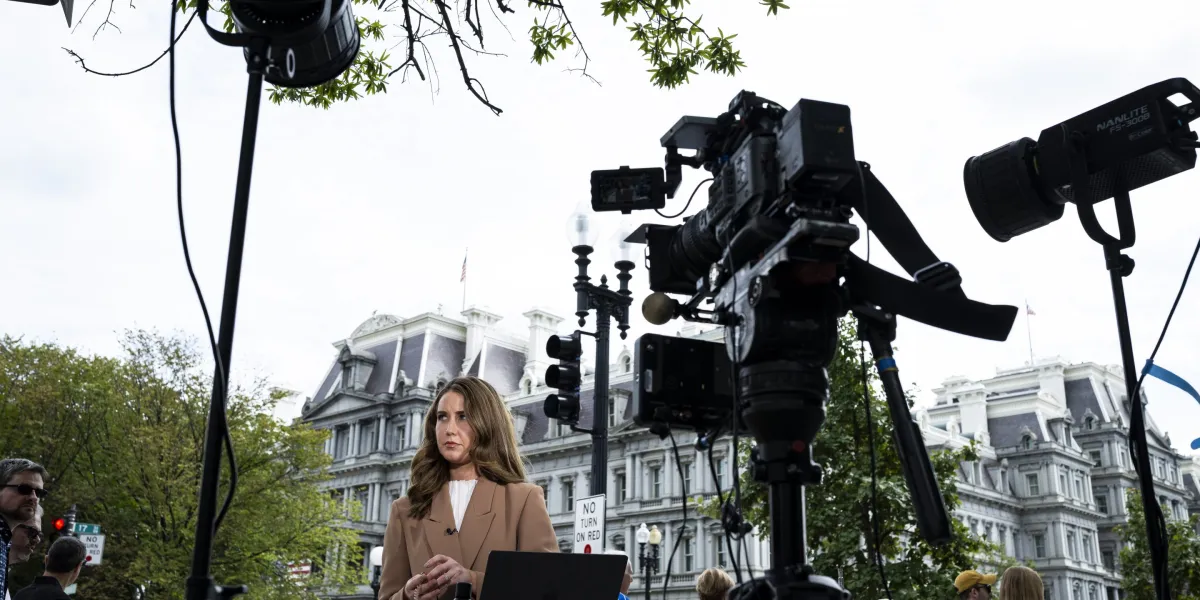
Donald Trump’s decision to bar CNN, MS NOW and Politico from the White House has intensified concerns about the information available to American voters before the 2026 midterm elections.
In-person voting began on Friday, the day the president announced the ban. Journalists from the three organisations were denied entry the following day and had their White House credentials deactivated.
The midterm elections on November 3 will be shaped by a range of issues, but the media and political spending are expected to play a significant role in how voters assess the candidates and their records.
Trump’s media restrictions raise concerns before the midterms
The restrictions come amid a wider campaign of legal and financial pressure on media organisations. Since declaring his candidacy in November 2022, Mr Trump has filed lawsuits and claims seeking more than $70 billion, much of it directed at companies already dealing with the effects of artificial intelligence and disinformation.
Reporting by news organisations has continued to expose allegations involving politicians and powerful figures. A Politico report on sexual assault allegations led Democrat Graham Platner to withdraw from the US Senate race in Maine.
Analysis by Bloomberg has also reported that Mr Trump made 28,700 stock trades during his first 17 months back in office, equivalent to about 80 trades on each market day. The figure was higher than the combined number of trades made by every member of Congress over the same period, according to the analysis.
The pressure on news organisations comes as wealthy donors are able to spend vast sums on political advertising. The Supreme Court’s 2010 Citizens United v FEC ruling removed limits on independent political communications funded by corporations, unions and individuals.
Elon Musk spent more than $291 million backing Republican candidates, political action committees and other outside spending groups during the 2024 election, according to OpenSecrets.
Steve Ballmer’s alternative approach
Former Microsoft chief executive Steve Ballmer has taken a different approach, investing more than $100 million in USAFacts, a non-partisan, non-profit initiative intended to counter political disinformation.
Ballmer said in 2024 that his aim was to support journalists and “get people educated, at a minimum”. His comments came shortly after USAFacts launched a video series called “Just the Facts” and Meta shut down its CrowdTangle tool, which had been used to track misinformation.
The importance of independent scrutiny was also underlined by the reporting of journalist Pablo Torre, whose investigation into the Los Angeles Clippers led to the NBA suspending Ballmer for a year and imposing severe penalties on the team for circumventing salary-cap rules. Torre won a Pulitzer Prize for the work.
The disputes have highlighted the competing forces shaping political information in the United States, from presidential attacks on media outlets to billionaire-funded advertising and efforts to provide voters with non-partisan data.
For journalists and news organisations already facing pressure from Washington, artificial intelligence and disinformation, the 2026 midterms will test what kind of political and media system American voters are prepared to accept.
