


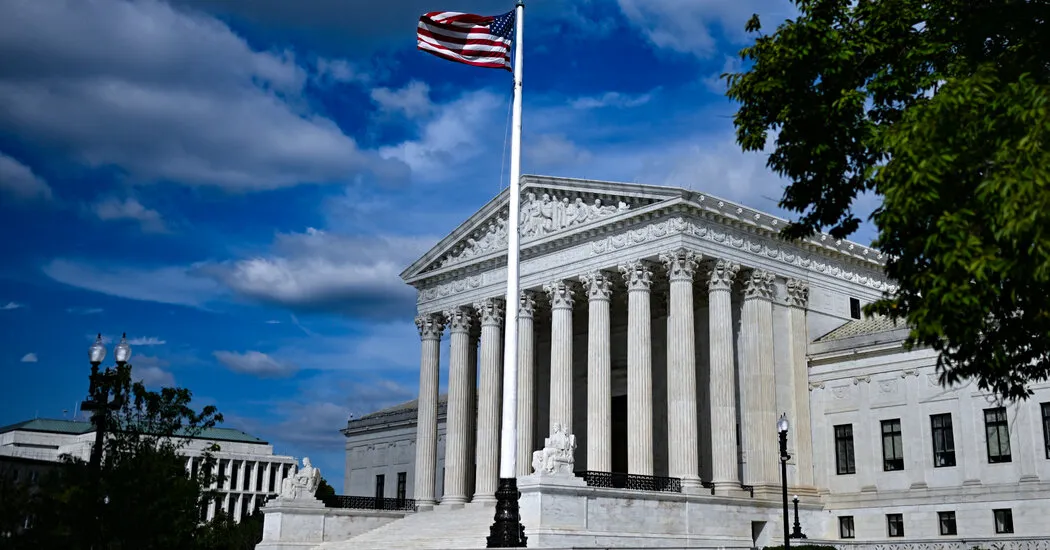
The US Supreme Court will review the legality of the Trump administration’s asylum policy, which bars people crossing the southern border from making asylum claims. The case represents a major test of the president’s immigration programme and the limits of executive power.
President Trump introduced the policy on his first day back in office, declaring that an “invasion” was taking place along the southern border. In a proclamation, he said he was exercising what he called “the inherent right and duty of the executive branch to defend our national sovereignty”.
The measure effectively prevented people fleeing torture or persecution from applying for asylum at the border and remaining in the United States while their claims were considered. Department of Homeland Security guidance subsequently blocked asylum applications from people who had crossed illegally.
Immigration rights groups challenged the policy on behalf of more than a dozen people who had been detained or removed without their asylum claims being addressed. Court filings said several had experienced political persecution in Afghanistan, Cuba, Egypt, Peru and Turkey, while lawyers alleged that some had suffered “traditional torture” at the hands of their governments.
Lower courts have ruled against the administration, although the policy has largely remained in effect under a temporary court order. In July 2025, Judge Randolph D. Moss ruled that neither the Constitution nor federal immigration law gave Mr Trump the broad authority he claimed.
A divided appeals court panel largely upheld that decision in April. The US Court of Appeals for the District of Columbia said the president was required to comply with the Immigration and Nationality Act and could not categorically reject asylum claims from people entering from Mexico.
The administration has argued that the Supreme Court’s intervention is urgently needed. D. John Sauer, the solicitor general, described the policy as Mr Trump’s “main tool for stemming an unprecedented crisis of uncontrolled illegal entry”.
Illegal crossings have fallen sharply since the policy was introduced. Border Patrol agents recorded just over 6,000 arrests in June 2025, compared with more than 200,000 crossings in December 2023 during the peak of the Biden administration.
The central question before the justices will be whether the president can override immigration rules established by Congress. The Supreme Court term is also due to include challenges involving deportations to third countries and the indefinite detention of immigrants who entered the country illegally years ago.
