


US thalidomide survivors are urging Congress to recognise them formally and provide financial support, decades after pregnant women were given the drug without being told what it was. The campaign is being led by Gwen Riechmann, co-founder of USA Thalidomide Survivors.
The group, which has about 100 members including allies and survivors, is backing a bill that would formally acknowledge American-born survivors and award each $150,000, with the possibility of further payments in future.
Riechmann was born with phocomelia, a rare condition involving severely shortened limbs associated with thalidomide. She says her mother was given the drug in the early 1960s to treat nausea during pregnancy, unaware that it was being used in an unregulated US clinical trial.
“We go to doctors today who say it didn’t happen here in the United States. Oh yeah, it did,” Riechmann said.
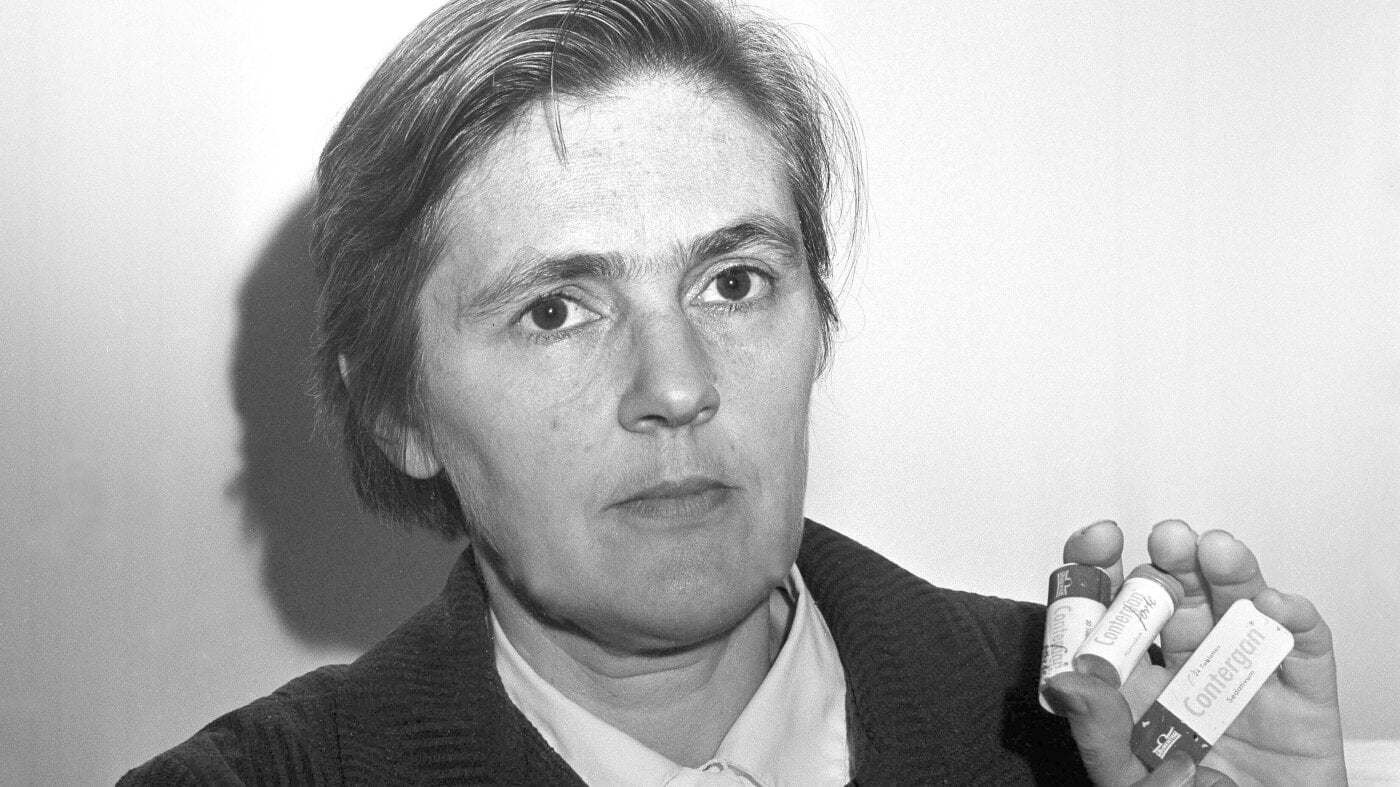
Thalidomide was developed as a sedative and was expected to receive approval from the Food and Drug Administration in time for sale before Christmas 1960. But Frances Oldham Kelsey, an FDA medical reviewer, repeatedly challenged the application and prevented it from being approved for general use.
Her actions helped bring about stricter drug testing and approval rules. President John F Kennedy praised Dr Kelsey for sparing “us this terrible human tragedy which has been visited on families in Germany”.
However, doctors in the US were already giving thalidomide to thousands of patients, including pregnant women, according to Jennifer Vanderbes, whose book examines the drug’s history. Pharmaceutical company William S Merrell distributed thousands of doses without labels and told doctors it was safe for conditions including insomnia and morning sickness, she said.
Doctors were not required to keep records of who received the medicine or report side effects, Vanderbes said. Many women were not told they had taken thalidomide, while some were later told they had not taken it even after their children were born with limb deformities.
John Swann, a retired senior FDA historian, described the investigation into Merrell’s records as “such a sloppy investigation”. He said a significant amount of the drug could not be accounted for when regulators traced where it had been distributed.
The exact number of US-born babies affected is unclear. The FDA has formally acknowledged 17 survivors, while Swann said the true figure was certainly higher. Vanderbes estimates there could be about 100 US survivors.
US thalidomide survivors seek recognition and support
Riechmann helped establish USA Thalidomide Survivors in 2018. She said survivors were ageing and their health was deteriorating, making recognition and assistance increasingly urgent.
“The U.S. is the only country that has not provided any kind of support or even recognition that they have thalidomide survivors,” she said. “We are looking for, first, recognition that, yes, we do exist. And then, secondly, support.”
