


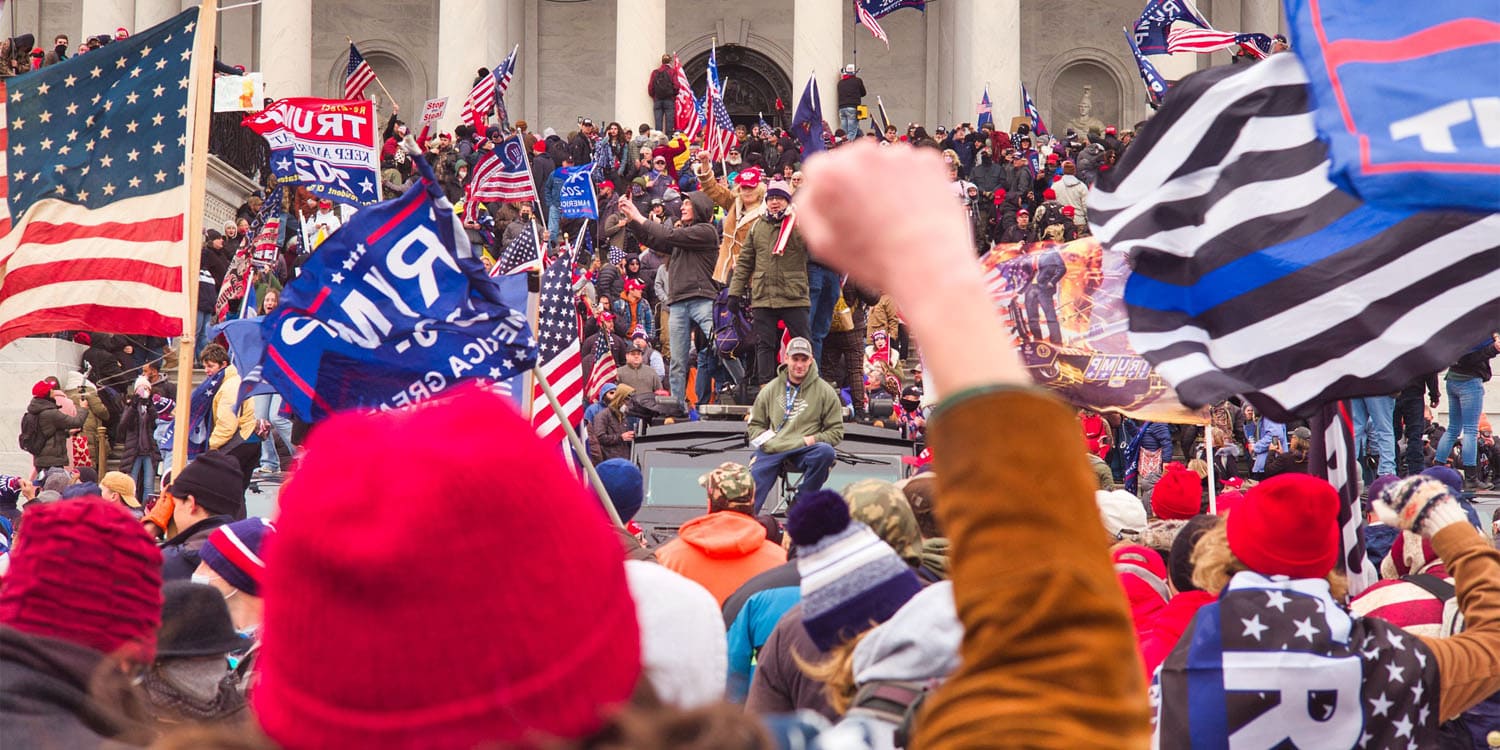
A nationally representative survey in the United States suggests public support for political violence decreased heading into the 2026 midterm elections, even as partisan tensions remained high. The research indicates that while people at large reject the use of physical force to pursue political aims, MAGA supporters were still more inclined than others to justify violence.
The findings come from a mid-2026 wave of an ongoing, annual study conducted under the direction of Garen J. Wintemute, a distinguished professor of emergency medicine and the Baker-Teret Chair in Violence Prevention at the University of California, Davis. The work was published as a preprint on SocArXiv, meaning it has not yet undergone peer review.
Political violence, the study notes, ranges from property damage to threats, injury, or even death carried out for ideological reasons. Beyond immediate harm, such violence can affect mental health and social stability, prompting researchers to monitor attitudes as the 2026 elections approached.
Findings show broad rejection of political violence
The fifth wave of the survey collected data online between May 15 and June 15, 2026, drawing 7,752 adults from the Ipsos KnowledgePanel, a probability-based panel designed to reflect the noninstitutionalised U.S. population.
The researchers assessed three main concepts: beliefs about the possibility of civil war in the future, justification for political violence, and personal willingness to engage in it. Violence was explicitly defined as physical force strong enough to cause pain or injury.
Respondents first indicated whether violence could ever be justified in general or for 21 specific political objectives, including preserving a particular American way of life, stopping police violence, preventing voter fraud, or halting illegal immigration. A new question in 2026 asked those who said violence was “never justified” to confirm whether their stance was unconditional.
Those who allowed violence were then asked how willing they would be to personally damage property, threaten or injure someone, or kill to advance a political objective. They were also asked about potential targeting of populations such as elected officials, police officers, election workers, or members of the opposing party. All participants were asked how likely they would be to use a firearm if they felt violence was justified.
Among 53 survey items measuring anticipation, justification and willingness, 51 showed small average decreases from mid-2025 to mid-2026, suggesting an overall decline in support for violence across the political spectrum.
“The general perception is that political violence is common and increasing,” Wintemute noted. “Neither of those things is true. And in our survey respondents, support for political violence fell from 2025 to 2026, across the political spectrum.”
Nevertheless, some results did not move in the same direction. In 2026, the belief that violence was “usually or always” justified to advance any political objective never exceeded 13 percent of respondents. Among the roughly one-quarter who said violence was never justified for the listed objectives, more than 91 percent stated that their rejection was absolute and unconditional.
Personal willingness to engage in violence remained low. Among those who felt violence was at least sometimes justified, only about 2 percent said they were “very or completely willing” to damage property, threaten, injure or kill someone. Fewer than 4 percent of all respondents expected they would shoot or threaten someone with a firearm to advance a political goal.
The only measure that rose from 2025 to 2026 was the public’s expectation of a civil war. In 2025, 7.1 percent strongly agreed that a civil war would occur in the near future; by 2026 that figure had edged up to 8.0 percent, though the proportion who believed a civil war was needed to “set things right” remained under 4 percent.
The study also looked at differences across political groups. MAGA Republicans and MAGA supporters who do not identify as Republicans tended to report higher levels of justification for political violence than Democrats and non-MAGA Republicans. For example, about half of MAGA-affiliated respondents considered violence justified to advance at least one political objective. Among the small number willing to engage in violence, non-Republican MAGA supporters reported the highest willingness to target specific populations. Despite these variations, the overall trend of declining support for violence was observed across most groups.
“We found, as others have, that support for political violence is generally stronger on the political right than on the political left,” Wintemute said. “Willingness to commit political violence is another matter; it is rare across the board. The vast majority of respondents in our surveys reject political violence altogether, and most of those who consider it acceptable are not willing to become involved in it themselves.”
The findings align with earlier work reported by PsyPost in 2024, which described a nationwide decrease in support for political violence and belief in an imminent civil war between 2022 and 2023, suggesting a persistent public aversion to political violence even during periods of heightened stress.
In accompanying reflections, the study authors emphasised the role of public norms. “These findings are clear,” they wrote. “Entrapment in a spiral of escalating political violence is not inevitable in the United States. Those who promote political violence should recognise that they do not have the public’s support and that promoting violence may exact a political cost.”
They urged those who reject political violence to voice their stance within their families, friends, and broader networks, arguing that a public climate of non-acceptance can help reduce the likelihood of violence.
Caveats accompany the interpretation of the data. Responses to hypothetical questions about violence do not perfectly predict real-life behaviour, the researchers cautioned, as some may exaggerate or understate their intentions due to social desirability or other pressures.
Because different groups passed the initial filter that violence could be justified at varying rates, follow-up percentages for Democrats and Republicans are based on different, narrower samples. The survey also reflects a single month of fieldwork in mid-2026, leaving room for shifts in sentiment as events unfold.
Looking ahead, the researchers signalled plans to translate these insights into practical interventions. “Next year we hope to launch a randomized trial of an intervention to prevent political violence,” Wintemute said.
The study, “Decreased Support for Political Violence in the United States in Mid-2026: Findings from a Nationally Representative Survey,” was authored by Garen J. Wintemute, Sonia L. Robinson, Daniel J. Tancredi, Krista Neumann, Shaina Sta. Cruz, Aaron B. Shev, Elizabeth A. Tomsich, Bradley Velasquez, Mona A. Wright, and Veronica A. Pear.
