


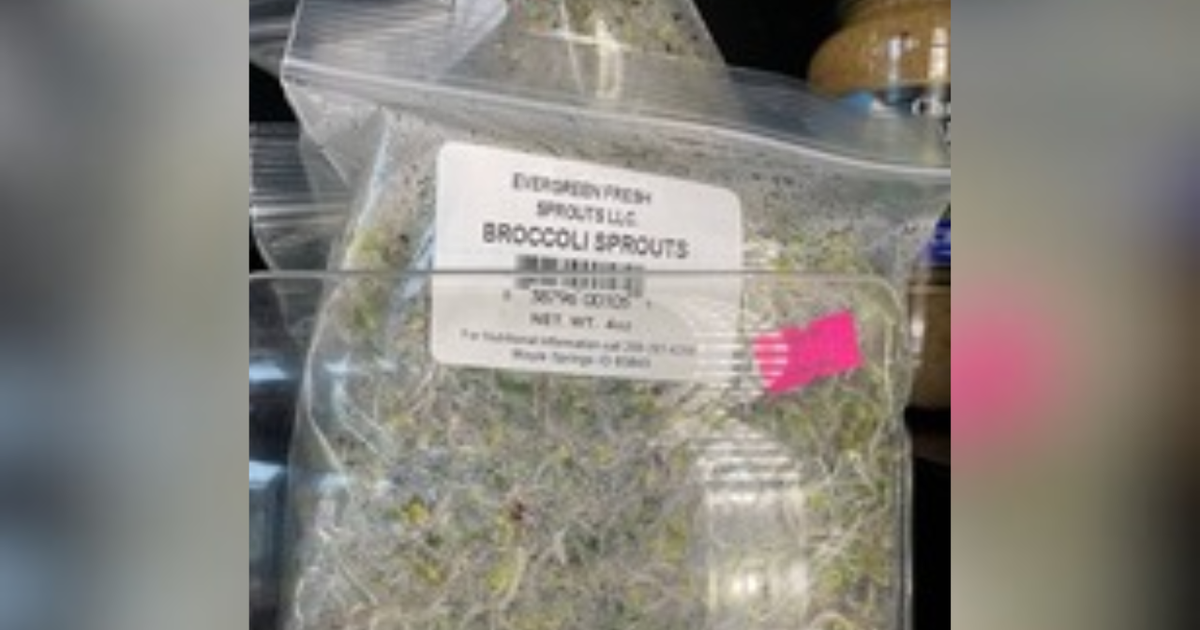
A multistate salmonella outbreak linked to broccoli sprouts grown by Evergreen Fresh Sprouts has sickened 22 people across the United States, with two requiring hospital treatment.
The cases have been reported in Washington, Montana, Idaho and Utah. Sixteen people are ill in Washington, four in Montana, one in Idaho and one in Utah.
The Food and Drug Administration and the Centers for Disease Control and Prevention said the outbreak involved Salmonella Bovismorbificans. Investigators identified Evergreen Fresh Sprouts, based in Moyie Springs, Idaho, as the common grower of sprouts eaten by patients before they became unwell.
Evergreen Fresh Sprouts began recalling affected broccoli sprouts on 4 September after a sample collected and tested by Montana health officials returned a positive salmonella result. Whole-genome sequencing found that the bacteria matched the strain linked to the illnesses.
The recalled products were sold in plastic bags and clear plastic containers, with expiry dates of 7, 9, 11, 14 or 16 September. They were distributed to grocery shops, restaurants and food-service customers in Idaho, Montana and Washington, although officials said they may have reached other states.
Illnesses began between 7 July and 26 August, with patients aged from two to 87. Of 19 people interviewed by investigators, all said they had eaten sprouts and 17 specifically reported eating broccoli sprouts.
The outbreak is separate from another recent US investigation involving salmonella and E. coli linked to alfalfa sprouts produced by Everything Sprouts in Minnesota.
What consumers should do
Consumers, restaurants and retailers have been told not to eat, sell or serve the recalled Evergreen Fresh Sprouts broccoli sprouts. Anyone who has them should throw them away or return them to the place of purchase.
Surfaces, containers and utensils that may have touched the sprouts should be washed thoroughly with hot, soapy water or cleaned in a dishwasher to reduce the risk of cross-contamination.
Salmonella can cause diarrhoea, fever and stomach cramps, with symptoms commonly developing 12 to 72 hours after exposure. People should seek medical advice urgently if they develop bloody diarrhoea, a fever above 39C, persistent vomiting or signs of dehydration.
