


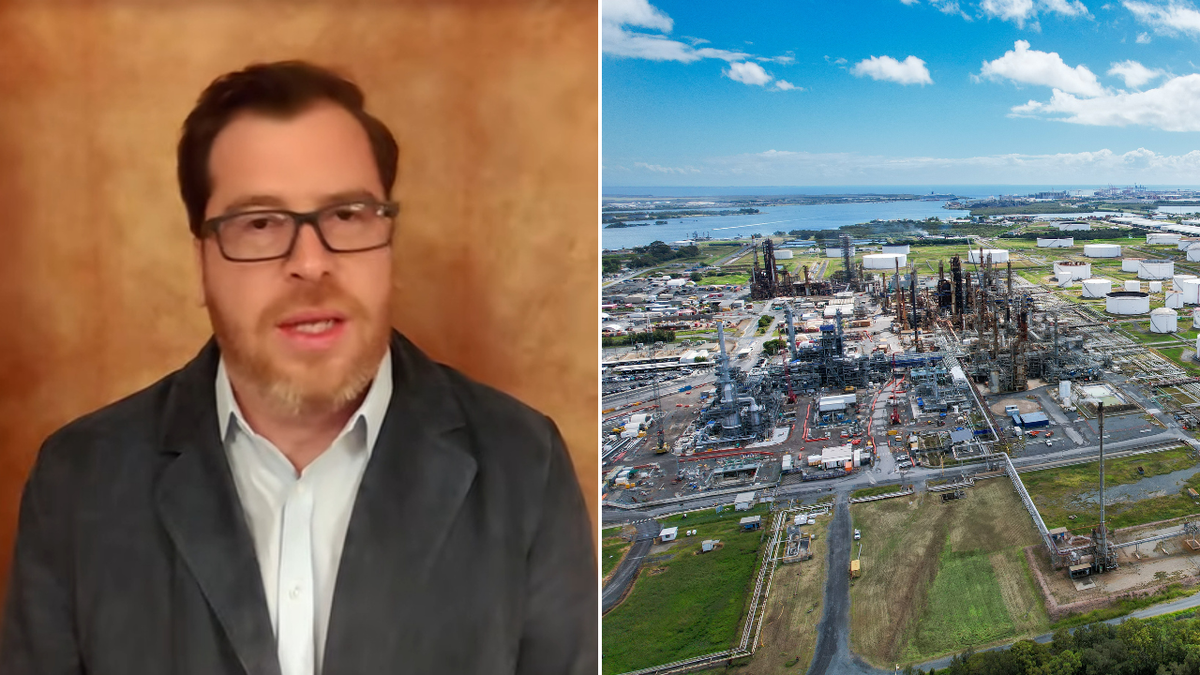
Australia could build a new oil refinery for the first time since the 1960s, according to energy analyst Saul Kavonic, who says heightened security risks have strengthened the case for domestic fuel production.
The assessment comes six weeks after the Federal and Western Australian governments announced an initial study into constructing a large-scale petrol refinery.
“I think there’s a very real chance that Australia builds a new refinery,” said Mr Kavonic, of Sydney-based MST Financial.
He said the changing global security environment had made sovereign supply chains, particularly in fuel, a national security concern.
“The risk and conflict scenarios ahead of us are different. They’re elevated now. There’s now strong national security reasons to have sovereign supply chains, particularly in fuels,” he said.
Australia’s refinery capacity has fallen
If the project proceeds, it would reverse a two-decade decline in Australia’s refining industry. The country has gone from eight refineries to just two: Ampol’s facility in Queensland and Viva Energy’s plant in Victoria.
Mr Kavonic’s comments came as conflict continues to threaten major routes for global oil supplies. Iranian-backed Houthi militants seized a strategic port city and a key island, creating a fresh opportunity to threaten oil traffic through the Red Sea.
The disruption to the Strait of Hormuz has also remained unresolved for six months, meaning both of the region’s main channels for oil exports have been affected by conflict.
“There is no unscrambling of this egg,” Mr Kavonic said. “The Strait of Hormuz will never operate the way it has in the past.”
He also warned that the war between Russia and Ukraine could place increasing pressure on global oil supplies, as Ukraine expands drone attacks on Russian energy infrastructure.
“We’re seeing Ukraine make big advances in its drone strike capabilities. and that’s seeing them launch a continued succession of attacks on Russian energy infrastructure, in particular refining infrastructure, going deeper and deeper into Russian territory,” he said.
Mr Kavonic said the attacks were affecting Russia’s exports of fuel and crude, with the country exporting about 10 per cent, or one million barrels a day, less.
He expects Ukraine’s campaign against Russian energy infrastructure to “scale up and increase” in the coming months, raising the prospect that 2026 could mark a turning point for Australia’s retreat from oil refining.
