


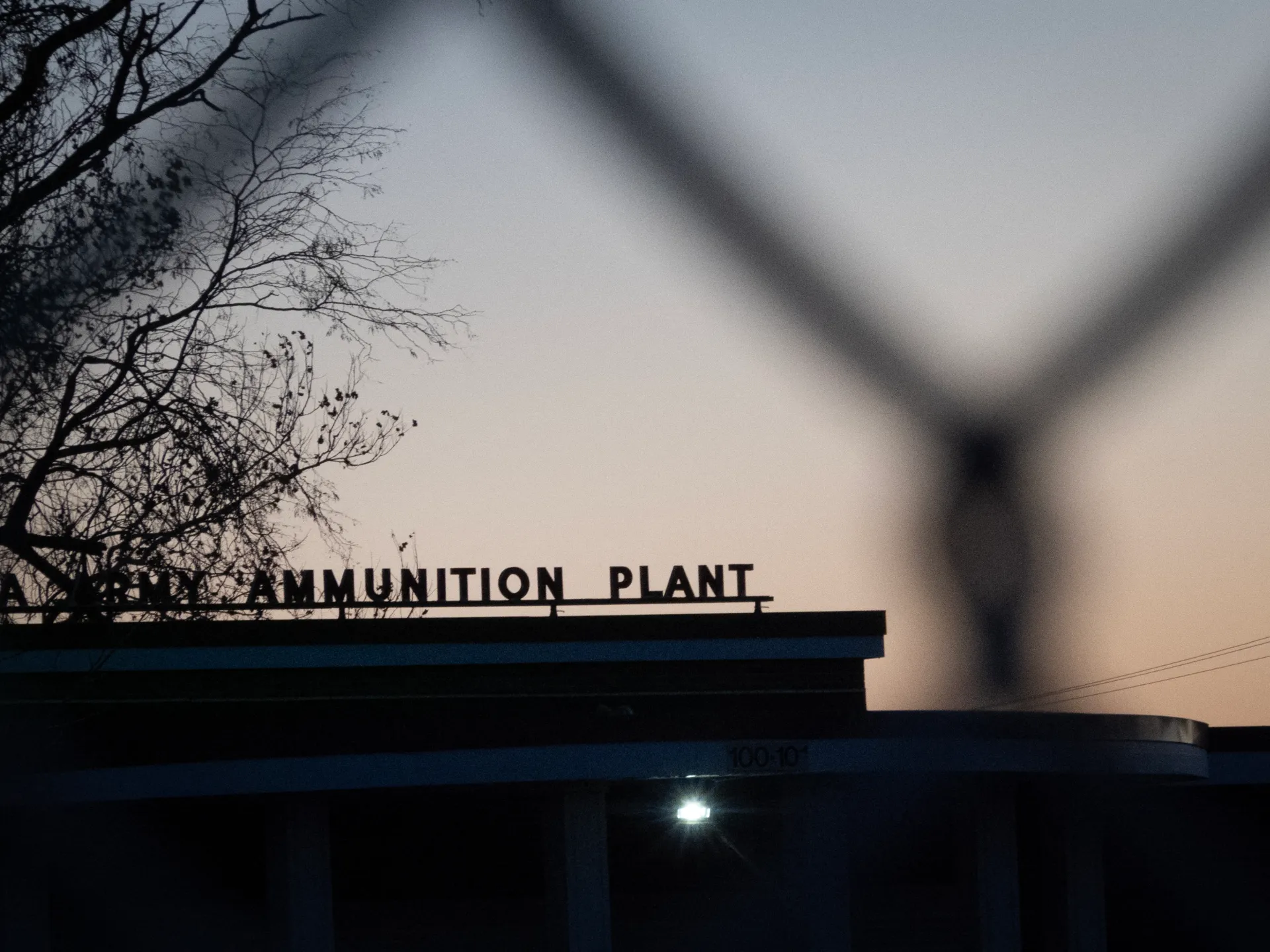
The US Army’s planned detonation of 68 drums of degraded lead azide in Iowa has been thrown into doubt after a federal appeals court temporarily suspended the emergency permit authorising the operation.
The controlled blasts at the Iowa Army Ammunition Plant were postponed from Friday until Monday, November 23, after public opposition grew. The Army has said colder weather could further destabilise the material, increasing the danger of an uncontrolled explosion.
The court’s interim stay prevents the military from proceeding under the permit while judges consider a longer-term injunction sought by two environmental groups. It is not a final ruling on whether the permit is lawful.
Justice Department lawyers have nevertheless indicated that the federal government could seek to use separate emergency powers to bypass the permit requirement and continue with the detonations.
Why the Army wants to destroy the lead azide
The stockpile was discovered during a safety review in March, after the explosive had spent about 20 years in storage bunkers at the 19,000-acre ammunition plant in Des Moines County, south-eastern Iowa.
The 68 barrels contain about 9,700lb of lead azide, with roughly 6,900lb of lead by chemical mass. Liquid evaporating from the drums caused the material to recrystallise, making it more sensitive to shock and friction, according to an Army environmental assessment.
The Army says the substance has deteriorated from a usable component in munitions into hazardous waste. Its officials have warned that colder conditions or further disturbance could raise the risk of spontaneous detonation, potentially endangering technicians at the site.
Under the proposed plan, the material would be detonated inside earth-covered concrete magazines. The ground above the structures would be soaked before and during the explosions to suppress dust, while sand-filled barriers around the magazines are intended to direct the force upwards.
An Army advisory warned residents of nearby Middletown that the blasts would produce loud explosions, ground vibrations and a dust plume containing “some lead”. Military modelling predicts elevated airborne lead levels, but says they would remain below the threshold at which the Environmental Protection Agency would require protective measures.
Concerns over lead exposure
Environmental health experts have questioned how much lead could be released and where it might settle. Patrick O’Shaughnessy, an environmental health professor at the University of Iowa who plans to monitor the effects, said the public had not been told the quantity of lead each explosion could propel into the air.
He warned that lead could later settle on playground equipment, crops, gardens and other surfaces, creating a longer-term risk for people living downwind.
Lead azide is made of lead and nitrogen, with lead accounting for about 71 per cent of its mass. While the Army has said the heat from a proper detonation “incinerates” the compound, Bruce Lanphear, a paediatric epidemiologist at Simon Fraser University, said the explosion would not destroy the lead but redistribute it as fine particles and other compounds.
Lead exposure is particularly dangerous for unborn babies and young children. The US Centers for Disease Control and Prevention says there is no blood lead level in a child considered safe, while prolonged exposure has been associated with developmental and neurological harm.
At high levels, lead poisoning can cause severe disruption to brain function and premature death. Lanphear also cited research linking long-term exposure to hundreds of thousands of deaths in the United States each year.
Legal challenge to the emergency permit
The Iowa Environmental Council and the Iowa chapter of the Sierra Club filed their challenge shortly before the original Friday operation. They argued that the EPA had failed to provide meaningful advance notice, require sufficient protections for human health and the environment, or properly examine safer disposal options.
Iowa’s Democratic senator-elect, Josh Turek, has also called for greater transparency. “Iowans deserve to know that every safety precaution has been taken and exactly what the associated health risks are. Until those questions are answered, the detonation should not proceed,” he wrote.
The Army says it has consulted local residents, including at an open meeting in October for people living within 50 miles of the plant. Acting Army Secretary Adam R Telle said Monday was the latest possible opportunity to carry out the operation before the forecast temperature drop.
The court’s temporary suspension means the fate of the proposed detonation remains unresolved as the Army approaches that deadline.
