


Private equity investment in sport has accelerated sharply, with the number of global deals nearly doubling to about 200 a year in 2024 and 2025, according to Apollo Global Management chief economist Torsten Slok.
Slok said deals had averaged roughly 100 a year between 2021 and 2023, suggesting that investors increasingly regard sport as an “institutional-grade asset class”.
The investment has extended beyond ownership stakes in professional teams. Private equity firms are also targeting businesses involved in equipment, talent representation, training facilities and other parts of the sports economy.
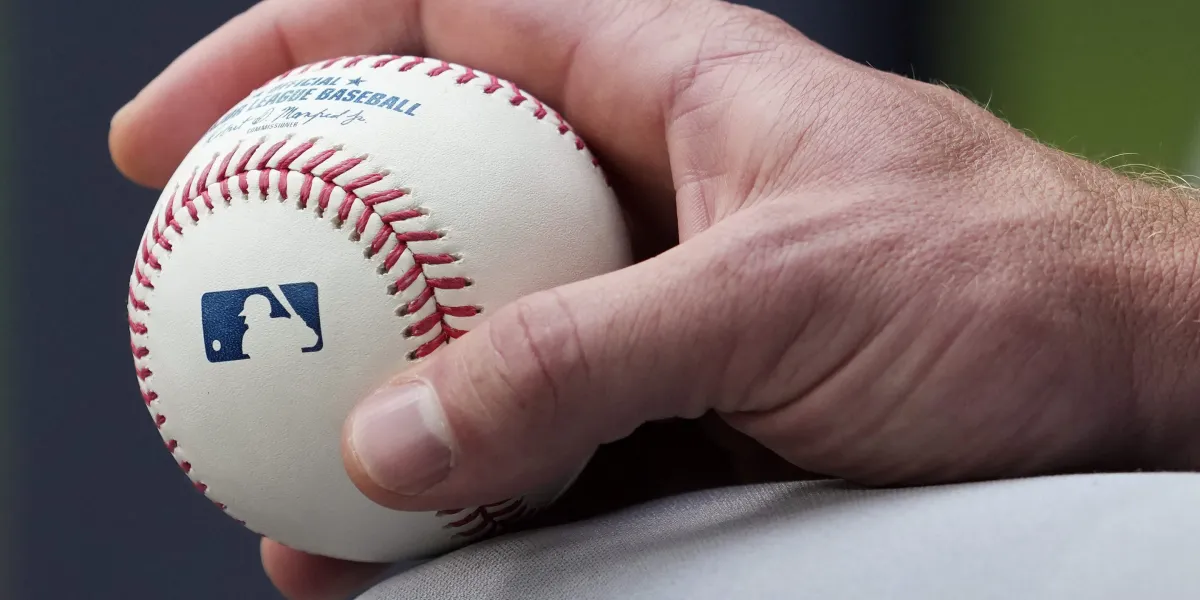
One of the latest transactions came on 19 November, when Swiss investment firm Partners Group agreed to acquire a majority stake in Rawlings Sporting Goods, the manufacturer of baseballs, gloves, bats and protective equipment used by Major League Baseball.
Rawlings is MLB’s official supplier of game balls, gloves, helmets, face guards and bases. The league already held a stake in the company, meaning the transaction gives Partners Group control rather than the minority position commonly permitted in professional sports teams.
MLB and Rawlings’ existing shareholders will retain meaningful ownership, according to Partners Group. The investment also gives the firm exposure to brands including Easton and Combat, as well as D-BAT Academies, a network of 228 indoor baseball and softball training facilities.
“Rawlings’ iconic brands and training footprint helps reinforce participation in America’s pastime and has credibility with consumers and athletes across all ages,” said Thomas Clark, Partners Group’s managing director of private equity goods and products.
Apollo has also expanded its presence in sport. In August, its sports arm, Apollo Sports Capital, became a “strategic investment partner” to the New York Yankees through a 2.6 billion-dollar financing agreement with Yankee Global Enterprises, the team’s holding company.
The agreement was intended to support the continued growth of the Yankees franchise and refinance existing debt.
Private equity ownership rules loosen
Major US professional sports leagues began easing restrictions on institutional investment in 2019, when MLB became the first to permit private equity stakes in franchises. The NBA and Major League Soccer followed in 2020, the NHL in 2021 and the NFL in 2024.
The permissions remain subject to limits. MLB allows institutional investors to own up to 30% of a franchise, with an individual fund capped at 15%. The NBA and NHL also permit institutional ownership of up to 30% per team, while limiting a single fund to 20%.
The NFL has the tightest restrictions, allowing approved private equity firms to hold a combined stake of up to 10% in a team, with an individual fund also capped at 10%.
For team owners, the new sources of capital can help fund stadium construction, arena upgrades, player contracts, new technology and entertainment districts without requiring them to finance projects in full.
The Buffalo Bills, for example, sold a 21% stake to a group of limited partners in 2024, including a 10% investment from Arctos Partners. The transaction came as the club was developing a new stadium whose projected cost had risen from 1.4 billion dollars to 2.1 billion dollars.
Private equity firms are attracted by the range of income available through sport, including broadcasting rights, ticket sales, sponsorship, merchandise, licensing and stadium-related businesses.
The five major US professional sports leagues generated about 60 billion dollars in combined revenue in 2025, while the combined value of their franchises was estimated at approximately 560 billion dollars.
Rashaun Williams, founder and chief investment officer of Harbinger Sports Partners, said teams were increasingly becoming media companies capable of generating income beyond their local markets.
“They’re finding ways to diversify their revenue and monetize that fan base 365 days a year,” said Williams, whose firm had invested a minority stake in the relocated Las Vegas Athletics MLB team.
