


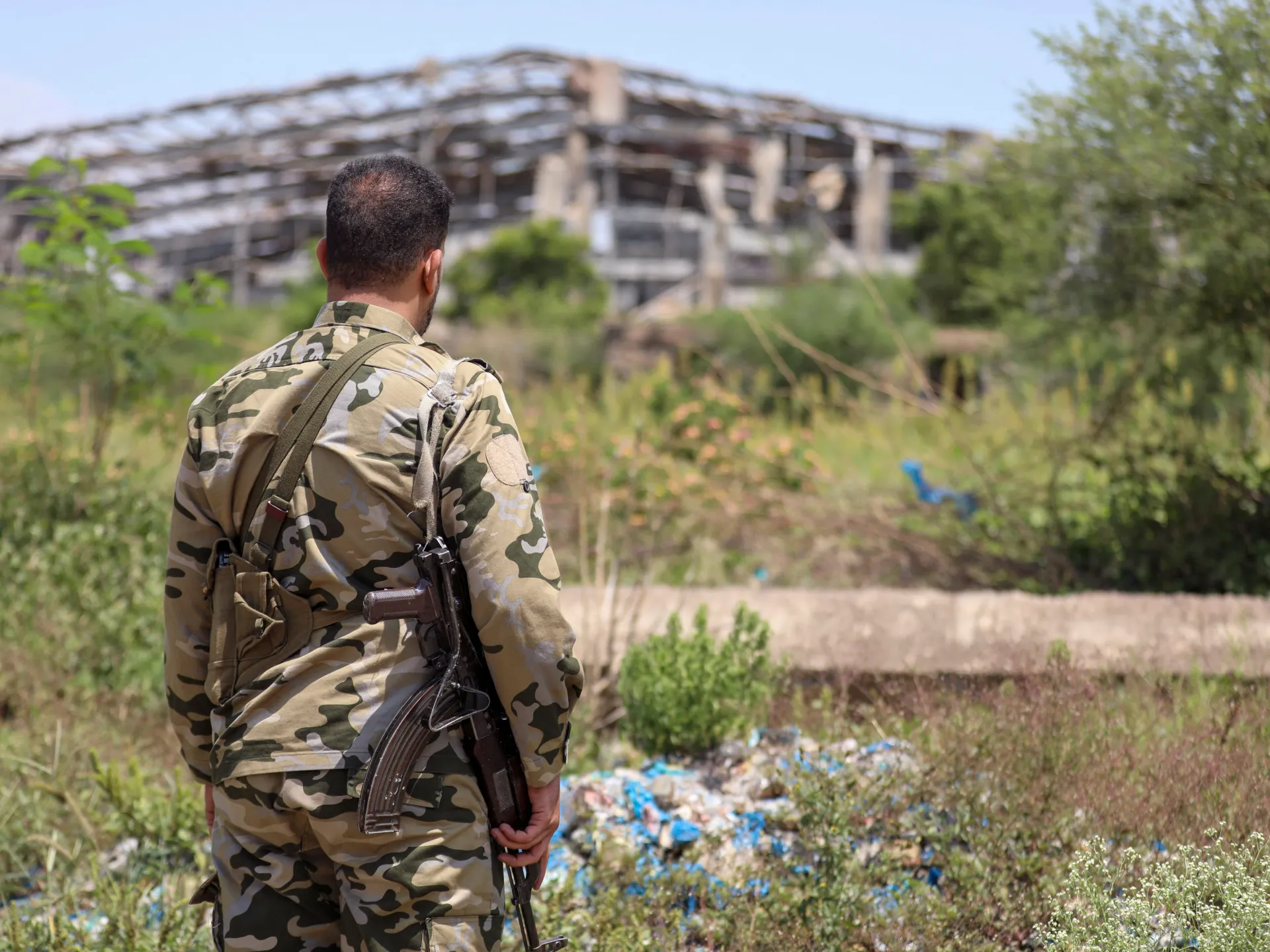
Yemen’s internationally recognised government has claimed that its forces seized the Dhubab district and several strategic positions near the Bab al-Mandeb Strait, as it presses ahead with a major offensive against the Houthi movement.
The reported advance came a day after the government announced military operations to retake territory held by the Iran-aligned group. The Saudi-backed army said the operation was carried out by the Homeland Shield Forces and Giants Brigades, with air support.
A military statement said the forces had captured positions and cut supply lines and roads leading towards Bab al-Mandeb. It also claimed that Houthi fighters had been killed or wounded and that military equipment had been destroyed or damaged.
Government troops were continuing to search and secure the areas they had taken, Yemen’s state news agency reported. The battlefield claims have not been independently verified.
Yemen offensive expands as regional officials prepare for talks
Brigadier General Majid Abdullah Al-Nuzaili, a military spokesman, said earlier that 1,122 attacks had been launched against Houthi sites, including artillery positions, rocket launchers and command centres.
He said warplanes, drones, missiles, rockets, artillery and snipers had been used in attacks across Saada, al-Jawf and Taiz provinces, as well as along the coast. He claimed 1,747 Houthi fighters had been killed.
The latest reports come as Pakistani Foreign Minister Ishaq Dar travels to Saudi Arabia for discussions with Saudi and Turkish officials under the Mecca Joint Defence Agreement.
Pakistan’s defence minister, Khawaja Asif, and military chief, Asim Munir, are due to join Mr Dar at talks in Riyadh with their Saudi and Turkish counterparts.
Saudi Arabia, Turkiye and Pakistan signed the defence agreement on August 7. It provides that an attack on one member is considered an attack on all three, and is intended to strengthen collective deterrence and defence co-operation.
Mr Dar said last week that the urgent talks would consider a proposal for political engagement with the Houthis as an alternative to military action, following an approach by Iran.
Yemen’s conflict began after the Houthis seized the capital, Sanaa, in 2014, forcing the government to withdraw to Aden. A fragile truce reached in 2022 collapsed in July.
In mid-September, the Houthis captured parts of western Yemen, including the port city of Mocha and strategic islands in the Bab al-Mandeb Strait. Anti-Houthi forces have since largely stabilised the front lines.
Rashad al-Alimi, chairman of Yemen’s Presidential Leadership Council, announced on Sunday that military operations had begun to retake the remaining territory controlled by the Houthis.
The renewed offensive threatens to prolong displacement and hunger among civilians caught along Yemen’s fragmented front line, as the humanitarian crisis worsens.
