


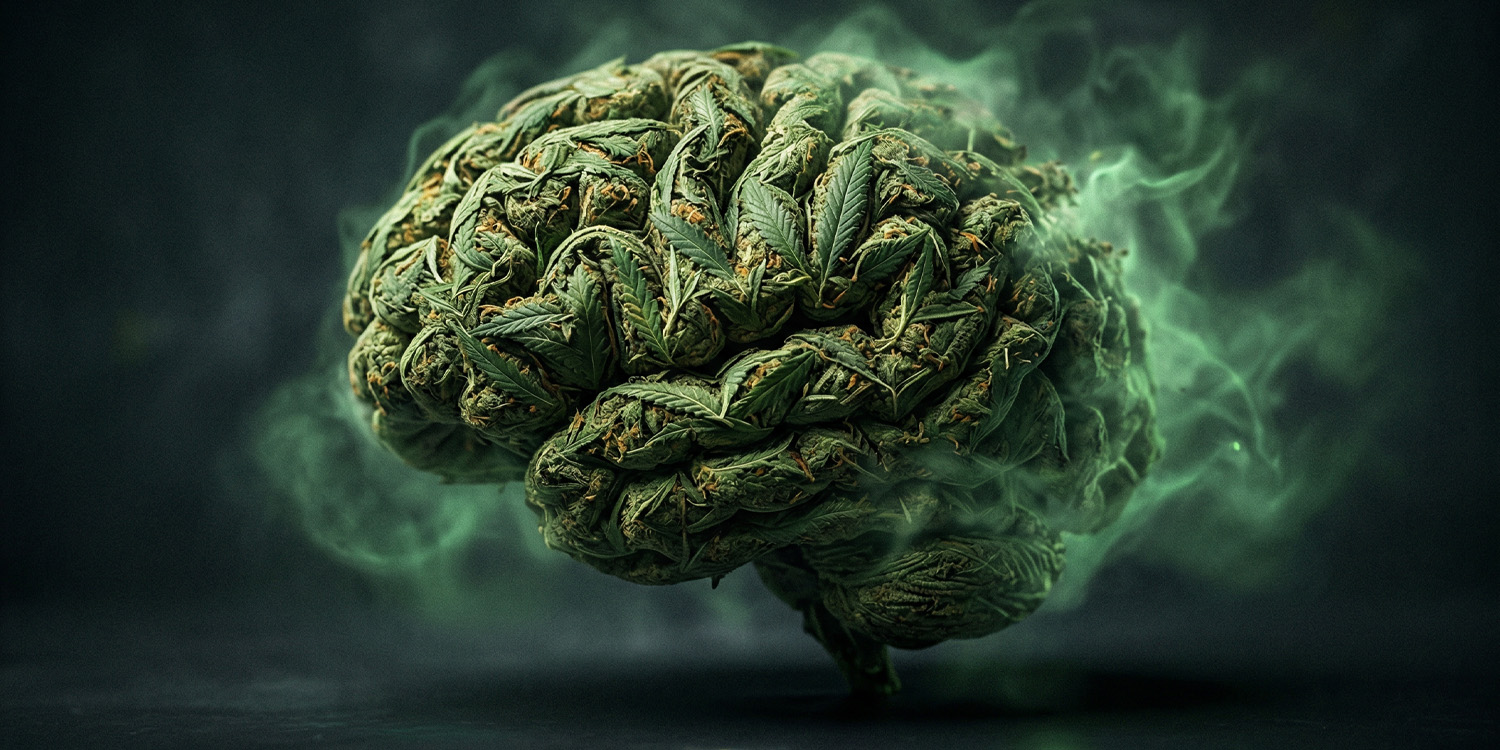
A new longitudinal analysis suggests that adolescents who begin using cannabis may experience a slower pace of cognitive development than their peers who do not use the drug. The study, published in Neuropsychopharmacology, draws on data from a large national project and finds that youths often start with marginally higher cognitive scores in late childhood, but their rate of improvement lags as they age.
Adolescence is a period of rapid brain development when the organ undergoes major structural and functional changes, making it particularly susceptible to external chemical influences. Cannabis contains more than 120 cannabinoids, with delta-9-tetrahydrocannabinol (THC) being the primary psychoactive component and cannabidiol (CBD) a non-intoxicating compound sometimes linked to perceived medical benefits. The study notes that adult research on CBD’s effects on cognition is inconclusive and little is known about its impact on teens.
Led by Natasha E. Wade from the University of California, San Diego, the researchers sought to map how the onset of cannabis use tracks with cognitive changes across adolescence. They emphasise that previous work often relied on self-reported use, which can be inaccurate. For a more complete picture, the team combined self-reports with objective biological tests to capture when teenagers started using cannabis and which cannabinoids were present in their systems.
The team drew on data from the Adolescent Brain Cognitive Development (ABCD) study, a large national project monitoring the biological and behavioural development of young people across the United States. In the current analysis, up to 11,036 youths aged 9 to 17 were included, with cognitive tests such as working memory conducted in 4,371 participants and verbal recall in 4,487.
Participants were classified as cannabis users from the first report or detection of use beyond a puff or taste, and remained in that group for the remainder of the study. In total, about 2,200 youths were identified as having used cannabis, compared with roughly 9,700 who had not.
Across the study’s cognitive battery, youths underwent assessments every other year, measuring skills including working memory, inhibitory control, language abilities, processing speed, visuospatial processing and episodic memory. Researchers adjusted for a wide range of potential confounders, such as parental education, family history of substance use problems, prenatal exposure, early behavioural indicators, sex, race and ethnicity, and use of other substances like alcohol and nicotine.
The findings indicated divergent cognitive trajectories between users and non-users. In late childhood (ages 9 to 11), youths who would go on to use cannabis tended to score slightly higher on most tests. As they aged, non-users showed steady, age-typical improvements, while users exhibited a flattened trajectory—progress continued but not as rapidly. By ages 15 to 17, cannabis-using teens performed worse than non-users across several domains, including processing speed, verbal recall and visuospatial skills.
Most differences were small, though episodic memory showed a medium-sized effect and working memory a large one. The authors note that even modest effects can have meaningful real-world consequences, such as schooling or driving performance.
A secondary analysis focusing on a smaller subset of 645 participants with repeated hair toxicology tests between ages 12 and 16 suggested that recent THC exposure was associated with a reduced rate of improvement in episodic memory, while CBD in hair did not show a detectable difference from non-exposed peers. This sub-analysis, which reflects heavier use, found episodic memory to be the domain where the THC group diverged from controls; other cognitive domains were not significantly different.
Harriet de Wit, a professor of Psychiatry and Behavioral Neuroscience at the University of Chicago who was not involved in the research, welcomed the study. “This is an impressive and timely study using longitudinal data from the ABCD database to examine cognitive function over time in relation to cannabis use, in a large sample of youth aged 9-17,” she told PsyPost. “The authors controlled for numerous potential confounding factors. The self-reported use of the drug was validated with biological samples. These data confirm a growing public concern that cannabis use among adolescents can have serious adverse developmental consequences.”
The findings align with earlier work from the same cohort reported last year, which linked cannabis use to poorer episodic memory in mid-teens, and with a 2021 meta-analysis tying frequent teen cannabis use to a small IQ decline observed in adulthood. They also echo earlier studies suggesting poorer verbal and learning abilities among teens beginning cannabis use, though prior work varied in scope and design. Some studies have produced contrasting results in adults who used cannabis as teens, complicating interpretation across the lifespan.
As with all such research, the study cannot prove that cannabis use causes slower cognitive gains. The authors acknowledge that factors that predispose some youths to try cannabis—such as earlier maturation—might also influence cognitive development. They also note that regression to the mean can affect scores that start above average. The CBD-focused subsample is comparatively small, limiting broad conclusions about CBD’s cognitive impact, and researchers recognise that some teenagers might use CBD to address sleep or anxiety symptoms, which could influence test results independently of CBD exposure. Mislabeling of cannabis products remains a concern in regulated markets and could lead to inadvertent THC exposure in some participants.
Looking ahead, the researchers emphasise that participants are still in the middle of adolescence and brain maturation continues into the mid-twenties. Ongoing monitoring of this cohort will help clarify how cessation or heavier use might relate to cognition over time.
The study is titled “Longitudinal neurocognitive trajectories in a large cohort of youth who use cannabis: combining self-report and toxicology” and lists Natasha E. Wade, Ryan M. Sullivan, Alexander L. Wallace, Rachel Visontay, Veronica Szpak, Krista M. Lisdahl, Marilyn A. Huestis, Priscila Dib Gonçalves, Hollie Byrne, Louise Mewton, Joanna Jacobus, and Susan F. Tapert as authors.
