


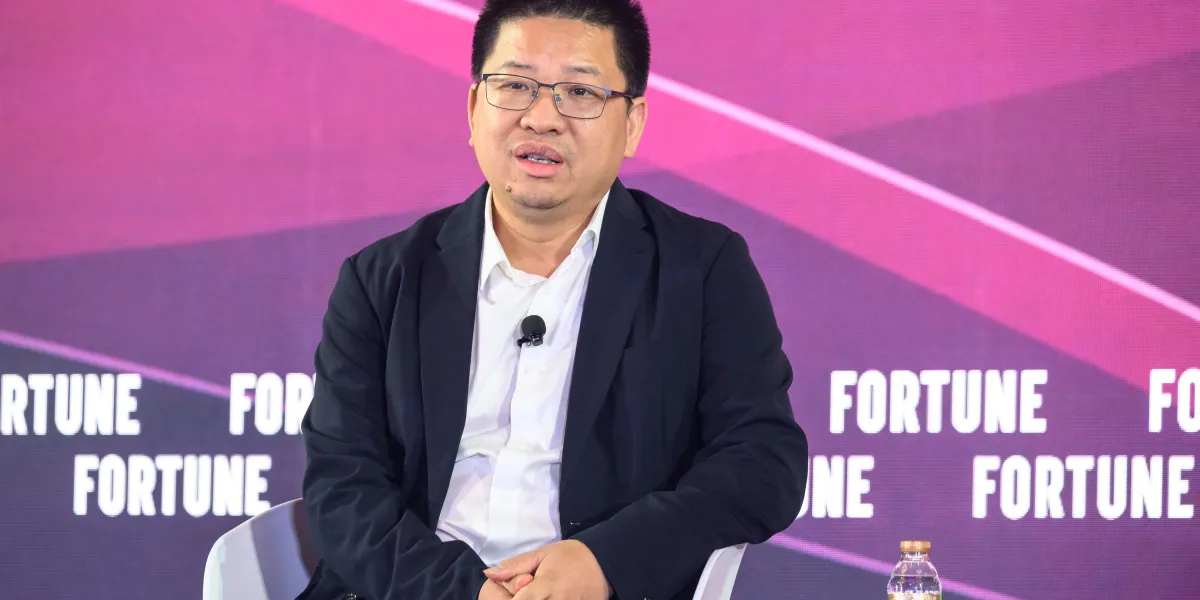
China’s renewable energy overcapacity is driving energy companies to explore artificial intelligence as a way of managing surplus power and improving the reliability of wind and solar infrastructure, speakers at the Fortune Leaders Forum in Macau said.
China has installed renewable capacity at such a pace that its clean energy infrastructure now exceeds what the market requires, according to executives speaking at the event on September 8.
Youyuan Huang, executive vice chairman of battery anode materials producer BTR New Material Group, said: “China’s grid is a very strong and stable one. But we’ve installed too much green energy.”
The International Energy Agency expects China to account for 60% of all installed renewable capacity through 2030. Solar power overtook coal as the country’s largest source of installed power capacity in July, while renewables met all of the growth in electricity demand last year, according to Daniel Liu, vice president of solar module maker Jinko Solar.
AI proposed as answer to China’s energy overcapacity
Artificial intelligence requires a large and dependable supply of electricity, making it a potential consumer of some of the surplus capacity while also helping operators balance the grid.
Mr Huang said energy was essential to the security and stability of computing power. “With the development of GPUs, the power of a single chip has risen dramatically…This means that if the power drops, [large amounts of] data that’s being computed could be lost,” he said.
Jiangxing Intelligence, a physical AI company, has developed a system described as an AI “brain” to monitor environmental conditions around renewable energy installations. It is designed to help ensure electricity is collected and stored in a controlled way, while directing autonomous robots to inspect and maintain solar panels and wind turbines.
Haitian Pang, the company’s founder and chief executive, said artificial intelligence could help operators predict changes in weather and decide when energy storage would be needed.
“The supply of wind and solar energy is highly uncontrollable…at night there’s no sunlight, but during the day sunlight floods in,” Mr Pang said. “With an intelligent brain that deeply understands the region’s physical and meteorological conditions, you can forecast wind and solar conditions, and then know what options you need for energy storage.”
The technology could also reduce the need for manual work in remote locations, he said. Drones could be sent to clean panels covered by windblown sand, allowing the wider energy system to operate more steadily and efficiently.
Renewable energy adoption varies across Asia
Elsewhere in Asia, renewable energy is being adopted at a slower pace, with geography creating particular difficulties for parts of south-east Asia. The Philippines has more than 7,000 islands and Indonesia more than 10,000, making the development and maintenance of a connected electricity grid challenging.
Mr Liu said it remained unclear how renewable energy would develop alongside fossil fuels in those markets. Mr Huang also raised concerns about the supply of clean and reliable electricity as Chinese factories move into the region.
He said many Chinese companies had invested in Indonesia, where large data centres were being built, but added that most were powered by traditional sources such as coal.
India has made substantial progress in renewable energy adoption, Mr Liu said, although demand for coal remains high.
Despite the differences between countries, speakers at the forum said Asia’s transition to cleaner energy was continuing. Mr Pang said a lower-cost clean energy transition would remain an ongoing pursuit, while Mr Liu said the reasons varied between energy security and longer-term ambitions, but countries were “all actively embracing renewables”.
