


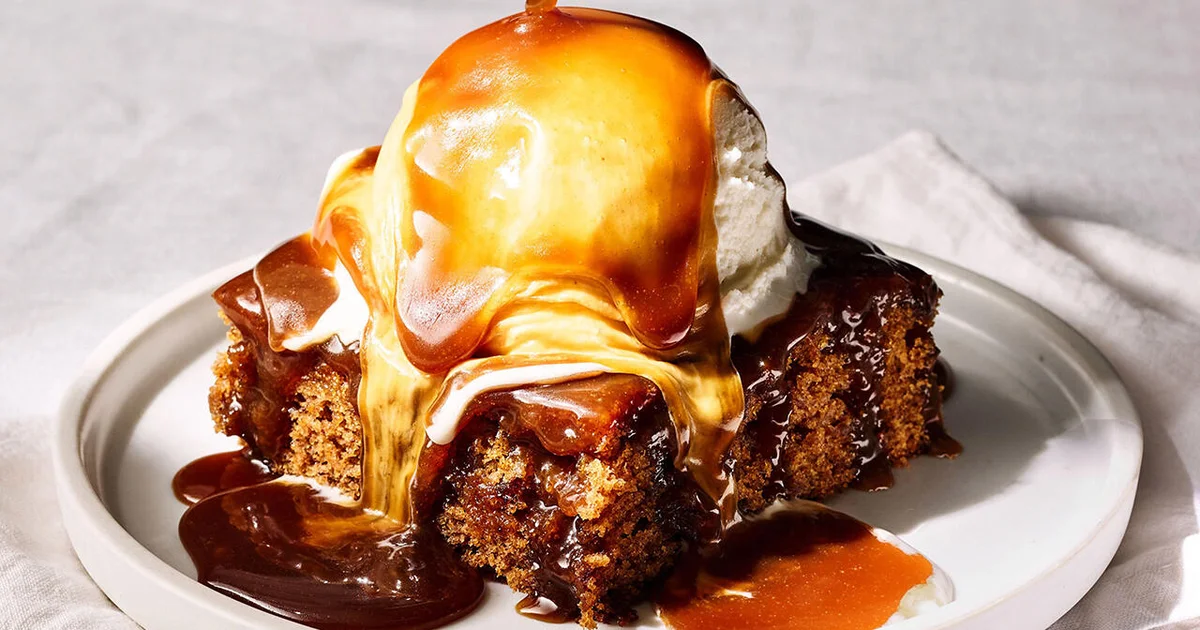
Nigella Lawson’s sticky toffee pudding is a rich, date-filled dessert made with dark brown sugar, light molasses and a warm butter sauce. The recipe, from her 2018 cookbook At My Table, serves nine and takes about 30 minutes of active preparation, with a total cooking time of around one hour and 30 minutes.
The pudding’s deep flavour comes from chopped Medjool dates, dark brown sugar and molasses. Lawson has described her version as “altogether deeper and darker than the original”, with an intensity that suggests ginger, cloves and allspice despite none of those spices being used.
How to make Nigella Lawson’s sticky toffee pudding
For the cake, use 12 large Medjool dates, pitted and roughly chopped, along with boiling water and a teaspoon of baking soda. The dates should be left to soften for about 10 minutes before being lightly mashed with a fork.
The batter is made by beating softened unsalted butter with two tablespoons of unsulfured light molasses, then adding packed dark brown sugar and two eggs. Plain flour and baking powder are mixed in before the softened dates and their liquid are folded through.
Pour the mixture into a buttered 9in square baking dish and bake at 350F until a wooden pick inserted into the centre comes out clean. This should take between 28 and 35 minutes.
While the cake is baking, prepare the sauce with more dark brown sugar, unsalted butter, light molasses and double cream. Melt the butter and sugar together over a low heat, stir in the cream and bring the mixture to a simmer before removing it from the heat.
Once the cake comes out of the oven, prick it all over with a wooden pick. Pour about a quarter of the warm sauce over the surface, spreading it to the edges so the sponge is covered with a thick, sticky glaze.
The pudding should be left to cool slightly for at least 20 minutes, rather than eaten piping hot. Lawson says it reaches its optimum temperature after the sponge has been glazed and allowed to stand.
Serve slices with vanilla ice cream or extra cream, with the remaining sauce offered separately. The recipe makes about two cups of sauce, giving diners plenty to pour over the warm pudding.
Choosing molasses and dates
Unsulfured molasses is generally preferred for baking. It is made from fully ripened sugar cane without preservatives, while sulfured molasses is produced from immature cane and treated with sulphur dioxide, which can give it a slightly chemical flavour.
Chewy Medjool dates are recommended, although other dried dates can also be used. Lawson also suggests running a spoon under a hot tap before measuring the molasses, making the sticky ingredient easier to release.
Any leftovers can be eaten cold. Lawson writes that a piece cut from the dish becomes “the most magnificent sticky gingerbread”.
For a drink pairing, Madeira is suggested for its bright acidity and flavours of fig, hazelnut and toffee, which are described as a balanced match for a rich dessert.
