


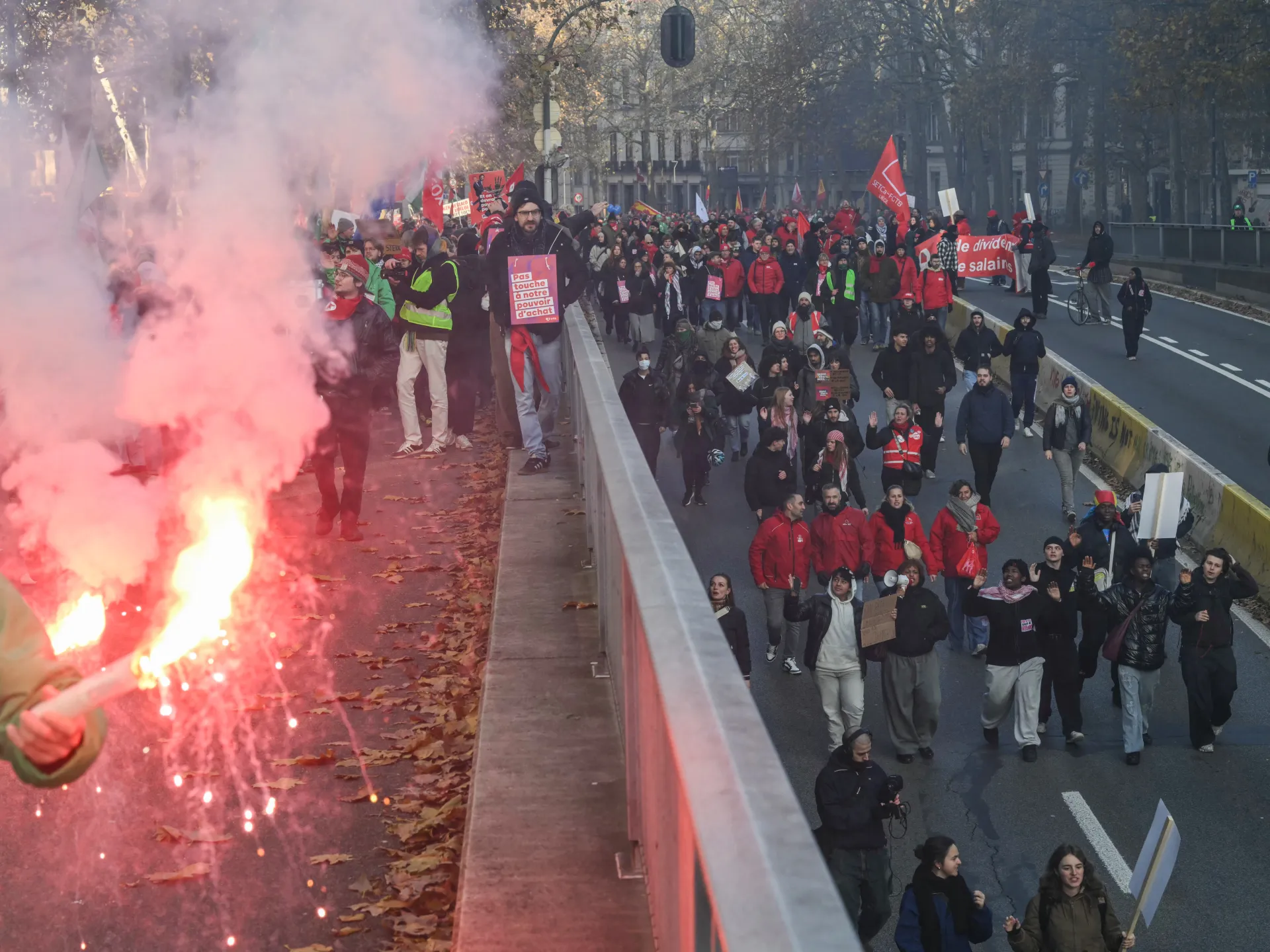
Belgium’s national strike has caused widespread disruption to air, rail and public services, with hundreds of flights and trains cancelled as trade unions protest against the federal government’s planned austerity measures.
Air traffic was suspended at Brussels Airport after air traffic controller Skeyes said it could not provide regular services. The airport said all departing and arriving flights between 7am and 9pm local time would be cancelled.
Operations were also halted at Brussels’ Charleroi airport, a major base for low-cost airlines including Ryanair.
The Board of Airline Representatives in Belgium, which represents about 25 carriers, said the stoppage would be the 11th strike to affect Belgian airspace in 11 months.
Buses, trains, schools and other public services were also hit by the action. Belgium has seen repeated protests and strikes over living costs in recent months, with much of the anger focused on Prime Minister Bart De Wever’s cost-cutting plans.
Belgium austerity plans threaten coalition
The government is seeking to save €10 billion over the coming years as it attempts to reduce the country’s high deficit. The measures have divided the ruling coalition and raised the prospect of the government collapsing.
Mr De Wever has already offered his resignation to King Philippe, who declined to accept it and gave the prime minister more time to resolve the impasse. After another week of talks ended without agreement, Mr De Wever set December 31 as a new deadline for reaching a deal on next year’s budget.
His office said: “Should we not have a budget agreement [before the end of the year], the government will effectively be unable to govern, thereby bringing its existence to an end.”
Proposals include spending reductions, particularly in healthcare, and an increase in VAT. Unions have instead called for higher earners to bear more of the burden as protests over rising living costs continue in Belgium and elsewhere in Europe.
