


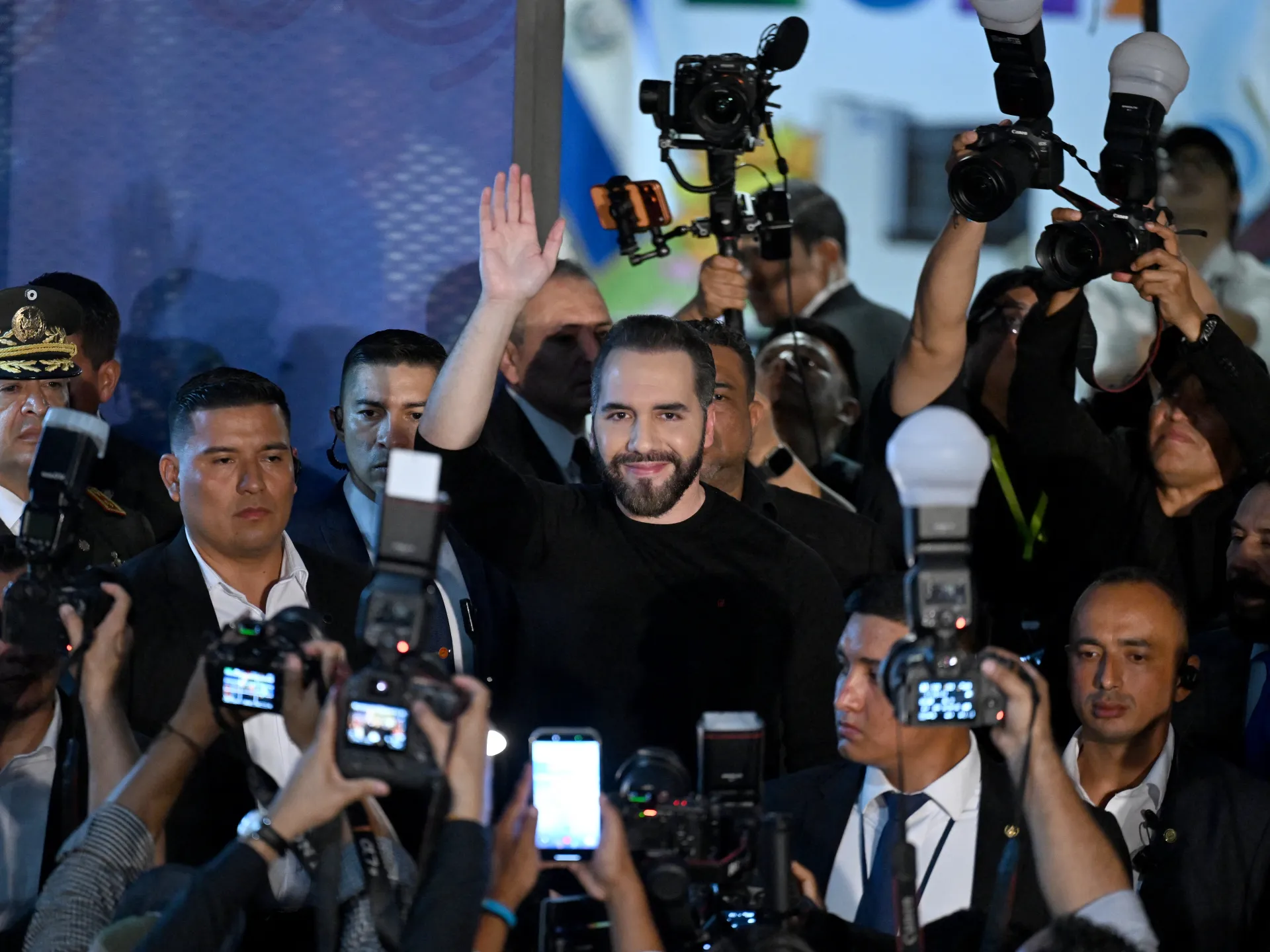
El Salvador’s President Nayib Bukele has launched his re-election campaign for a third consecutive term, after constitutional changes removed presidential term limits and extended terms from five years to six.
Bukele arrived at the Supreme Electoral Tribunal on Friday to register his candidacy for the February 2027 elections, where supporters gathered outside to back the 45-year-old president.
He is widely expected to win, having built substantial political support around his crackdown on the country’s violent cartels. The campaign launch has nevertheless intensified accusations that his administration is dismantling checks and balances and moving El Salvador towards a de facto one-party state.
Bukele’s party, Nuevas Ideas, used its supermajority in Congress to remove the presidential term limit and change the length of terms. Last year, it also abolished second-round votes and brought forward the national elections by two years.
Critics say the changes have consolidated power in the president’s hands. The Bertelsmann Transformation Index and others have accused Bukele of creating a de facto one-party state.
Addressing supporters on Friday, Bukele rejected those claims. “In El Salvador there is total, complete open democracy,” he said. “We’re sending a message to the world that El Salvador will never return to the past.”
His campaign has been closely tied to the crackdown on criminal groups, which has become a defining feature of his presidency and political identity.
Bukele has also begun exporting that approach. Last month, he sent about 2,500 soldiers to Haiti after four Salvadoran members of a United Nations-backed force went missing. The deployment was welcomed in gang-wracked Port-au-Prince, although analysts questioned whether the president was using the crisis to strengthen his international reputation.
Juan Pappier of Human Rights Watch accused Bukele of seeking a third consecutive term after packing the courts, rewriting the constitution to suit his interests and jailing or forcing into exile those who criticise him.
“The absolute concentration of power in his hands has been the defining feature of his administration,” Pappier said.
