


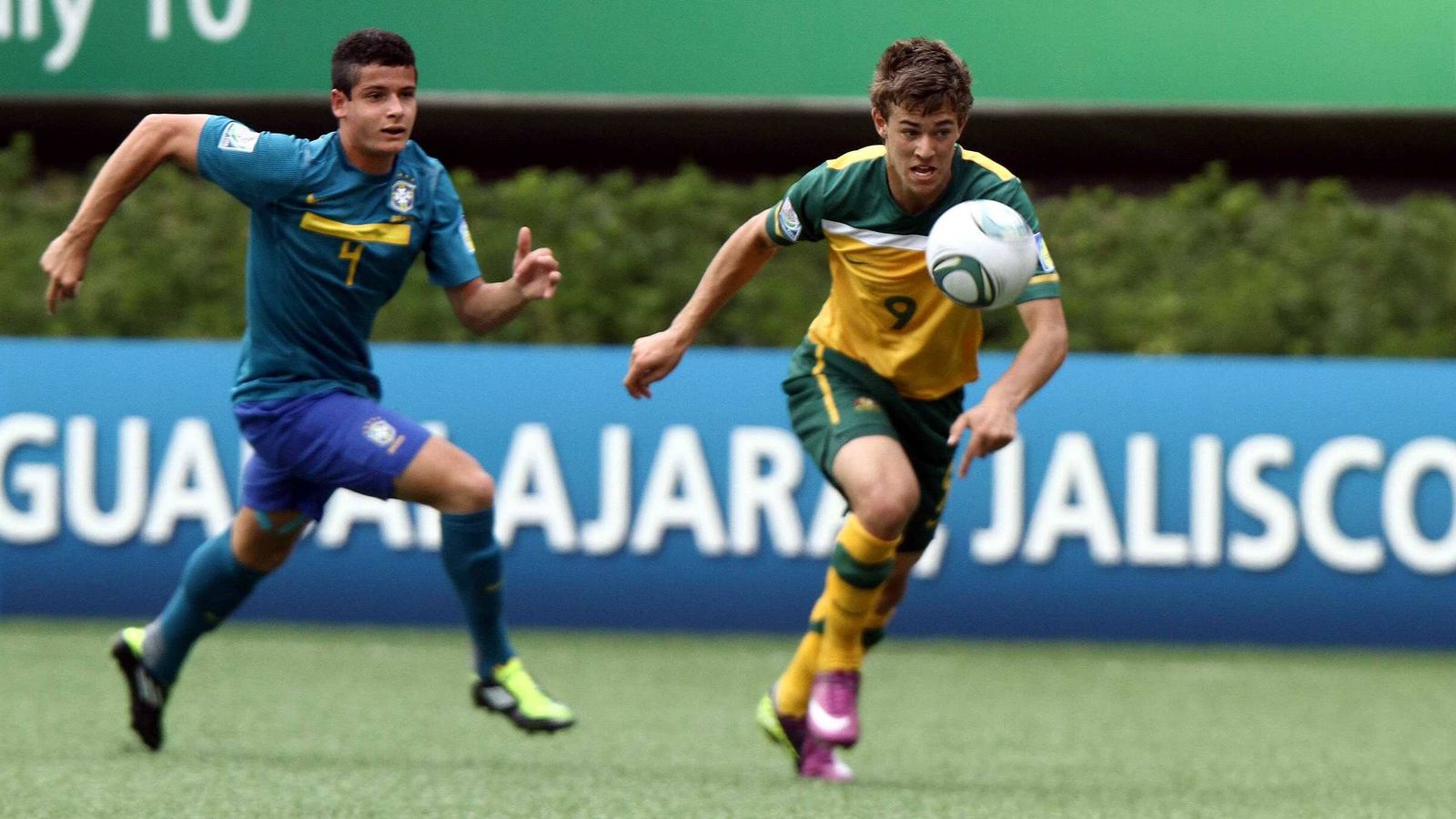
The family of former West Ham striker Dylan Tombides has delivered testicular cancer awareness talks to 1,200 players at the Under-17 World Cup in Doha, 15 years after he was diagnosed with the disease while representing Australia.
Tombides died in April 2014 aged 20, following three years of intensive chemotherapy. His mother, Tracy, and brother, Taylor, have returned to the tournament through the DT38 Foundation, established in his memory, to explain the importance of regular self-examination.
Tombides was diagnosed during the 2011 competition in Mexico after a random drugs test uncovered a condition which had initially been misdiagnosed by his GP as a cyst.
DT38 Foundation reaches 48 teams
Working with FIFA Medical, Tracy and Taylor have spoken to all 48 teams during a two-week programme, outlining how players can check themselves and why early action matters.
“Getting the call from FIFA was a massive opportunity and an amazing thing for us and for the charity,” Taylor said. “Obviously, it’s where Dylan last kind of played healthy before his diagnosis. So to come back to where it all started for us as a family is a grateful honour.”
Testicular cancer is the most common cancer in males aged between 15 and 44, but it is highly treatable and in most cases curable when detected early.
Dr Andy Massey, FIFA’s chief medical officer, helped establish the partnership and has overseen free scans for players during the tournament.
“It’s the number one cause of fatality of cancer in this particular age group,” he said. “This is one of the biggest things I think I’ve ever done in my sports medicine career because it has such a reach.”
The presentations have prompted emotional reactions from the young players. Tracy recalled one member of the Jamaica squad telling her: “I’m so sorry for your loss. I’m sorry your son isn’t coming home to you. We are so grateful that you are telling us all about it.”
A conversation with the France team also ended with hugs rather than handshakes, she said.
Campaign urges men to check themselves
The DT38 Foundation runs its Check One Two campaign, which encourages men to examine themselves on the first day of every month. Tombides’ nickname, Didge, is also used in the foundation’s message: “Delay Is Deadly, Get Educated.”
Tracy said early detection could make a significant difference to the treatment required, and urged anyone with concerns to insist on an ultrasound examination.
“Early detection is the difference between dealing with cancer treatment that has a 96 per cent cure rate or the figures drop away very, very quickly if you have to go to round two or round three of chemotherapy,” she said.
She and Taylor have received messages from people who remembered Dylan’s story after finding a lump, sought help and were subsequently treated for testicular cancer.
“I thought of Dylan’s story when I found a lump and I knew not to delay. I had testicular cancer and now I’m cancer-free and Dylan saved my life,” one message said, according to Tracy.
“That tells us that what we’re doing is life-changing for that family, that person,” she added.
Taylor said educating players at a young age could extend the campaign’s impact beyond the current tournament.
“The effect is lasting. If we can teach these kids now, we know the next generation, they’ll teach their kids and they’ll teach their kids and it’ll be continuous,” he said.
“We’re not just affecting one life, we’re affecting a whole generation of lives, which is the biggest part of it. Without FIFA, we couldn’t touch as many people as we have.”
