


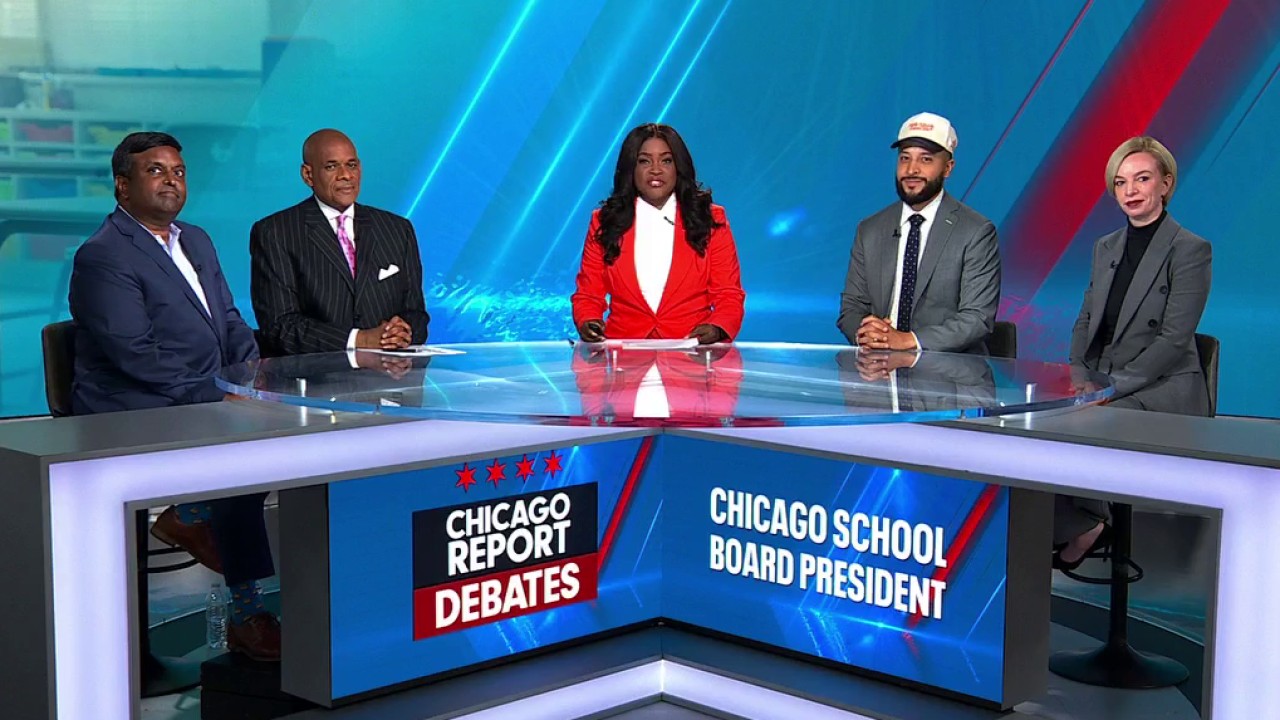
Chicago School Board president candidates have backed tighter controls on the use of artificial intelligence in classrooms, while differing over whether the technology should be paused altogether across the city’s public schools.
The issue featured prominently in a debate involving Jessica Biggs, Hilario Dominguez, Victor P. Henderson and Sendhil Revuluri, who are seeking to become Chicago’s first elected president of the Board of Education.
All four candidates said they supported stricter limits on how AI and digital devices are used in Chicago Public Schools classrooms. Their positions reflect growing concern about student privacy, screen time and the risk that automated tools could weaken pupils’ ability to think and work independently.
Chicago school board candidates divided over AI ban
The discussion comes as Illinois Families for Public Schools, a parent advocacy group, urges candidates to sign a pledge calling for a three-year moratorium on generative AI in the district.
The proposed pledge also calls for a chief privacy officer, tighter restrictions on screen use by younger pupils and a ban on collecting students’ biometric information, except where it is needed to support children with disabilities.
About half of the candidates standing for the 21 seats on Chicago’s fully elected school board have signed the pledge, according to reporting by Chalkbeat Chicago. Biggs is among those who have backed it.
Henderson has declined to sign, saying a blanket commitment could prevent schools from teaching pupils how to understand and use a technology that is already becoming part of everyday life. He has instead called for CPS to act cautiously, transparently and responsibly while protecting children.
Chicago Public Schools has rejected claims that it is preparing to place an AI chatbot on every high-school pupil’s Chromebook. The district said a plan to provide access to Google’s Gemini chatbot was put on hold in May after concerns were raised about schools’ readiness and the need for further staff training.
CPS has said it supports the potential educational benefits of AI, but wants its use to be governed by safeguards for critical thinking and student data. The district has also pointed to work by pupils and staff on guidance for the responsible use of the technology.
The dispute is likely to remain a central issue in the election, which will complete Chicago’s transition from mayoral control to a fully elected Board of Education. Voters will choose the board president and 20 district representatives on November 3.
