


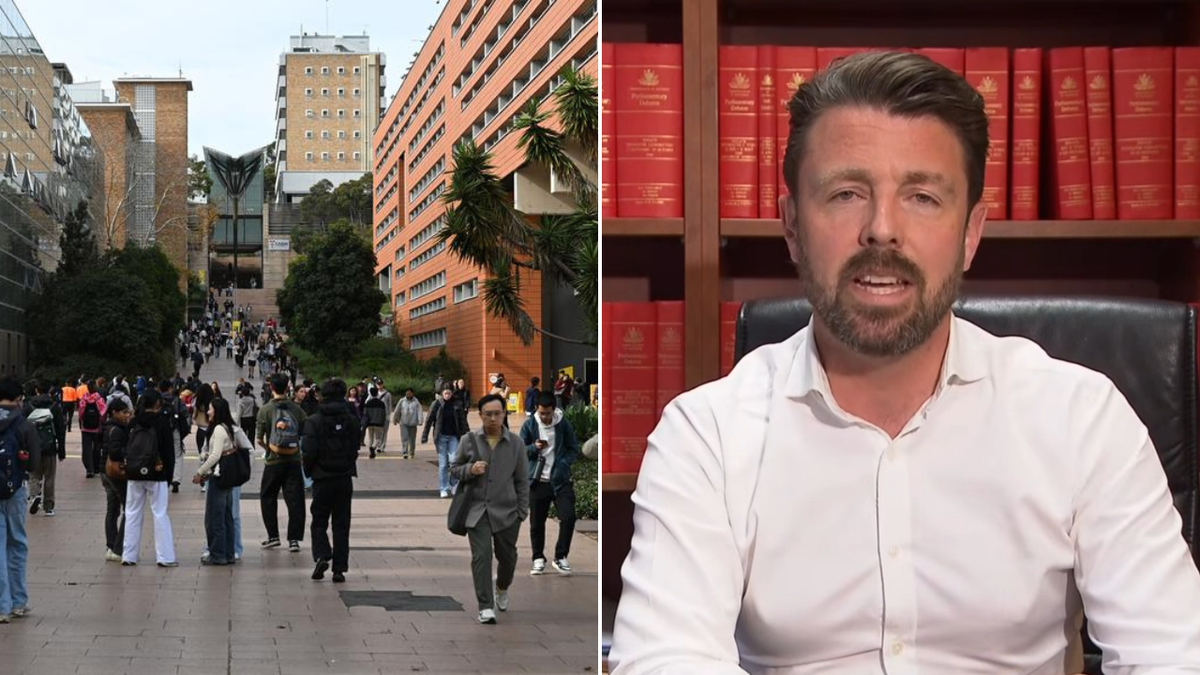
The Coalition is preparing to target international student numbers rather than backpackers as it seeks to reduce migration, with Shadow Home Affairs Minister Jonno Duniam due to unveil the Opposition’s detailed plan next week.
The policy is expected to include specific migration figures, economic modelling and an assessment of its impact on the community. Duniam has indicated that foreign students would bear the brunt of the proposed reductions.
His announcement will set out a migration target linked to workforce requirements and the number of homes being completed. About 172,000 homes were built last year, meaning the Coalition’s target is expected to be at or below that level.
That would place the Opposition below Labor’s net overseas migration target of 225,000 for 2027-28, but above One Nation’s proposed long-term cap of 130,000.
Coalition migration plan to focus on international students
Duniam criticised One Nation’s proposal to cut 750,000 temporary visas over three years before introducing a permanent annual net migration cap of 130,000.
“The problem with One Nation is they say things people want to hear, but never back it up with detail,” he said.
“Their policies will become law (if One Nation wins government), but we don’t understand how they work because they haven’t been able to explain them.”
The Albanese Government is seeking to meet its migration target by limiting second and third-year backpacker visas through a lottery system. Duniam rejected that approach, saying farmers, tourism operators and small businesses depended on working holiday labour.
“We don’t believe the lottery system… is one that is viable,” he said.
“It provides a huge amount of uncertainty. Our plan will be more comprehensive. It’s one where you won’t see farmers, wine growers and fruit and berry growers, you won’t see the hospitality sector out there criticising us.”
Duniam also acknowledged what he described as an unintended consequence of the Australia-UK Free Trade Deal. British backpackers can work in Australia without being required to undertake regional work, and the Coalition would support the Government in negotiating a solution with the UK government.
“There is that unintended consequence that does need to be dealt with,” he said. “I’m sure the Government will come up with a way.”
International students are the largest group of temporary migrants currently in Australia, numbering 589,923 according to figures from the Australian Bureau of Statistics and the Australian National University’s Migration Hub.
Duniam has criticised institutions such as Sydney University, where he says 51 per cent of students are foreign. He said the Coalition would seek to reduce international student numbers in a targeted way, particularly at private institutions he alleged “sell citizenship rather than education”.
“That’s not good on any front,” he said. “That is filling your boots and trying to rake in as much cash as possible to prop up a business model.”
Associate Professor Alan Gamlen of the ANU Migration Hub said the major parties were focusing on the wrong issue. He warned that concentrating on arrivals could create sharp swings in migration levels and lead to workforce problems.
Gamlen said arrival numbers had stabilised and that attention should instead turn to departures, including people whose visas had been extended during and after the Covid pandemic.
“It’s processing that delayed departure cohort, that will solve the problems we’ve got,” he said.
Duniam, a Tasmanian Liberal senator who is preparing to leave federal politics at the age of 43, is expected to use the migration policy to strengthen Opposition Leader Angus Taylor’s position with conservative voters and the business community.
