


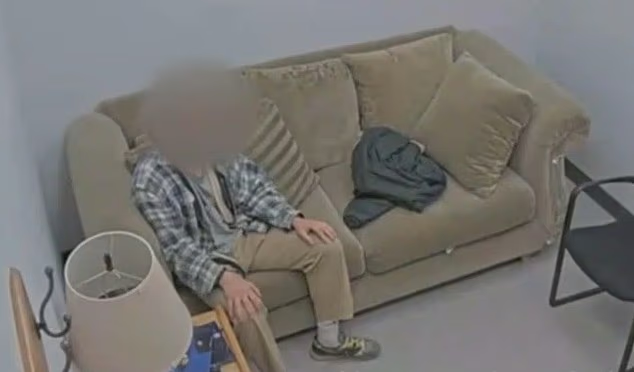
Newly surfaced video shows two members of Cornell University’s Chi Phi fraternity telling investigators that sexual activity during an alleged gang rape was consensual, despite the accuser’s claim that she was incapacitated and unable to consent.
The woman, identified in court documents as Jane Doe, sued last month alleging that she was sexually assaulted by several male students at the now-defunct fraternity house on 19 October 2024.
Neither of the two fraternity members interviewed was among those accused. Their faces have been obscured and their names withheld in the footage.
One man told investigators: “What people were saying was that there was like multiple consenting adults in this room.” A second added: “There was consensual act that took place.”
The investigating officer challenged them on how they could know whether those involved had consented to sexual activity.
“Dude, I was a college kid. I get it. In college I wouldn’t have been like, ‘oh, that was a sick consensual act last night.’ Right? I guess how did they know it was consensual?” the officer said.
The second man replied: “I mean, I can’t recall exactly what was said, but, yeah, I mean, they – they said that they had sex with her, I guess.”
Allegations and disciplinary action
Jane Doe alleges that Umar Matthew Ingalls, Jonathan Newell, Winston Lee, Gillio Lopes, Diego Sarabia, Scott Noris and Scott Kretzschmar engaged in sexual acts with her while she was “completely incapacitated” and without her consent.
She claims the ordeal lasted until about 5.45am, when she lost consciousness, and that she had been pressured into consuming alcohol and taking ketamine. The men have either denied the allegations or said that any sex was consensual.
Doe, who was then a 20-year-old sophomore, reported the alleged assault to Cornell police in November 2024, three weeks after she said it happened.
Campus police sent a summary of their investigation to the district attorney’s office, which decided not to bring criminal charges. Cornell also conducted a Title IX investigation.
Ingalls was expelled, as was Newell, who allegedly took part in a threesome with Doe and Ingalls and struck the woman. Lee and Lopes received suspensions and disciplinary probation, while Sarabia was barred from campus for three years.
Noris and Kretzschmar were ordered not to contact Doe and were required to study sexual harassment, social media use and bystander intervention before writing reflection papers. They were not alleged to have taken part in the assault but were accused of entering the room after a fraternity Snapchat message referred to “free p***y” upstairs.
Ingalls later claimed that he was the person who had been sexually assaulted, saying he had been too intoxicated to consent to intercourse. In an email to Cornell’s Title IX investigator in February 2025, he accused the university of “entrapment” and suggested that he would make a complaint against Doe.
Investigation reopened
No criminal charges have been filed against any of the men. The Chi Phi chapter was shut down, while Cornell said some students had been expelled and others suspended.
The case has since been reopened by the Tompkins County district attorney’s office, and New York Governor Kathy Hochul appointed Attorney General Letitia James as a special prosecutor.
Cornell has also hired former Deputy Attorney General Sally Yates to review its handling of the case and its wider policies on sexual assault. The review will examine how reports are received and investigated, disciplinary hearings and decisions, the role of campus police, cooperation with outside law enforcement and prosecutors, and oversight of fraternities and sororities.
