


Global defence spending is on course to exceed $8 trillion as geopolitical tensions drive a worldwide rearmament push, even as Democratic victories in the US midterms threaten plans for a major increase in the Pentagon’s budget.
Adam Smith, the senior Democrat on the House Armed Services Committee, has argued that the proposed $1.5 trillion US defence budget for 2027 would be excessive. The plan would represent an increase of more than 40% and, he said, could come at the expense of services for the American public.
In a letter to colleagues, Mr Smith called for a smaller military budget and an investigation into the Pentagon’s dealings with defence contractors.
“We must thoroughly review our national defense strategy and develop a more realistic and sustainable approach that does not require a defense budget in excess of $1 trillion or paid for through draconian cuts to critical domestic programs,” he wrote.
Global defence spending gathers pace
Economists and public policy experts say increased interest in cyber security and renewed military investment have accelerated a cycle of spending that slowed after the end of the Cold War before rising again following the September 11 attacks.
Defence spending across the G7 — Canada, France, Germany, Italy, Japan, the UK and the US — has reached 2% of gross domestic product, its highest proportion in more than three decades, according to asset management firm Carlyle.
At the current rate, that share could rise to 3.8%, representing roughly $8 trillion in defence commitments.
The US accounted for about one-third of global defence spending after exceeding $1 trillion in the 2026 fiscal year. It remains by far the largest military spender, providing arms and aid to European allies as well as funding its own forces, although other wealthy nations are making up an increasing share of global outlays.
With wars continuing in Ukraine and the Middle East, countries are changing how they assess military risk. Rather than preparing for a single conflict, they are building broader capabilities as part of a structural shift, according to retired Admiral James Stavridis, Carlyle’s vice-chairman of global affairs and a former NATO commander.
“None of this is unique to the United States,” he wrote in a research note. “Europe and Japan are both increasing defense budgets meaningfully, and the underlying logic is the same everywhere: if you cannot count on someone else to defend you, secure your energy, or protect your infrastructure, you build the capability yourself, and you build it now.”
Europe’s rearmament drive
European Union defence spending reached €418 billion (£363 billion) in 2025, equivalent to about 2.2% of the bloc’s GDP. It is projected to rise to €454 billion (£394 billion), or 2.4% of GDP, this year.
Huw van Steenis, a former securities analyst and partner at Apollo Global Management, said the spending was extending beyond defence companies into infrastructure investment. Disruptions involving undersea cables and cyber attacks that caused hundreds of supermarket refrigerators to stop working have also heightened concerns about resilience.
Those threats could lead to additional NATO security spending alongside a commitment to devote 3.5% of GDP to core defence, Mr van Steenis wrote.
“The bottom line is that some of the next beneficiaries of Europe’s defense buildout may sit in infrastructure, energy and industrial technology rather than in the defense sector itself,” he said.
Linda Bilmes, a Harvard Kennedy School public policy lecturer, said Europe’s increased spending was also linked to the war in Ukraine and a reduced expectation of American military support.
“What is driving this whole enormous bill?” she said. “In Europe, it’s the combination of the war for four years in Ukraine and Russia, and the unreliability of the United States to support NATO.”
EU member states have provided almost $83 billion in military support to Ukraine since Russia’s invasion began in 2022. That figure could rise as the Pentagon reportedly reduces its leadership of the NATO-based Security Assistance Group in Germany, which co-ordinates training and supplies for Ukraine, in July.
The move is part of a wider effort by the Trump administration to scale back America’s global military support under its “America First” approach and protectionist policies.
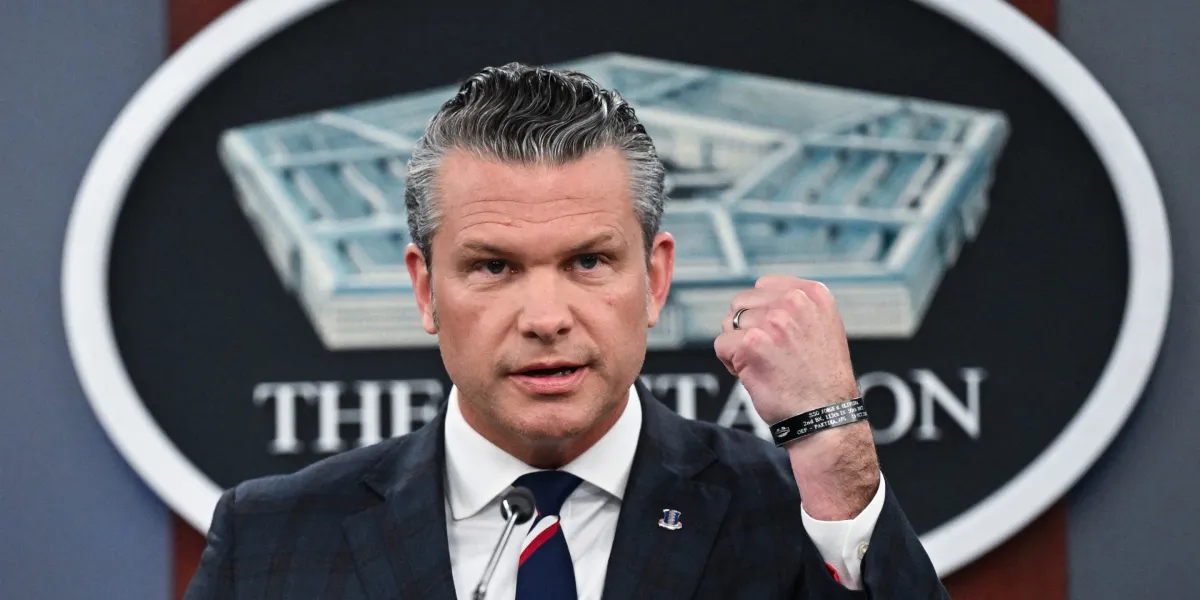
Speaking at the Shangri-La Dialogue in Singapore on May 30, Defence Secretary Pete Hegseth urged Asian allies to move away from relying on US assistance.
“Our approach asks Pacific nations to do what many are already eager to do: invest seriously in their own defense, contribute more to collective security,” he said.
US defence budget faces fresh scrutiny
Rebecca Patterson, a senior fellow at the Council on Foreign Relations, has warned that the global rearmament drive could intensify budget deficits, inflation and interest rates.
“For the private sector, higher interest rates on government debt translate into higher borrowing costs for companies and households, the latter importantly including mortgages and auto loans,” she said. “All else equal, these costs weigh on economic growth.”
With Democrats taking control of both chambers of Congress, the party is expected to seek substantial changes to Republican defence spending legislation and subject the Pentagon budget to greater scrutiny.
Ms Bilmes said Democrats could seek to redirect money from the Pentagon towards the State Department and US contributions to the United Nations, as part of an effort to strengthen American soft power.
“There are a lot more people who are not interested in purely pushing some of the Trump agenda for bigness,” she said. “I think that there will probably be a significant change in terms of pushing to restore some of the soft power that has been cut.”
