


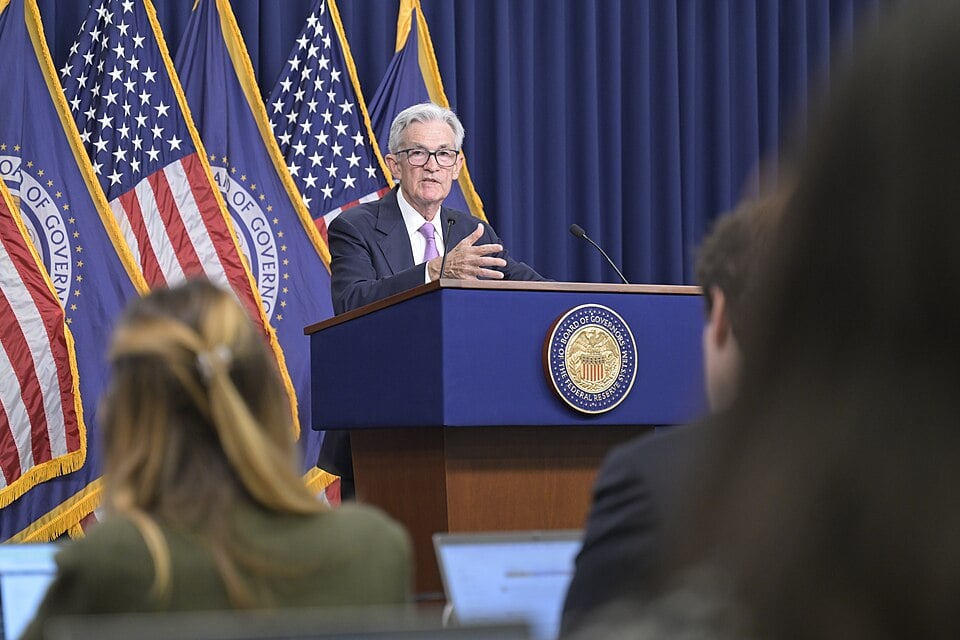
The US Department of Justice has abandoned its criminal investigation into Federal Reserve Chair Jerome Powell, a move that removes one of the most politically charged obstacles to the Senate’s confirmation of Kevin Warsh as his successor.
The decision was announced on Friday by Jeanine Pirro, US Attorney for the District of Columbia, in a post on X — just three days after Mr Warsh appeared before the Senate Banking Committee for his nomination hearing. It marks a striking reversal: as recently as Wednesday, Ms Pirro had publicly insisted she was committed to pursuing the probe.
What has changed, and why the timing matters
In place of the criminal inquiry, Ms Pirro said the Federal Reserve’s inspector general had “been asked this morning” to take over the examination of cost overruns associated with the multibillion-dollar refurbishment of the central bank’s Washington headquarters. That project — already under review by the inspector general since last summer — had been the stated pretext for her office’s interest in Mr Powell, with Ms Pirro citing both the renovation and the Fed chair’s testimony to the Banking Committee about it.
The criminal probe had been struggling to gain traction. A federal judge’s earlier ruling quashed subpoenas issued by Ms Pirro’s office to the Fed, significantly weakening her investigative position. In explaining her decision on Friday, she said: “The IG has the authority to hold the Federal Reserve accountable to American taxpayers.” She added that she expected “a comprehensive report in short order” and was “confident the outcome will assist in resolving, once and for all, the questions that led this office to issue subpoenas.” The closure, she emphasised, was not necessarily permanent: “Note well, however, that I will not hesitate to restart a criminal investigation should the facts warrant doing so.”
A spokesperson for the inspector general told CNBC that the office was “actively working to complete” its evaluation of the board’s building renovation project and would make the findings public and available to Congress on completion.
Why the shift unblocks the Warsh nomination
The political significance of the move lies principally in the Senate. Senator Thom Tillis, a North Carolina Republican on the Banking Committee, had effectively held up the full chamber from proceeding to a confirmation vote on Mr Warsh while the criminal probe remained open. With the investigation now shelved, that procedural obstacle falls away.
Committee chairman Tim Scott of South Carolina had argued earlier in the week that handing the matter to Congress rather than federal prosecutors was essential if Mr Warsh was to be confirmed. In a CNBC interview he floated the creation of a joint committee with the House Financial Services panel, saying: “Wherever that leads us, we should go. If that leads to a criminal referral, so be it. But give us Kevin Warsh at the Fed so that we have access to all the information necessary.” Mr Scott also offered a pointed characterisation of the outgoing Fed chair, describing Mr Powell as “incompetent, not criminal.”
The White House, which has nominated Mr Warsh to replace Mr Powell, signalled confidence that the confirmation will now proceed swiftly. “American taxpayers deserve answers about the Federal Reserve’s fiscal mismanagement, and the Office of the Inspector General’s more powerful authorities best position it to get to the bottom of the matter,” said spokesman Kush Desai, adding that the administration remained “as confident as before that the Senate will swiftly confirm Kevin Warsh”.
A probe that many viewed as pressure politics
The inquiry itself has been widely interpreted as a mechanism to pressure Mr Powell and the Fed into cutting interest rates, a long-running demand of President Donald Trump. Mr Powell himself had requested the inspector general’s review of the renovation in July, after Mr Trump publicly criticised its cost, pointing out that the inspector general had already conducted a 2021 audit of the Fed Board’s handling of renovation contracts.
Democrats have reacted sceptically to Friday’s announcement. Senator Elizabeth Warren of Massachusetts, the ranking Democrat on the Banking Committee, characterised the move as “just an attempt to clear the path for Senate Republicans to install President Trump’s sock puppet Kevin Warsh as Fed Chair.”
Her statement also drew attention to the parallel legal pressure facing another member of the Fed’s board. “They threatened to restart the bogus criminal investigation into Fed Chair Powell at any time while failing to drop their ridiculous criminal probe against Governor Lisa Cook,” Ms Warren said. Ms Cook, like Mr Powell, had resisted White House calls to cut rates. Last summer, an administration official alleged she had made false statements on mortgage applications; she denied the claims and sued to prevent her removal, and remains on the board while the Supreme Court considers her case.
“Anyone who believes Donald Trump’s corrupt scheme to take over the Fed is over is fooling themselves,” Ms Warren said. “The Senate should not proceed with the nomination of Kevin Warsh.”
What comes next
For now, the political path to a vote on Mr Warsh has been smoothed, but the substantive questions about the Fed’s building project remain open — simply relocated from a federal prosecutor’s office to an inspector general whose report, when it is delivered to Congress and the public, will be scrutinised in an intensely charged political environment.
