


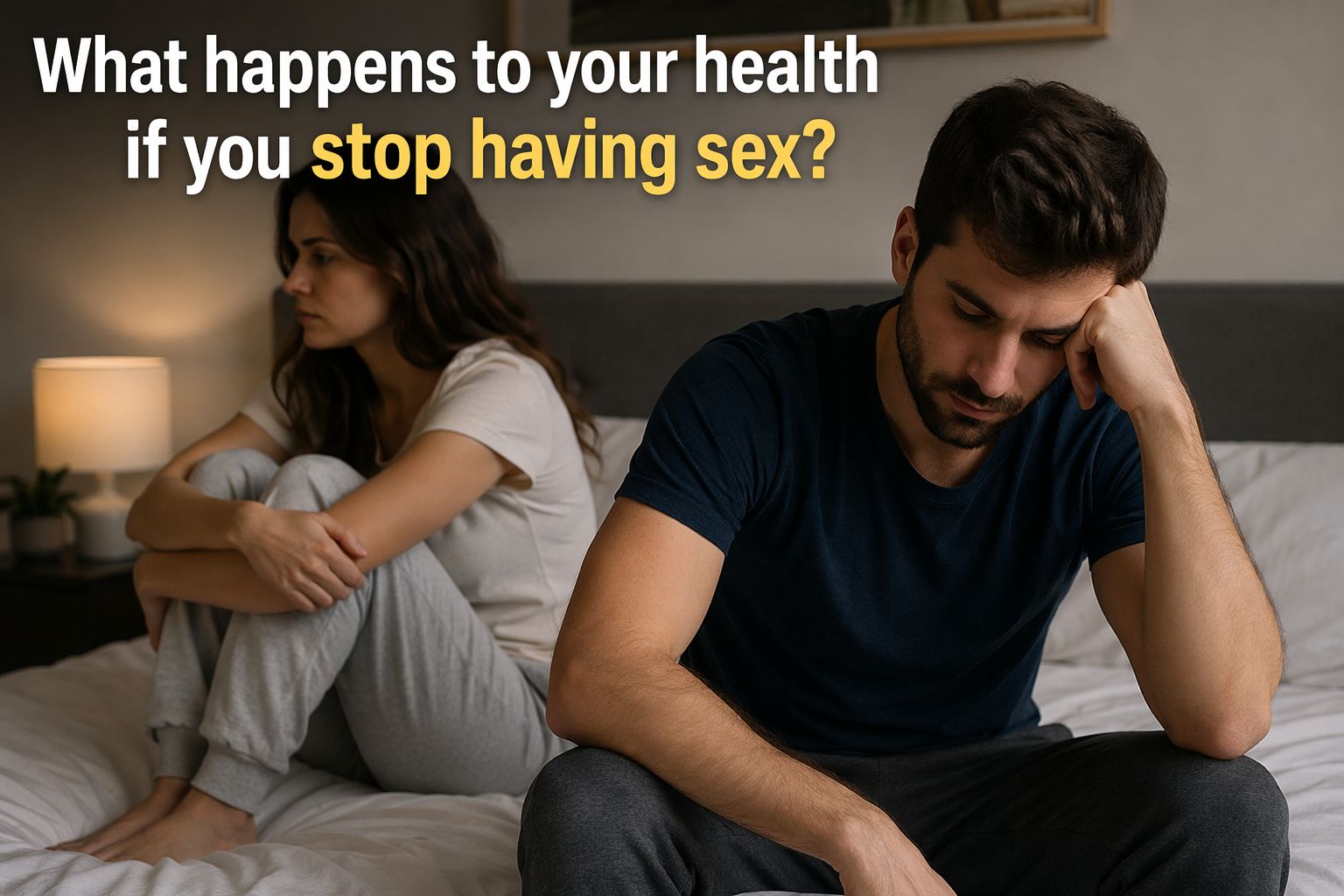
A quieter sex life than you might think
Britain’s bedrooms are a good deal less busy than popular culture might suggest. Research indicates that roughly 16 per cent of men and 22 per cent of women in the UK are sexually inactive, and one survey has put the share of sexless relationships at more than a quarter. The reasons vary enormously — some people choose celibacy outright, while others find themselves in partnerships where one half wants intimacy and the other does not.
That raises a question many people quietly wonder about but rarely ask aloud: if you stop having sex, does anything actually happen to your body, and should you be worried about it?
Defining a “sexless” life
Sexual abstinence, in the strict sense, is a deliberate decision. “Sexual abstinence is a choice to refrain from engaging in any form of sexual activity. This may be due to personal, relational, cultural or religious reasons,” explains Dr Ali Novitsky, an obstetrician and the founder of Exercising Intimacy, a programme that uses physical activity as a route to closer partnerships.
The benchmark for what counts as a “sexless marriage” comes from The Social Organization of Sexuality, a study of 3,432 people in the United States, which defined it as a couple who are either not having sex at all or are doing so only very rarely.
The physical and emotional effects
According to Dr Novitsky, going without sex can ripple outwards into both how you feel and how your body functions. “Abstaining from sexual activity can have a variety of effects on individuals, both physically and emotionally,” she says. The most immediate of these tends to be hormonal: regular sex is known to lift levels of chemicals such as oxytocin and endorphins, both of which are linked to feelings of happiness and lower stress. Stop having sex, and those levels may dip accordingly.
The potential consequences are not limited to mood. A study published in the European Journal of Preventive Cardiology found that having sex at least 52 times a year was associated with a 10 per cent reduction in deaths from heart disease and a striking 44 per cent fall in deaths from other causes — a finding that has fuelled the argument that intimacy is, in some sense, good for longevity.
For women going through or beyond the menopause, the effects can be more localised. As oestrogen levels fall, the vaginal tissues can become thinner and drier — a condition known as vaginal atrophy, which can bring itching, burning, discomfort during sex, unusual discharge and spotting. Studies suggest that women who continue to have sex regularly tend to experience milder symptoms than those who do not.
Why regular sex tends to be good for you
The case for an active sex life rests on a fairly broad evidence base. Research has linked it to reduced anxiety and lower rates of depression, and to a stronger immune system: one study of university students found that those having sex once or twice a week had higher levels of immunoglobulin A, an antibody that helps fend off infection.
For men, frequency appears to matter for prostate health. A 2016 study found that those who ejaculated at least 21 times a month had a lower risk of prostate cancer than men who did so only four to seven times. For women, orgasms have been linked to stronger pelvic floor muscles, which can offer some protection against incontinence in later life.
The relational benefits may be just as significant. Couples who maintain a regular sex life tend to report longer and more satisfying partnerships, with research pointing to less strain in the relationship — an effect that, interestingly, appears to be more pronounced for men than for women.
Why couples drift apart in the bedroom
If sex is so beneficial, why do so many couples stop? A survey of 2,000 adults found that exhaustion topped the list, cited by 45 per cent of respondents. Stress was next at 29 per cent, followed by a gradual fall in libido (28 per cent), mismatched sex drives (20 per cent) and a general absence of intimacy (19 per cent).
Dr Novitsky says the reality is usually more layered. “For many, the demands of daily life, work, children and other responsibilities can take precedence over intimacy, leaving little time for sex,” she observes, noting that stress and fatigue can sap both libido and desire.
Health, too, plays a part. “In some cases, health issues, including hormonal imbalances, menopause or chronic illness, can directly impact sexual function or desire,” she says. Heart disease, high blood pressure and diabetes are all known to contribute to impotence in men, and conditions including cancer, chronic respiratory illness and certain medications can take their toll on older people’s sex lives. Her advice is straightforward: “If you suspect an underlying health issue, seek medical advice. Hormonal therapy or medication might be helpful.”
Psychology matters as well. A study in the Journal of Sex Research, which followed 1,170 adults with an average age of 53 over a decade, found that those who “felt older” — and held negative views about ageing — reported the steepest declines in sexual quality. Those who felt younger reported the opposite. Hormonal shifts can complicate matters further: a Relate survey found that nearly a third of women over 60 said they had lost their libido following the menopause.
Emotional factors cannot be ignored either. “Emotional factors such as depression, anxiety or unresolved conflict within the relationship can also lead to a decrease or cessation of sexual activity,” Dr Novitsky says, adding that some couples simply experience a natural cooling as the early novelty of a relationship fades. “It’s important to remember that a decrease in sexual activity doesn’t necessarily indicate a problem… However, if the lack of sex is causing distress to either partner, it’s crucial to address the issue openly and constructively, considering professional help if needed.”
Lifting a flagging libido
There is no universal definition of a “low” sex drive, Dr Novitsky stresses — what matters is whether you are content with where things stand. For those who do want a boost, she recommends an approach that pulls together physical health, mental wellbeing and the dynamics of the relationship itself.
Self-care is the foundation: regular exercise, a balanced diet and proper sleep. A 2015 study of women suggested that simply sleeping longer the night before increased sexual desire the following day. Exercise helps in multiple ways — another 2015 study, this time of men undergoing androgen deprivation therapy, found regular activity helped them cope with low libido and body image concerns. “Regular physical activity can increase blood flow, enhance mood and improve body image, all of which can contribute to a healthier sex drive,” Dr Novitsky says.
Stress management matters too. “High stress levels can negatively impact libido. Incorporating stress-management techniques such as yoga, mindfulness or meditation into your daily routine can help reduce stress and anxiety levels, potentially improving sexual desire,” she says.
Talking therapies have their place. A trial of 198 women found that cognitive behavioural therapy played a positive role in improving sexual relationships, and a separate review found CBT could help erectile dysfunction alongside drug-based treatments. Ammanda Major, head of clinical practice at Relate and a trained relationship counsellor and sex therapist, suggests professional support can give couples the space and language to work through emotional barriers. “Sex can create a sense of connectedness and comfort. Even if the desire is waning, it doesn’t mean you can’t reach out and be intimate and gain comfort and affection from each other. But that often starts with being able to talk about how you’re feeling,” she says.
Is there anything to be said for going without?
For all the health arguments in favour of regular sex, choosing not to have it is not, in itself, harmful. “While regular sexual activity can have certain physical benefits, not having sex does not inherently lead to physical health issues,” Dr Novitsky says.
There can even be psychological upsides. “It can be a chance to regroup, to get a sense of who you are. There can be a lot of pressure on people to be sexual and to choose to be abstinent can be a huge relief,” Major says. Studies suggest that people who refrain from sex are no less happy than those who do.
When you and your partner are out of sync
Mismatched desire is, in fact, the norm rather than the exception: research suggests around 80 per cent of couples regularly find themselves in situations where one partner wants sex and the other does not.
Major’s advice is to broach the subject without accusation. “Don’t go in all guns blazing: ‘I’m not happy, it’s your fault…’ Start with language like: ‘I’ve noticed recently… I’ve been thinking that, or I’ve been feeling that, and I really want to share that with you…’ Then ask a question, something like: ‘What are your thoughts about that?'” She points out that many people are quicker to express how they feel than to listen to their partner in return. “Open up the conversation and listen.”
Avoiding the conversation altogether, she warns, is the bigger risk. “A lot of people are scared to have the conversation because they catastrophise and worry that it means the end of the relationship. But we need to normalise the ebb and flow of our sex drive and keep the lines of communication open. Reach out to each other not just physically but emotionally too – with kindness.”
Dr Novitsky echoes the point. “Focus on creating shared experiences, expressing affection and understanding your partner’s needs. Every individual and relationship experiences variations in sexual desire, and it’s important to navigate these changes with patience and understanding.”
