


The president used a Truth Social post to reverse a homeland security memo suspending most traffic stops, as state and local investigations continue into the deaths of Johan Sebastián Durán Guerrero and Lorenzo Salgado Araujo
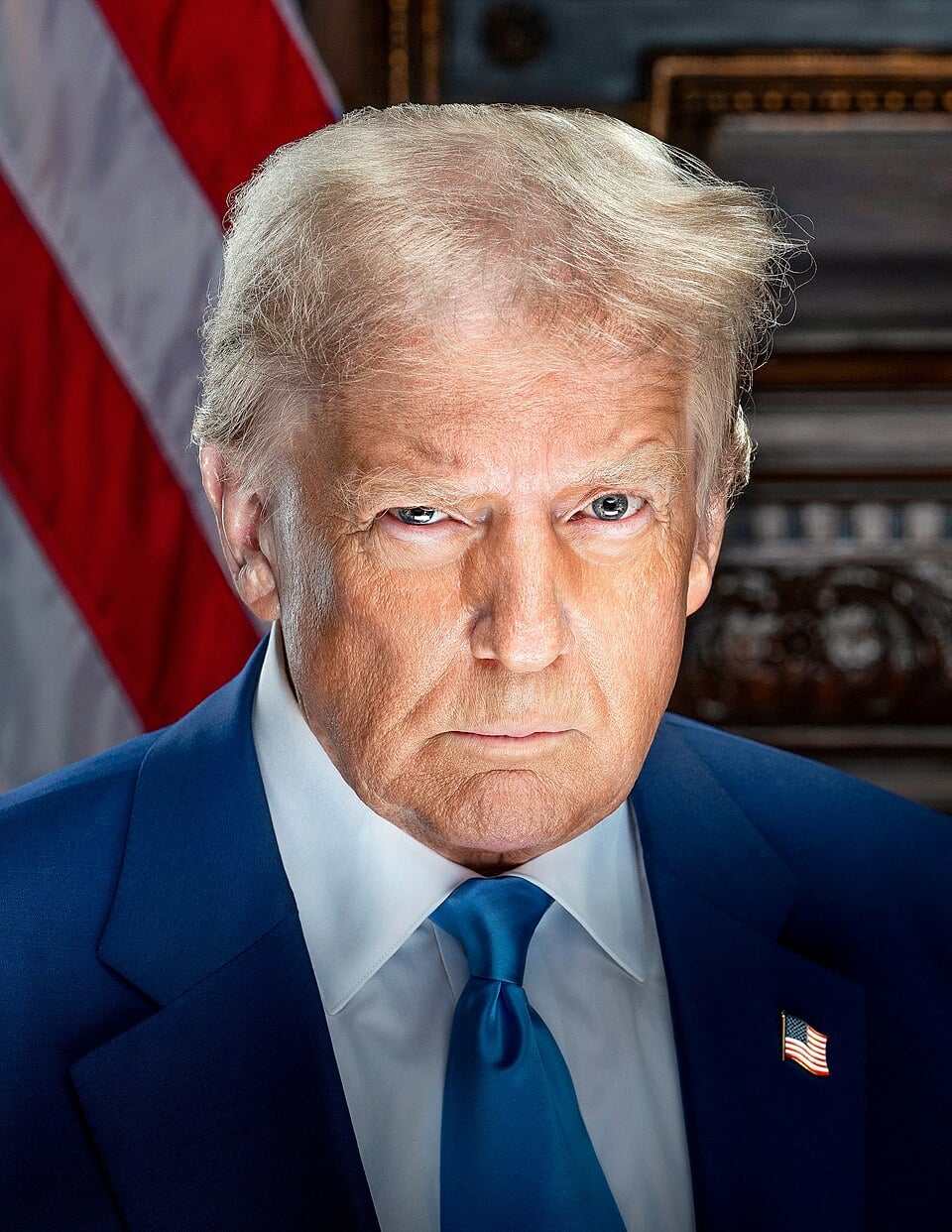
President Donald Trump has overturned a suspension of vehicle stops by US Immigration and Customs Enforcement that multiple law enforcement sources said was introduced after fatal shootings in Texas and Maine over the past week. The Department of Homeland Security memo, issued on Tuesday, had instructed agents to halt most traffic stops during immigration enforcement operations nationwide, except in cases involving serious criminal targets. In a Truth Social post on Wednesday morning, the president insisted the tactic was too valuable to give up. The White House confirmed to CBS News that his post was intended to reverse the directive.
“We CANNOT give up one of I.C.E.’s most important and effective Crime Fighting tools, THE TRAFFIC STOP! Once we do, we are playing right into the criminal’s hands,” Mr Trump wrote, while telling the agency to “be judicious, fair and smart”.
The suspended directive applied to ICE Enforcement and Removal Operations (ERO), the division responsible for civil immigration arrests and removals, but not to Homeland Security Investigations, which primarily handles criminal cases, according to sources with visibility on the memo. The pause was intended to be temporary while ERO officers received additional training on vehicle-stop tactics, the sources said, and officers were still permitted to carry out stops when working alongside partner agencies to pursue criminal suspects with judicial warrants.
Vehicle stops have been a common tactic in ICE operations under the Trump administration, allowing officers to identify, follow and arrest targeted individuals away from homes or workplaces.
‘A temporary pause, not a policy change’
Tom Homan, the Trump administration’s border czar, played down the significance of the memo in an appearance on Fox News on Tuesday. “It’s not a policy change. It’s a temporary pause,” he said.
Mr Homan said ICE leadership and the DHS “want to look at these last couple of incidents. And look, is there something that could have been done better?” He added: “I’m confident that ICE is well trained in vehicle stops and you’re going to see us keep moving forward.”
Fatal shooting in Biddeford, Maine
In the most recent incident, Johan Sebastián Durán Guerrero, a 25-year-old Colombian national, was shot at around 7am ET on Monday when ICE tried to stop him in Biddeford, Maine. The DHS, which described him as being in the country illegally, said he “attempted to flee the scene” and that, “fearing for public safety, an officer discharged his weapon”.
Durán Guerrero was not the target of the operation. Agents attempted to pull over his car while “conducting targeted surveillance on the last known address of an illegal alien with a final order of removal”, the department said.
His immigration status has become a point of contention. Independent Maine Senator Angus King said on Monday that Durán Guerrero had previously been given an order to leave the country, while officials in Maine say he had work authorisation and had been issued a Social Security number. Mr King also said the agents involved were not wearing body cameras, and bystander footage reportedly shows officers removing Durán Guerrero’s body from the car and shackling his wrists after the shooting.
His father, Omar Duran, told CBS News partner Noticias Caracol that his son leaves behind a wife and a three-year-old daughter, and had “left the country to build a future for his family”. Speaking in Spanish, he said: “I only ask God … that this be resolved in the best way, and that there be justice.”
Maine’s Attorney General has opened a state investigation into the shooting, assisted by Biddeford and Saco police and Maine State Police, and has appealed for witnesses to come forward. The ERO officer involved is to be placed on leave under standard police-shooting protocol.
Mr King, who caucuses with Democrats, has demanded scrutiny from outside federal agencies. “I want a full, fair, open, transparent investigation of this, not strictly run by the feds,” he told CBS News on Tuesday. “Unfortunately, the feds don’t have the credibility today. The people of Maine are not going to accept an investigation that’s run by ICE or at the FBI.”
Republican Senator Susan Collins, meanwhile, said she had pressed DHS Secretary Markwayne Mullin to act. “While the investigation of the Biddeford shooting is not yet complete, it raises sufficient critical questions that I spoke with DHS Secretary Mullin last night and urged him to cease all non-urgent vehicle stops,” she said in a statement.
Houston death six days earlier
The Biddeford shooting came less than a week after Lorenzo Salgado Araujo, a Mexican national, was fatally shot by ICE officers in Houston who had pulled over his vehicle while searching for a different person, the DHS confirmed last week.
The department said officers had been carrying out surveillance on a target’s address after a credible tip, having previously noted two white vans at the property. “On July 7, officers were almost at the target’s address when they observed a white van with an individual who resembled the target. Officers then initiated the vehicle stop,” it said.
The DHS initially said officers were targeting Salgado Araujo because he was living in the country illegally, and alleged he was shot after ignoring “multiple verbal commands” and attempting to ram an officer, who fired in self-defence. His family has said he had no criminal record and was close to obtaining a work permit after living in the US for more than three decades without legal status.
The Harris County District Attorney is treating the death as a criminal investigation, and says local authorities still do not know the identities of the ICE agents present or which one fired the fatal shot. DA Sean Teare described the lack of federal cooperation as “unacceptable and unprecedented”, warning the inquiry could take “many, many months — potentially years”. County Commissioner Rodney Ellis is seeking funding for an independent investigation and said he expects support to remain available for as long as it requires.
Nearly a week on, major factual questions remained unanswered. The Texas Tribune reported that federal officials had not publicly identified the agents, disclosed whether they wore body cameras, released video, specified how many shots were fired or explained where the shooter was standing in relation to Salgado Araujo’s van.
Wider scrutiny of ICE tactics
At least seven people have been shot dead during federal immigration enforcement operations since Mr Trump returned to office in January 2025, including two US citizens killed in Minnesota earlier this year. The two latest deaths have triggered protests beyond Maine and Houston, including in Boston, and Reuters reports that the demonstrations — along with the absence of body cameras on the agents involved — have intensified questions about accountability and evidence in use-of-force cases.
Federal authorities have not publicly produced evidence substantiating their accounts that either Durán Guerrero or Salgado Araujo posed a threat sufficient to justify lethal force, and Reuters notes that official versions of other recent violent encounters during immigration enforcement have subsequently been contradicted by video or other evidence.
The DHS’s own use-of-force policy places specific restrictions on firing at moving vehicles. Officers may use deadly force only when they reasonably believe there is an imminent threat of death or serious injury; the policy states that deadly force cannot be used solely to stop a fleeing person and requires officers to consider the danger of an out-of-control vehicle before shooting at its operator.
Mr King has broadened his criticism to the administration’s enforcement strategy as a whole. “It’s a tragedy for our country that we’re going through this process that’s based on a phony premise,” he said, pointing to repeated pledges to arrest “the worst of the worst”. “Well, in Maine last winter, they arrested over 200 people. Nineteen of them had criminal records. That means 90% of the people arrested had no criminal records.”
