


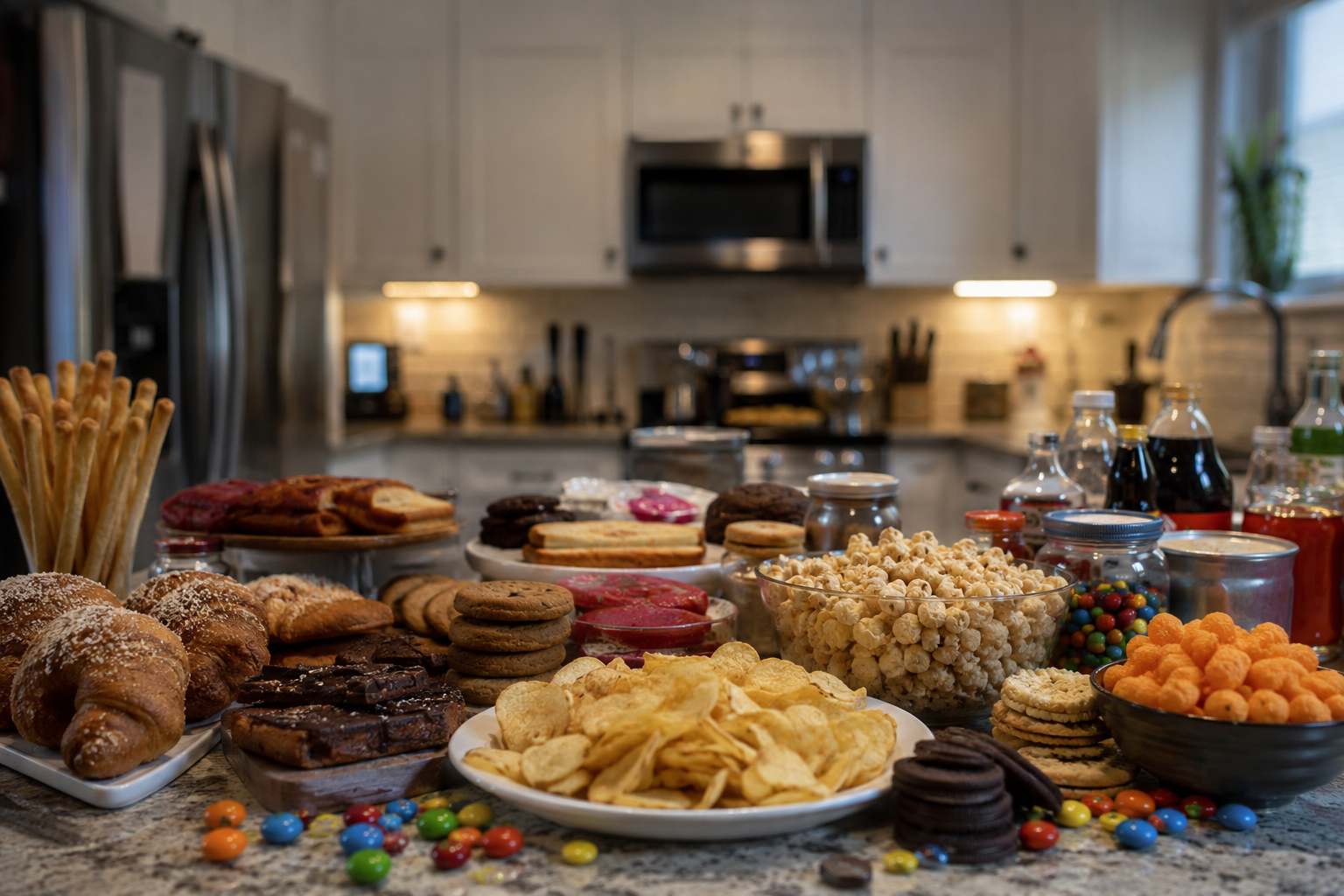
Open your fridge. Check your cupboards. Now ask yourself one simple question: how much of what you see was actually made, and how much was manufactured?
For most of us, the honest answer is uncomfortable. From the bread in the bread bin to the cereal on the shelf, from the “healthy” granola bars to the ready meals waiting in the freezer, a huge share of what we eat every day no longer comes from a kitchen. It comes from a factory. And scientists are increasingly convinced that this shift is reshaping our health in ways we are only beginning to understand.
What exactly is ultra-processed food?
The term sounds technical, but the idea is simple. Ultra-processed foods, or UPFs, are products built largely from substances you would never find in a home kitchen — protein isolates, modified starches, emulsifiers, artificial flavourings, colourings and preservatives. They are designed in laboratories to be cheap, long-lasting and, crucially, irresistible.
A good rule of thumb: if you read the ingredients list and find a string of words you cannot pronounce, you are probably holding a UPF. Fizzy drinks, packaged snacks, mass-produced bread, breakfast cereals, instant noodles, flavoured yoghurts and most ready meals all fall into the category.
The scale is staggering. In countries like the UK and the United States, UPFs now make up more than half of the average adult’s daily calories — and an even larger share for children and teenagers.
Why the alarm bells are ringing
For years, nutrition advice focused on individual villains: too much sugar, too much salt, too much fat. But a growing body of research suggests the processing itself may be part of the problem, regardless of the nutrition label.
Large studies tracking hundreds of thousands of people have linked diets high in ultra-processed food to higher rates of obesity, type 2 diabetes, heart disease and certain cancers. One closely watched experiment took this further: when volunteers were fed an ultra-processed diet, they ate around 500 more calories a day than when they ate unprocessed food — even though both diets were matched for sugar, fat, salt and fibre. The food itself seemed engineered to make people eat more.
Why? Theories abound. UPFs are usually soft, energy-dense and quick to eat, so we consume more before our bodies signal fullness. The additives that give them their texture may interfere with the gut. And the relentless combinations of salt, sugar and fat are precisely tuned to override the brain’s natural “stop” signals.
The other side of the story
Here is where it gets complicated — and where good journalism has to resist the easy scare story. Not all ultra-processed foods are equal, and the science is far from settled.
Wholegrain bread, baked beans and some plant-based products are technically ultra-processed, yet they can sit comfortably within a healthy diet. Critics of the UPF label argue that it is too broad, lumping a sugary energy drink in with a tin of beans. They warn that demonising entire aisles of the supermarket risks frightening people away from affordable, convenient food without offering realistic alternatives.
And that word — affordable — matters enormously. UPFs are popular precisely because they are cheap, filling and quick. For a parent working two jobs, “just cook from scratch” is not always advice; sometimes it is a luxury. Any honest conversation about ultra-processed food has to reckon with cost, time and inequality, not just willpower.
What you can actually do
You do not need to overhaul your entire diet overnight, and you certainly do not need to feel guilty. Small, steady swaps tend to last longer than dramatic ones:
- Cook one extra meal from scratch each week, then build from there.
- Keep simple, fast whole foods on hand — eggs, fruit, plain yoghurt, frozen vegetables, tinned fish.
- Read labels with curiosity rather than fear: fewer, more familiar ingredients is a good sign.
- Treat the most heavily processed snacks as occasional pleasures, not daily staples.
The bigger picture
The debate over ultra-processed food is really a debate about how we live now: faster, busier and more dependent on a food system built for profit and convenience. Scientists will keep arguing over definitions and mechanisms for years to come. But the broad message is already clear enough to act on.
The next time you fill your trolley, you do not need to panic. You just need to notice. Because the most powerful thing about ultra-processed food is how invisible it has become — and the first step to taking back control is simply seeing it for what it is.
