


From a bear posing on a Carpathian wall to the geothermal pools of Iceland, readers have been sharing the road trips that stayed with them long after the engine cooled. The accounts, submitted to The Guardian, range across Europe and closer to home, but they share a common thread: the journey itself, rather than any single destination, is the holiday.
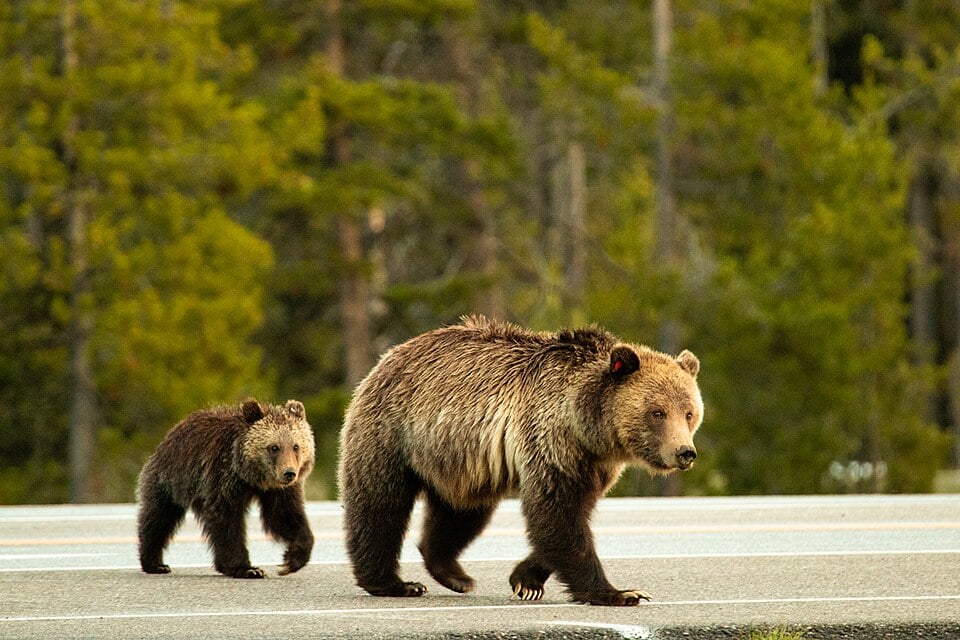
Few routes capture that spirit better than Romania’s Transfăgărășan Highway, which one reader, Joe, picked out for its sheer drama. Snaking over the southern Carpathian Mountains in a succession of hairpin bends and steep climbs, the road was once described by Jeremy Clarkson on Top Gear as “one unbroken grey ribbon of motoring perfection”. Joe and his wife had been warned that bears were possible, but did not expect to find one draped over a stone wall by the roadside, apparently posing for a photograph taken through the car window. The section climbing to Bâlea Lake — the highway’s highest point, at more than 2,000 metres — is open only for a few summer months because of the harsh mountain winters, and Joe found it especially beautiful. The road, built in the early 1970s on the orders of the communist leader Nicolae Ceaușescu, typically opens only between June and October once the snow has cleared.
Confusingly, Joe’s tale of the Transfăgărășan sits alongside a quite different memory of his own: a 1,000-mile loop of Ireland in 2022. After taking the overnight ferry from Liverpool to Belfast, he and his wife worked their way through Dublin, Kilkenny, Waterford, Cork, Dingle, Ennis, Galway, Castlebar, Sligo, Donegal and Derry before returning to where they started. They mixed youth hostels, B&Bs, spare rooms, hotels and holiday lets along the way, naming the Ellison Hotel in Castlebar as their favourite. The scenery, he said, was remarkably varied — from the peninsula drive of the Ring of Kerry to the karst landscape of the Burren in Co Clare — with the wild sands of Glassilaun beach in Co Galway a particular highlight, alongside the food, the pubs and the warmth of the people.
Norway drew Nick Martin and his wife to the water. They drove from Bergen to Vossevangen along the Hardangerfjord, the country’s second-longest, diverting to Flåm for a sauna and a dip before tackling the Myrkdalen road, with its hairpin bends, waterfalls and a steep descent into Vikøyri. Their route took in Nese, a secluded village on the western shore of the Arnafjorden, then a car ferry to Dragsvik and on along the northern shore of the Sognefjord — Norway’s longest and deepest — before a second ferry carried them to the coast at Dingja for some fishing, and finally back to Bergen.
For Jess, the appeal of Iceland lay in its constant change. Setting off from Reykjavík, she and her companions drove the entire ring road around the country, and rated it the most interesting of several road-trip holidays they had taken. Travelling in May, they encountered multiple dramatic landscapes and weather systems each day and very few other vehicles. Iceland is expensive, she acknowledged, but the chance to watch whales and swim in geothermal pools made it worthwhile.
Closer to home, one reader made the long drive up to Orkney, taking it slowly with stops in Glasgow, Falkirk, Perth and Tain. As lovers of history and design, they paused at the Falkirk Wheel and the Kelpies, as well as Scone Palace near Perth and Dunrobin Castle in Sutherland, the most northerly of Scotland’s great houses. The Caithness coastline proved the main draw, not least Dunnet Head, the most northerly point of mainland Britain. Good food punctuated the route, from the River Bothy in Berriedale to Paesano Pizza in Glasgow.
Germany offered something more curated. Marilyn drove the full 286-mile Romantic Road through Bavaria, from Würzburg to Schwangau — an early and successful postwar example of a themed tourist route — diligently following the signs. Along the way she visited medieval towns, climbed the clock tower at Nördlingen, a walled town built inside a meteor crater, and finished at the fairytale castle of Neuschwanstein, sampling hearty Bavarian food and local beer and staying in simple hotels.
The winning tip, however, went to Emma de Heveningham for a drive through Italy’s Abruzzo Apennines. The Valle del Sagittario threads between narrow limestone cliffs into what she called Italy’s wild heart. From the vertiginous village of Anversa degli Abruzzi, the road runs south to Scanno — its stone stairways and cobbled alleys made famous by photographers and artists, among them MC Escher — before crossing mountain pastures still grazed by shepherds’ flocks and roamed by the region’s endangered brown bears. After the Godi pass at 1,630 metres comes the turquoise glint of Lago di Barrea below, and a beech-clad descent into the national park, where the aptly named roadside Hotel Paradiso awaits.
