


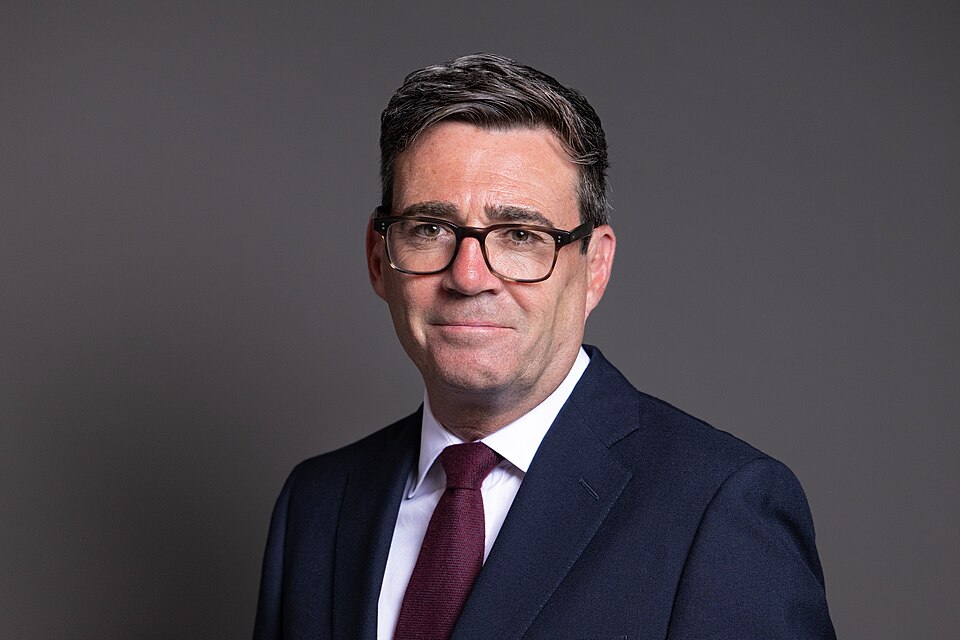
On Monday 20 July 2026, Andy Burnham walked up Downing Street as the United Kingdom’s 59th Prime Minister — and the seventh in a little over a decade. The former Mayor of Greater Manchester, long nicknamed the “King of the North”, takes over from Keir Starmer promising what he called a “circuit breaker for Britain” and the biggest changes the country has seen in 40 years. He arrives without a general election, with bond markets watching nervously, and with a cabinet that mixes loyal allies, rehabilitated big names and one genuine surprise at the Treasury.
This analysis covers how Burnham reached Number 10, who is in his new cabinet, what is expected to change, and the honest case for and against his premiership being good for Britain.
How Did Andy Burnham Become Prime Minister?
Burnham’s route to power was unusually fast, even by the standards of recent British politics.
Keir Starmer’s premiership had been in trouble for most of its second year. A series of U-turns, internal rebellions and scandals eroded his authority, and the most damaging blow came from his decision to appoint an ambassador to Washington with close ties to the late sex offender Jeffrey Epstein. Heavy Labour losses in the May 2026 local elections — with Reform UK the chief beneficiary — convinced many Labour MPs that the party could not recover under his leadership. The resignation of Defence Secretary John Healey, who accused the government of underfunding defence and leaving the country “less safe”, accelerated the collapse. On 22 June 2026, Starmer announced he would step down as Labour leader and Prime Minister.
Burnham, meanwhile, had prepared the ground. In January 2026 he announced he would seek a return to the House of Commons — a prerequisite for any leadership bid, since he had left Parliament in 2017 to become Mayor of Greater Manchester. He duly won a by-election in Makerfield, near his old Leigh constituency, putting him in position when the vacancy came. Wes Streeting, seen as his most serious potential rival, ruled himself out shortly after Starmer’s announcement, and Burnham was confirmed as Labour leader unopposed on 17 July. Three days later, King Charles III invited him to form a government.
Crucially, none of this required a public vote. Under the UK’s parliamentary system, the governing party can change leader — and therefore Prime Minister — mid-term. The next general election does not have to be held until 2029. That constitutional fact will hang over everything Burnham does.
Who Is Andy Burnham? From “King of the North” to Number 10
Andy Burnham, 56, was born in Aintree, near Liverpool, and built his political identity around England’s north–south divide. A Cambridge English literature graduate with resolutely working-class instincts, he served as MP for Leigh from 2001 to 2017, holding cabinet posts under Gordon Brown as Chief Secretary to the Treasury, Culture Secretary and Health Secretary. He is widely respected for his long campaign for justice for the victims of the Hillsborough disaster.
After two unsuccessful Labour leadership bids in 2010 and 2015, Burnham reinvented himself outside Westminster. As Mayor of Greater Manchester from 2017, he brought buses back under public control through the Bee Network, drove a high-profile rough-sleeping programme, and famously clashed with central government over Covid-era funding — the standoff that earned him his royal nickname. He is married to Marie-France van Heel, and the couple have three children.
That mayoral record matters, because Burnham’s central argument — sometimes dubbed “Manchesterism” — is that Britain’s problems stem from over-centralisation, and that power and money should flow out of Whitehall to regions and communities.
Andy Burnham’s Cabinet: Full List of Key Appointments
The defining decision of Burnham’s first day was his Chancellor. Media reports had suggested a choice between Ed Miliband and Shabana Mahmood; instead, in a surprise move, he handed the Treasury to John Healey — the veteran former Defence Secretary whose resignation over defence funding helped bring Starmer down, and whose earlier experience as a housing minister fits Burnham’s council-house-building ambitions.
| Role | Appointee | Notes |
|---|---|---|
| Prime Minister | Andy Burnham | MP for Makerfield; former Greater Manchester Mayor |
| Chancellor of the Exchequer | John Healey | Surprise pick; resigned from Starmer’s cabinet over defence funding |
| Foreign Secretary | Ed Miliband | Former Labour leader; moves from the energy brief |
| Home Secretary | Shabana Mahmood | Retained — continuity on policing, borders and security |
| Defence Secretary | Wes Streeting | Former Health Secretary and one-time leadership rival |
| First Secretary of State & Cabinet Office | Louise Haigh | Burnham’s closest ally; ran his by-election and leadership campaigns |
| Health & Social Care Secretary | Yvette Cooper | Moves from the Foreign Office; tasked with social care reform |
| Housing, Communities & Local Government | Angela Rayner | Returns to cabinet after her September 2025 resignation; cleared by HMRC |
| Work & Pensions Secretary | Pat McFadden | Retained; continues welfare reform |
| Business, Innovation, Science & Trade | Jonathan Reynolds | Heads a newly merged super-department |
| Justice Secretary | Alex Norris | Promotion for the Nottingham North & Kimberley MP |
| Environment Secretary (Defra) | Angela Eagle | One of Labour’s longest-serving MPs |
| Wales Secretary | Stephen Kinnock | New appointment |
| Northern Ireland Secretary | Chris Bryant | Replaces the dismissed Hilary Benn |
Who’s out: Rachel Reeves left the Treasury after reportedly declining a different role, ending her tenure as Britain’s first female Chancellor. Deputy Prime Minister and Justice Secretary David Lammy departed, Business Secretary Peter Kyle was sacked, and Housing Secretary Steve Reed, Northern Ireland Secretary Hilary Benn and Paymaster General Nick Thomas-Symonds also left government. At the time of writing, the Deputy Prime Minister role had not been confirmed, with deputy Labour leader Lucy Powell seen entering Number 10 amid speculation.
What the choices signal: loyalty is rewarded (Haigh’s remarkable comeback after her 2024 resignation as Transport Secretary), rivals are bound in (Streeting at Defence), the party’s left is rehabilitated (Rayner’s return), and continuity is preserved where voters are most anxious — the Home Office and welfare.
What Will Change Under Prime Minister Burnham?
Speaking outside Number 10 without a lectern — a deliberately informal touch — Burnham promised both immediate relief and generational reform. The key strands:
Cost-of-living help now. Burnham said he would give people “breathing space” straight away, with concrete proposals expected as early as Tuesday 21 July. Expect targeted support on household bills before any wider fiscal event.
A ten-year plan for Britain. Due later this year, this is the centrepiece: allies describe it as rolling back decades of neo-liberal economics and pushing power out of Westminster to mayors, councils and communities — devolution on a national scale.
Social care reform. Burnham has championed a National Care Service–style settlement since his time as Health Secretary. Yvette Cooper’s appointment to Health and Social Care, with care reform explicitly at the heart of her brief, suggests this is where he wants a defining legacy.
Housing. A large council-house-building programme is expected, with Angela Rayner returning to Housing and a Chancellor who once served as a housing minister.
Energy. In one of the sharpest breaks with the Starmer–Miliband era, Burnham plans to fast-track new North Sea oil and gas exploration — a move publicly welcomed by US President Donald Trump, who spoke to Burnham by phone on day one even while deriding Britain’s economic state. Moving Ed Miliband from energy to the Foreign Office removes the loudest internal obstacle, but sets up an obvious tension with Labour’s climate commitments.
Defence and welfare. Healey must now fund the very defence investment he resigned to demand — a point Conservative leader Kemi Badenoch seized on immediately, offering to help him pay for it through benefit cuts. Pat McFadden continues welfare reform he has framed as fair and sustainable.
Whitehall machinery. The science and business departments have been merged into a single Business, Innovation, Science and Trade ministry under Jonathan Reynolds — an industrial-strategy signal.
Is Andy Burnham Good for Britain? The Case For and Against
The case for. Supporters argue Burnham is exactly what a demoralised country needs: a plain-speaking retail politician with a genuine record of delivery in Greater Manchester, from public transport to homelessness. He connects with the working-class and northern voters drifting to Reform UK in a way Starmer never did. His priorities — social care, housing, the cost of living — map onto the public’s actual concerns, and his devolution agenda addresses a structural weakness of the British state that economists across the spectrum acknowledge. After years of churn, his pledge to restore stability and make politics work better at least names the right problem.
The case against. Critics point first to legitimacy: Burnham is the seventh Prime Minister in a decade and the latest to take office without a general election, unopposed even within his own party. Financial markets are wary — the prospect of a more left-leaning, bigger-spending government rattled the gilt market earlier this year, and higher borrowing costs could swallow his spending plans before they start. The fiscal arithmetic is brutal: funding defence, care reform, housing and cost-of-living support simultaneously, without the tax rises or borrowing that spook bond investors, may prove impossible. His mass clear-out of Starmer loyalists risks creating an embittered faction on the backbenches. And the North Sea pivot invites attacks from both directions — too timid for Reform, a betrayal for greens.
The honest verdict is that it is too early to say. The autumn budget will reveal whether the “circuit breaker” is funded or merely rhetorical, and the May 2027 local elections will be the first real electoral test. What can be said is that Burnham has correctly diagnosed the twin crises — living standards and trust in politics — and assembled a cabinet built to pursue his answer. Whether Britain’s finances, his party and the voters give him the time is another matter.
What Happens Next?
Watch for the cost-of-living announcement expected on 21 July, Burnham’s first Prime Minister’s Questions, the confirmation of remaining ministerial posts, an autumn budget under Chancellor Healey, and the publication of the ten-year plan later in 2026. The next general election must be held by 2029 — but with Reform UK strong in the polls, every intervening contest will be read as a referendum on the Burnham experiment.
FAQ: Andy Burnham as Prime Minister
Why did Keir Starmer resign as Prime Minister? Starmer announced his resignation on 22 June 2026 after heavy Labour losses in May’s local elections and a string of political missteps, most damagingly his appointment of a US ambassador with close ties to Jeffrey Epstein.
Did Britain hold a general election in 2026? No. Under the UK’s parliamentary system, a governing party can change leader mid-term, and the new leader becomes Prime Minister. The next general election is not required until 2029.
Who is the UK Chancellor now? John Healey, the former Defence Secretary, was appointed Chancellor of the Exchequer on 20 July 2026, succeeding Rachel Reeves.
What is Burnham’s “circuit breaker for Britain”? It is his framing for a two-track agenda: immediate cost-of-living relief now, followed by a ten-year plan of structural reform — devolution, social care, housing — that he claims will be the biggest set of changes in 40 years.
When is the next UK general election? It must be held no later than 2029, five years after the July 2024 election, though a Prime Minister can call one earlier.
