


The 2026 US midterm elections could become the decade’s first major political turning point, with Democrats predicted to challenge Republican control of the House and potentially the Senate. The vote on November 3 is being viewed against a century of elections in which midterms have repeatedly reshaped Congress and altered the direction of national politics.
The 2020s have so far lacked a midterm election with a decisive national impact. The 2022 contest defied expectations of a sweeping Republican “red wave”: Democrats retained the Senate, while Republicans won a narrow House majority.
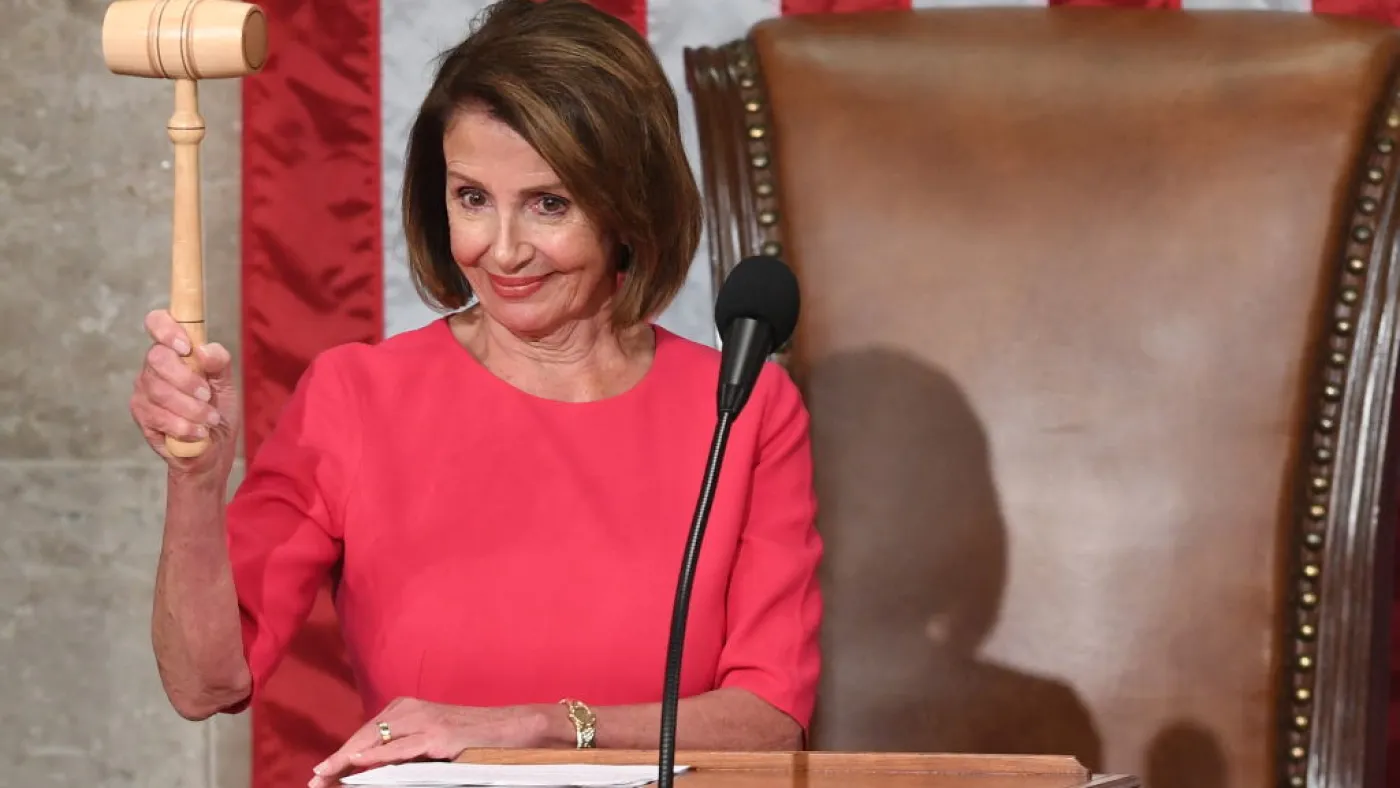
That change ended Nancy Pelosi’s second period as Speaker of the House. But Republicans spent much of the following two years struggling to unite behind their own leader, underlining how a narrow majority can prove difficult to use.
Midterm elections generally attract fewer voters than presidential contests. With the White House absent from the ballot, overall turnout falls by about a third as many less regular voters stay at home.
Yet the stakes remain substantial. Those who do vote elect every member of the House, a proportion of the Senate, and hundreds of state legislators. Midterm voters also determine about two-thirds of the country’s governors.
The contests have traditionally offered the president’s opponents an opportunity to register their discontent, while supporters may be less motivated. The most consequential elections have often come during a president’s second term, when popularity and political momentum have begun to fade.
Midterm elections that changed Washington
The pattern can be seen in the elections that followed the Wall Street crash of 1929. In 1930, Republicans lost eight Senate seats and 52 in the House as the economic crisis that became the Great Depression damaged their long period of dominance in Washington.
The party initially retained small majorities in both chambers, but Democrats took control of the House after several special elections early in 1931. The Senate remained nominally Republican, although Democrats and progressive Republicans formed a working majority.
Democrats went on to take outright control in 1932 and held their majority through the Second World War. After the war, Republicans returned to power in another dramatic midterm reversal, winning control of both the House and Senate in 1946.
Dwight Eisenhower’s presidency provided another example of the limits placed on a popular president by the midterms. After winning two landslide presidential elections, the Republicans lost the House in 1954 and fell to 35 Senate seats in the 1958 contest.
The Senate Democrats elected in 1958 later formed part of the majorities that helped pass the Civil Rights Act of 1964 and the Voting Rights Act of 1965. The same period also saw the creation of major social programmes including Medicare and Medicaid under Lyndon Johnson’s “Great Society”.
Johnson’s political strength had weakened by 1966, as the war in Vietnam absorbed increasing attention and support. Democrats lost 47 House seats to the Republicans, while Ronald Reagan won the governorship of California in what became an early sign of the growing political importance of the Sunbelt.
The 1974 election delivered the reverse result. The Watergate scandal had forced Richard Nixon’s resignation three months before the vote, while inflation and the oil crisis further exposed Republican weaknesses. The party lost 48 House seats, as well as several Senate seats, despite Gerald Ford’s efforts to distance the administration from the scandal.
From Reagan to Obama
Republicans recovered under Ronald Reagan, who won the presidency in 1980 and secured a 49-state re-election victory in 1984. But Democrats made significant gains in the 1986 midterms, taking eight net Senate seats and establishing a 55-45 majority.
That majority allowed the Senate to override a Reagan veto of a highway bill and reject the nomination of Robert Bork to the Supreme Court. The result demonstrated how a midterm defeat could sharply constrain a president during the second half of his term.
Bill Clinton suffered an even greater setback in 1994. Republicans gained 54 House seats and eight Senate seats, winning their first House majority in 40 years and recapturing the Senate.
Newt Gingrich became Speaker and promoted a “Contract with America” promising lower taxes, less corruption and a stronger economy. His confrontational approach helped define the new Republican majority, although it later gave way to negotiations with Clinton and internal dissatisfaction that contributed to his departure in 1998.
George W Bush was one of the exceptions to the usual pattern in 2002, when Republicans made gains across Congress after the September 11 terror attacks. Four years later, however, the party paid a heavy price as the Iraq war became increasingly unpopular.
Republicans lost control of both chambers in 2006, allowing Pelosi to become the first woman Speaker of the House. Barack Obama then entered office in 2009 with Democratic majorities in Congress, but suffered a major reversal in the 2010 midterms.
Republicans capitalised on continuing economic difficulties and opposition to, or confusion surrounding, the Affordable Care Act. Obama described the result as a “shellacking” and was left working with a much-reduced Senate majority and a Republican-controlled House led by John Boehner.
The Republicans retained the House and won the Senate in the 2014 midterms. The result reflected their continuing strength across the South and Midwest and foreshadowed the Electoral College victories that later helped Donald Trump win the presidency in 2016 and 2024.
The 2026 US midterm elections are therefore being judged against a long history of electoral corrections, rather than simply as a routine vote between presidential contests. Economic concerns, including energy prices, and negative perceptions of incumbents are again prominent features of the political environment.
The party seen as holding power is usually most exposed in a midterm, particularly when voters believe it has lost momentum or no longer has a mandate. Pollsters, commentators and other forecasters now expect Democrats could take the House and possibly the Senate, although the scale of any shift will only be determined when voters go to the polls.
