


Ohio rural voters are emerging as a crucial battleground in this year’s closely fought elections for governor and the US Senate, with Democrats seeking support in communities that have traditionally leaned Republican.
The state is now regarded as reliably Republican, despite its former status as a swing state. But the competitive statewide contests have opened a path for Democrats if they can persuade voters dissatisfied with the cost of living, fuel prices, healthcare and the pressures facing agriculture.
That effort is particularly important in the Senate race between Republican candidate Jon Husted and former Democratic senator Sherrod Brown, both of whom have been campaigning in rural parts of Ohio.
At a farmers’ market in Athens, a college town that is generally liberal, the presence of an Athens County Republican Party stall was seen as a sign of the changing political mood.
“I think that does speak to the political climate right now – that it’s pretty competitive,” said Paige Walters, the market’s promotions manager.
Matthew White, from Athens, said many rural residents were struggling with the effects of higher costs. “There’s a lot of people in rural Ohio that are not happy, whether it’s gas prices, diesel prices, the tariffs, the war,” he said.
Affordability drives voters’ concerns
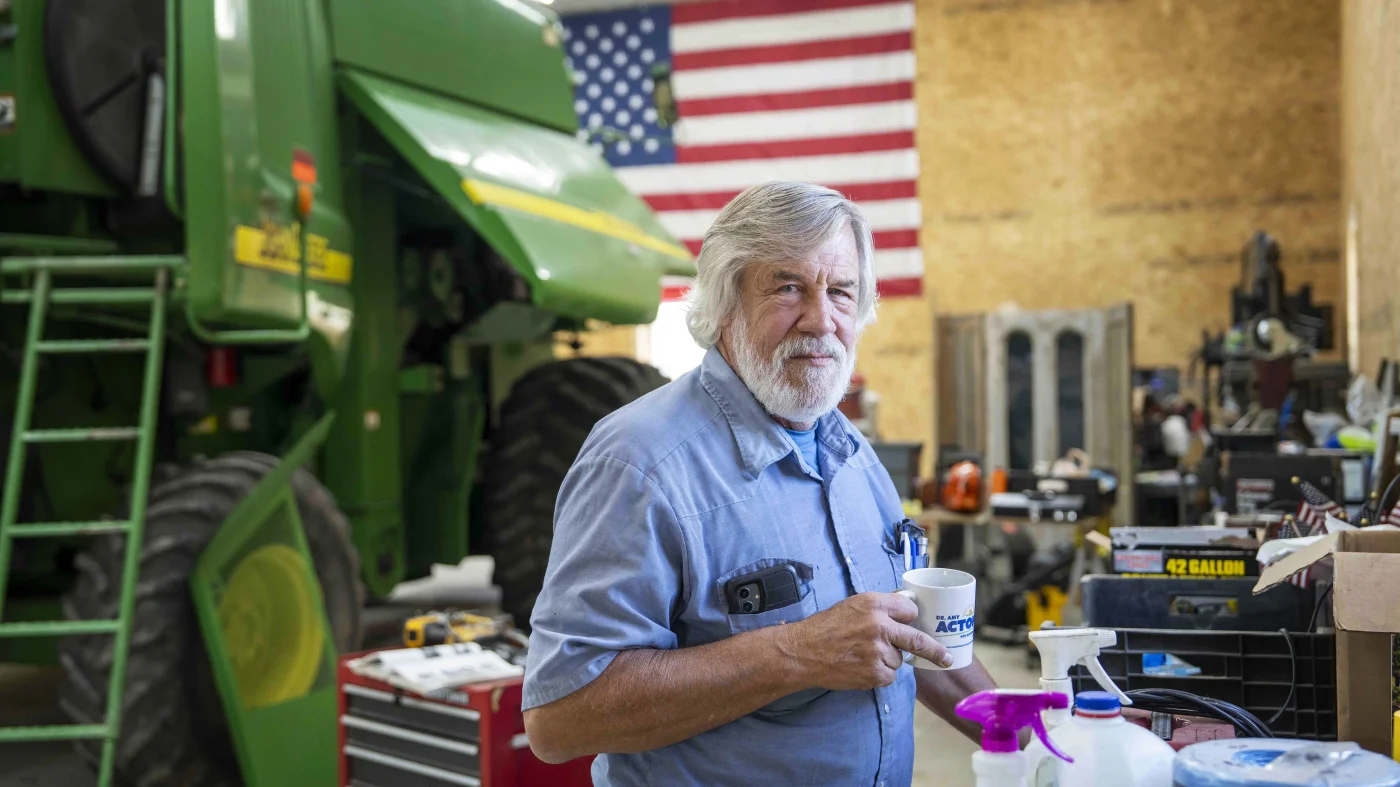
For Larry Cowdery, who runs a small vegetable farm along the Ohio River, healthcare is one of the biggest worries. As a self-employed farmer, he must arrange his own insurance.
“The big, big issue that we run into is since we’re self-employed, we have to find health insurance somewhere,” he said. “It’s going to be much more expensive next year.”
Healthcare premiums on Ohio’s Affordable Care Act marketplace are expected to rise by about 15%, partly because federal subsidies are expiring. The state recorded one of the largest falls in marketplace enrolment last year, with numbers dropping by nearly 33%, alongside Oklahoma.
Republicans, including Mr Husted, voted to eliminate the subsidies under the Trump-backed “One Big Beautiful Bill”. Cowdery said the cost of running his farm was also rising because of electricity, petrol and fertiliser prices.
“I’m not convinced we’re even going to be able to get fertilizer next year,” he said.
He said the volatility around the Strait of Hormuz, through which much of the nitrogen used in fertiliser travels, was adding to uncertainty. The pressure has made him reconsider his usual political choices.
“I don’t trust Jon Husted at all. I think he’s a crook,” Cowdery said.
Not every voter at the market was moving towards the Democrats. Dean Ferrell, a 62-year-old lifelong Athens resident who describes himself as independent, said rising costs had forced him to cut back on food and other essentials. He is undecided in the Senate race but leans towards Mr Husted.
“I mean, who would ever thought you’d be paying ten bucks a pound for ground beef? That used to be filet mignon prices, not ground beef,” he said.
Ferrell said he rarely paid full price and believed politicians should spend time living within the financial constraints faced by ordinary people. But he blamed what he called the “far left” for taking over the Democratic Party.
Farmers weigh the cost of Republican policies
Chris Gibbs, who farms 560 acres in Shelby County, was once chair of the county Republican Party and voted for Donald Trump in 2016. He said the cost of diesel, fertiliser and production had since caused him to reconsider that support.
Gibbs said diesel for his machinery had risen by 50% under the Trump administration and amid the war in Iran. He estimated that filling his combine during the harvest season would cost about 7,000 dollars.
He also criticised tariffs, saying they had hurt agriculture, and said he had developed “buyer’s remorse” over his earlier vote for Mr Trump.
Gibbs moved away from Mr Trump in 2018 and is now chair of the Ohio Democratic Party Rural Caucus. He is backing Brown’s return to the Senate.
“We’re going to get Sherrod Brown across the line. I have complete confidence in that,” Gibbs said, arguing that the former senator had the experience needed to represent rural Ohio.
At a Republican Party event in Guysville, however, Melissa Jant said Mr Brown represented the political establishment and should not return to Congress.
“I absolutely do not want Sherrod Brown back in there. He was there for 30 years. We saw the policies that he put in place. He ran the country down. He ran Ohio down. We just need new blood in there,” she said.
Jimmy Williams, from Monroe County, also viewed Mr Husted as the less established option despite his position as a sitting senator. He said voters should look beyond campaign advertising and preserve Republican control.
Bob Rouch, from Washington County, said he expected Ohio to remain Republican and believed Mr Trump had done good for the area. Williams said the country was “at risk”, reflecting the strength of the Republican argument in rural communities even as economic concerns create openings for Democrats.
