


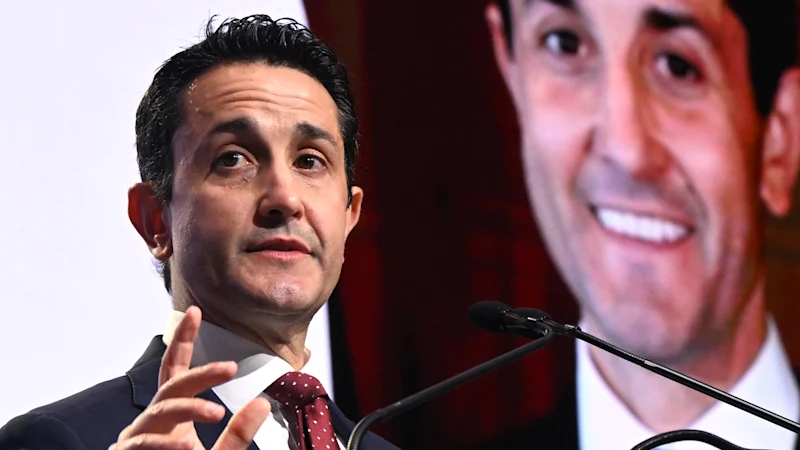
Queensland Premier David Crisafulli is seeking to move his administration beyond its “new government” label as it approaches the halfway point of its four-year term, while public dissatisfaction over crime and the cost of living remains a challenge.
Mr Crisafulli spent the past week delivering a series of speeches focused on what the Liberal National Party government had achieved and the problems it still faced, including health, housing, crime and living costs.
“The big four issues that I spoke about before the election remain the big four issues and the big four challenges,” he said during a State of the State address.
“And on all of them [health, housing, crime and cost of living], we are making progress after a long period of time where the numbers went in the wrong direction.”
The Premier pointed to improving figures across the four areas, but the government’s reliance on evidence of progress has exposed the difficulty of demonstrating change on issues that remain prominent in voters’ lives.
A Queensland Media Club appearance billed as including a significant law and order announcement produced no new policy beyond confirmation that parliament would pass a government bill the following week.
Asked when the administration would stop describing itself as new, Mr Crisafulli replied: “well, I hope we did that today”.
Government advertising continues to use the “new Queensland government” branding, even as frustration has begun to emerge over its continued use. Crime is a particular vulnerability, after the LNP made it a central issue in opposition while acknowledging that public concern remains two years after taking office.
The government is also having to decide how far to go with new policy. Its moderate pre-election image has been maintained through language about being “calm and methodical”, but several measures have provided a glimpse of a more interventionist administration.
Political speech has been criminalised, objections to mining projects have been made more difficult, planning and land-use powers have been expanded and Queensland’s bail regime has been tightened. Those changes have prompted warnings about possible effects on the rule of law, the court system and community safety.
The government has additionally begun a substantial restructuring of the state’s industrial relations system following difficult negotiations with major public service workforces. Disputes have affected schools, railways, hospitals, youth detention centres and child safety offices.
Mr Crisafulli and his strategists appear to be betting that such changes will not alarm voters who are wary of rapid or extreme action. The Labor opposition, led for now by Steven Miles, has adopted a limited approach, hoping that one issue or a combination of grievances will eventually turn public opinion.
The resignation of Child Safety Minister Amanda Camm from cabinet may represent the first significant setback that Labor can claim against the Premier.
Although the LNP remains the clear favourite in the Resolve Political Monitor, the same polling indicates that the broader public mood has deteriorated over the past year. Optimism about people’s personal circumstances and Queensland’s direction, which improved after the 2024 election, has fallen back to pre-election levels.
More respondents now expect their lives to worsen than to remain unchanged, while both groups outnumber those who believe their circumstances will improve. Views of the state’s future have also become more pessimistic than before the election.
With two years still to run before Queenslanders next vote, the government has time to adjust its approach. But its central difficulty is becoming clearer: it must persuade people that fundamental problems are changing for the better while avoiding action that appears too fast, too far-reaching or too disruptive.
