


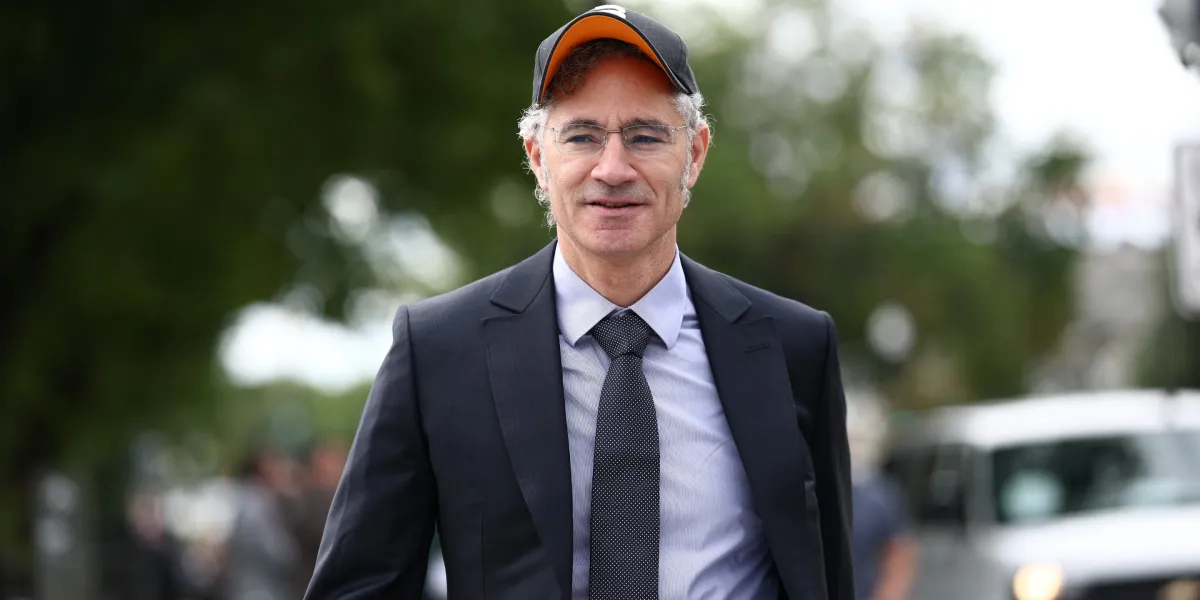
Neurodivergent workers could have an advantage as artificial intelligence reshapes employment, according to Palantir chief executive Alex Karp and psychologist Daniel Wendler, who is autistic.
Karp, who has dyslexia, said in an interview on the business podcast TBPN that there were two ways for workers to have a future in the AI era: vocational training or being neurodivergent.
“There are basically two ways to know you have a future,” he said. “One, you have some vocational training. Or two, you’re neurodivergent.”
The Palantir boss has previously described his dyslexia as a “formative moment” that helped him learn to “think freely”. He has also credited the experience with contributing to his success in co-founding the software company and leading it for more than two decades.
During the interview, Karp argued that AI was changing which skills and perspectives were valuable in the workplace.
“The thing they need to learn to do is be more of an artist, look at things from a different direction, be able to build something unique,” he said.
Why neurodivergent perspectives matter in the AI workplace
Wendler said people with different ways of thinking could be particularly important as businesses adapt to new technology. Neurodivergence can include autism, ADHD and dyslexia.
“If you don’t have neurodivergent minds in the room tackling AI, looking at it, then you miss out on that unique perspective,” he said.
He argued that the transition could prompt employers to reconsider long-standing assumptions about what makes an employee valuable and how work should be organised.
Wendler said workplaces had generally been designed around neurotypical employees, making it more difficult for neurodivergent people to fit in and thrive.
“Many workplaces are set up to kind of accommodate neurotypical weaknesses and to support neurotypical strengths,” he said. “But then, for neurodivergent people, that stuff gets missed.”
As companies change how they operate, he said they could begin to accommodate different kinds of thinkers instead of expecting everyone to work in the same way.
“We are now entering a new frontier, where everybody is on more equal footing because nobody really knows how we navigate this new chapter, or what AI is going to do, or the future of work,” Wendler said.
He added that neurodivergent employees might be particularly willing to experiment with AI because existing workplace structures were often failing to meet their needs. Large language models could help them break complicated assignments into smaller steps, organise tasks and support communication.
Companies changing their approach
Wendler said most companies had been slow to adapt their practices, although he highlighted SAP’s Autism at Work programme, which has operated for more than a decade and aims to make recruitment more inclusive while providing support after people are hired.
Microsoft, Dell and JPMorgan Chase have also introduced initiatives to alter conventional interviews and recruit or support neurodivergent employees, he said.
Palantir runs a Neurodivergent Fellowship offering estimated salaries of between 110,000 and 200,000 dollars a year. Its job posting says participants will be held to the same performance standards as any Palantir engineer, while suggesting that neurodivergent people could have an advantage in an AI-dominated future.
“The current LLM tech landscape positions them to dominate. Pattern recognition. Non-linear thinking. Hyperfocus. The cognitive traits that make the neurodivergent different are precisely what make them exceptional in an AI-driven world,” the posting said.
Wendler cautioned against presenting neurodivergent people as having automatic or extraordinary abilities. He said that portraying them as genius savants could minimise the contributions of those who did not fit that stereotype, while overlooking the difficulties associated with autism, ADHD, dyslexia and other conditions.
He said neurodivergent people should not be put on a pedestal, but viewed as employees with valuable contributions to make as the workplace changes.
“A person does not need to be a genius superhuman, you know, Spider-Man, to be able to have something to offer and to deserve a seat at the table,” he said.
