


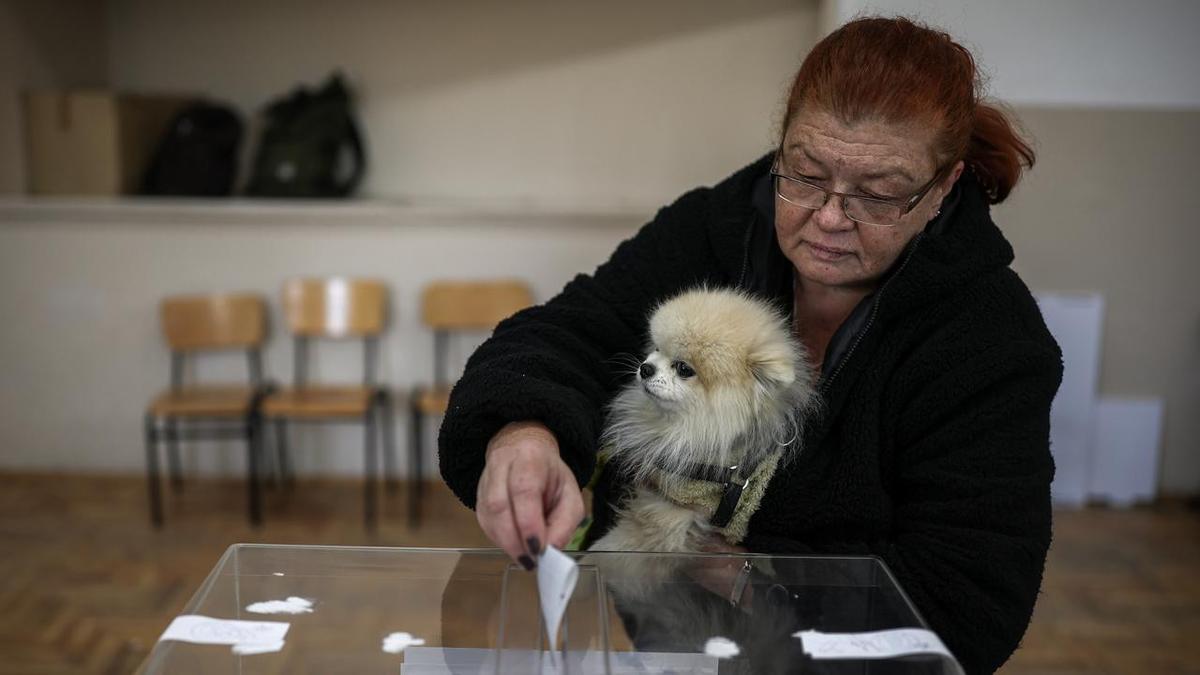
Bulgaria’s presidential election is heading for a runoff after a record-low turnout left no candidate expected to secure an outright victory. The November 1 contest will set the pro-Western reformist opposition’s Andrey Gyurov against incumbent president Iliana Yotova.
Projections put turnout at below 40% of the 6.6 million registered voters, well short of the 50% threshold. The final result is expected on Monday, but a second round is considered likely because none of the 27 candidates is forecast to win a majority.
Observers attributed the low participation to widespread mistrust in politicians and voter apathy. The runoff will place two contrasting views of Bulgaria’s future relationships with Europe, Nato and Russia at the centre of a highly polarised campaign.
Bulgaria presidential election enters a second round
Ms Yotova, 62, is a former journalist and member of the European Parliament. She served as vice president under Radev during his two terms in office before taking over the presidency in January 2026, when he stepped down to run for parliament.
Running as an independent, she has the backing of Progressive Bulgaria and the Socialist Party, where her political career began. Victory would make her Bulgaria’s first elected female president.
Analysts expect Ms Yotova to maintain Bulgaria’s European path while advocating improved relations with Russia and the removal of sanctions. She and Radev have both called for a diplomatic settlement to the war in Ukraine.
At a rally this week, Ms Yotova said she “advocated for peace through negotiations, rather than force”. Her victory would keep the presidency in the hands of the ruling majority, according to observers, who have warned that a concentration of power could weaken institutional checks and balances.
Mr Gyurov, an economist and former deputy governor of Bulgaria’s central bank, is supported by the pro-Western reformist opposition. He also served as caretaker prime minister during the early months of 2026.
He has repeatedly expressed firm support for Ukraine and signed a security co-operation agreement with Kyiv during his premiership. Addressing supporters this week, he said: “I want Bulgaria to have a voice of its own in Europe. A reliable NATO ally that defends its interests through preparedness, strong diplomacy and a clear position.”
Opinion polls had given Ms Yotova between 40% and 45% support in the first round, compared with 25% to 30% for Mr Gyurov. The margin of error was three percentage points.
Despite that lead, some observers believe Mr Gyurov could perform more strongly in a runoff, when the votes of supporters of eliminated candidates could determine the outcome.
The election campaign focused on economic hardship, inflation and rising energy costs, with families in rural areas reported to be struggling to make ends meet. Russia’s invasion of Ukraine and growing tensions in the Black Sea also featured prominently.
Recent drone attacks on commercial vessels off Bulgaria’s coast have heightened security concerns in the European Union and Nato member state. The strikes have prompted the government to ask its partners for help in strengthening maritime security amid concern that Russia could escalate the conflict.
Bulgaria’s president is elected directly for a five-year term and may serve no more than two terms. Although the role is primarily ceremonial, direct election gives the office significant political authority, including command of the armed forces, the power to veto legislation, and responsibility for signing international treaties and appointing ambassadors.
