


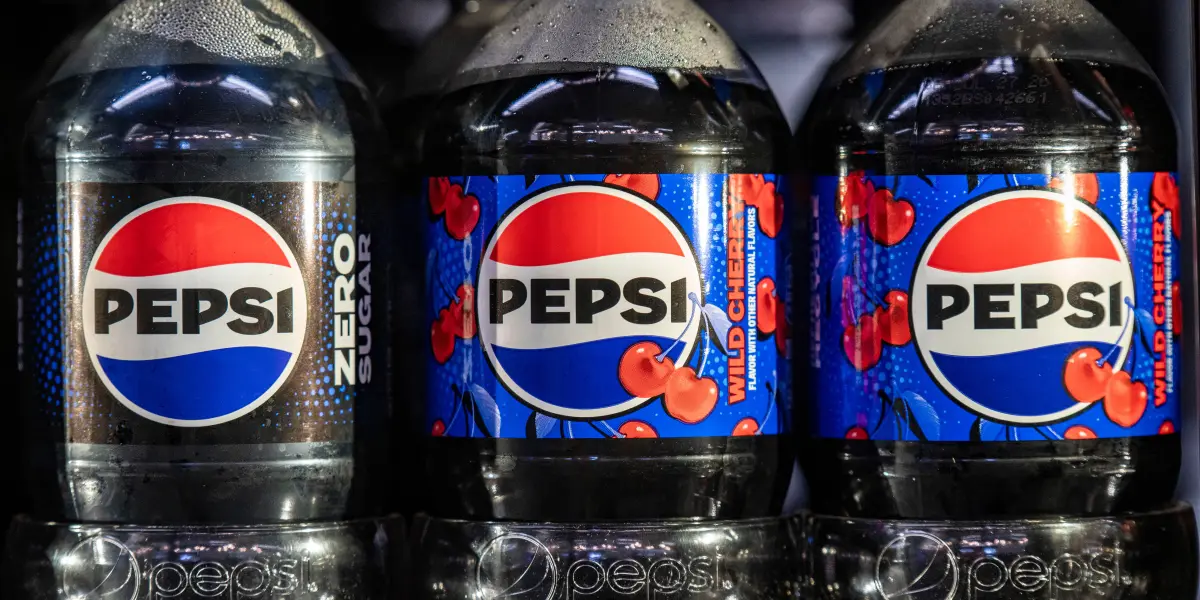
KFC is switching from Pepsi to Coca-Cola at its 3,700 US restaurants in January, ending a 40-year partnership and delivering a symbolic setback to PepsiCo’s soft-drinks business.
The fried chicken chain was once owned by PepsiCo, which bought it before spinning it off in 1997. KFC’s decision comes as Pepsi falls further behind Coca-Cola in the US fizzy drinks market.
Pepsi-Cola accounted for 8.1% of the US carbonated soft drinks market by volume last year, compared with 18.5% for Coca-Cola, according to Beverage Digest. Pepsi also dropped to third place behind Dr Pepper in 2024 and remains there.
The gap is wider in the diet category, where sales of Diet Coke and Coke Zero are several times higher than those of Pepsi’s equivalent products.
PepsiCo turns its attention back to soft drinks
The decline has unfolded after years in which PepsiCo’s beverages received less attention than its food and snacks operations. The company generated nearly $94 billion in revenue last year, with about 58% coming from its Frito-Lay snacks division.
Its North American beverage business, worth about $28 billion, contracted by 2% in volume in the latest quarter. The decline came despite improvement in non-soda brands including Gatorade, Aquafina and Ocean Spray, pointing to greater weakness in its soft-drinks range.
PepsiCo chief executive Ramon Laguarta told analysts earlier this month: “We do not feel good about the beverage business. So we are putting all the urgency of the business and focus on improving our performance in soft drinks.”
The company is expected to place greater emphasis on Pepsi, Mountain Dew and Poppi, the prebiotic soda it bought last year for $2 billion. The approach could involve increased advertising, greater spending to secure retail space and lower prices where necessary.
PepsiCo’s snacks arm has traditionally generated operating profit margins about twice as high as its domestic beverage business. That helped make Frito-Lay the group’s principal investment engine, while the drinks operation was left largely to run without major changes.
But snacks sales have come under pressure as consumers resist higher prices. Sales have been flat so far this year, after prices for some PepsiCo crisps reportedly rose by 50% since 2021. The company cut some snack prices this spring.
Calls for a PepsiCo break-up
Investor pressure has led to calls for PepsiCo to separate its food and drinks operations. Nelson Peltz spent two years in the 2010s trying unsuccessfully to persuade the company to split the businesses.
Elliott Management described PepsiCo as a “dramatic underperformer” last year and urged it to consider re-franchising its company-owned bottlers. Coca-Cola has already moved towards a franchise-led model, reducing the costs of bottling and allowing greater investment in marketing and product development.
Laguarta surprised analysts by raising the possibility of re-franchising, saying it could lead to “better execution and potentially better margins”. Analysts have warned that the process could cause significant disruption and take a decade or more to complete.
“We’re open to revisiting every option,” Laguarta said on the company’s earnings call. A PepsiCo spokesman declined to comment beyond the chief executive’s remarks.
KFC US president Catherine Tan-Gillespie said the move to Coca-Cola would provide “a platform to innovate, meet changing tastes and give customers more reasons to choose us”. Pepsi has retained a major fast-food customer, however, after Taco Bell extended its contract with the company for another 10 years.
Gatorade remains a bright spot for PepsiCo, with sales rising this year following product changes including the launch of a lower-sugar version in March. Beverage Digest editor and publisher Duane Stanford said the company could rebuild its soft-drinks business, but would need to change its approach after years of treating fizzy drinks as a category with limited growth prospects.
“Everyone counted carbonated soft drinks out and now we see that was a mistake,” Stanford said. “This is a conglomerate that knows how to execute. They just have to make the decision to do it.”
